
High-Skilled Migrants 'Key' For US Growth Warns Top Economist
- Date & Time:
- |
- Views: 87
- |
- From: India News Bull
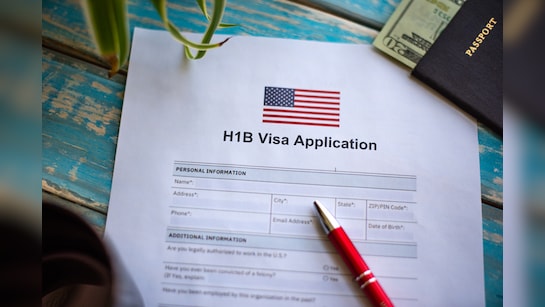
High-skilled migrants play a crucial role in sustaining the US economy, according to the OECD's chief economist in a statement to AFP, following the implementation of a $100,000 fee for H-1B visas that are extensively utilized by the technology sector.
Alvaro Pereira, who is departing his position after being appointed governor of Portugal's central bank, shared insights with AFP as the Paris-based organization released an updated forecast for the global economy.
The Organisation for Economic Co-operation and Development, a collective of 38 wealthy nations, has revised its growth projection upward to 3.2 percent for 2025, an increase from the 2.9 percent predicted in its June report.
According to the OECD, the economy "demonstrated greater resilience than expected" during the first half of the year as businesses accelerated imports to beat the implementation of President Donald Trump's new tariffs.
The organization also enhanced the US growth outlook from 1.6 percent to 1.8 percent, while cautioning that a slowdown is anticipated as higher tariffs begin to take effect.
The OECD indicated that reductions in the US federal workforce coupled with Trump's stricter immigration policies would further dampen growth prospects.
"There's clearly reduced labor growth, and diminished labor growth inevitably impacts total GDP," Pereira explained to AFP.
He mentioned that the report was completed before the new H-1B visa fee regulation went into effect over the weekend.
"We firmly believe that continuing to attract highly skilled individuals from the United States or globally remains a fundamental strength of the US economy," stated Pereira.
"This challenge will only intensify with the AI revolution, as there are significant workforce shortages in the ICT (information and communication technology) sector."
H-1B visas enable companies to sponsor foreign workers with specialized expertise—such as scientists, engineers, and computer programmers—to work in the US, initially for three years with the possibility of extension to six years.
These visas are predominantly utilized by the technology industry, with Indian nationals representing nearly three-quarters of permits allocated through the annual lottery system.
The US and Germany are experiencing the most severe labor shortages in the ICT sector among OECD countries, according to Pereira.
The OECD report indicated that the impact of Trump's tariffs has been mitigated by companies engaging in "front-loading"—importing goods before the implementation of these new duties.
"The economic effects of tariffs are materializing more gradually," Pereira noted.
"Many companies decided to take action by exporting and stockpiling in the United States to avoid the tariffs."
However, he cautioned that the OECD was already observing "reduced growth and increased inflation" compared to expectations.
"Typically, when the global economy is performing robustly, it grows at approximately four percent, so we remain considerably below that benchmark," he concluded.