
Tibet Leader Warns India Of China's "Elite Capture" Before It's "Too Late"
- Date & Time:
- |
- Views: 73
- |
- From: India News Bull
Former Tibetan Government in Exile President Sounds Alarm on Beijing's Influence Operations in India
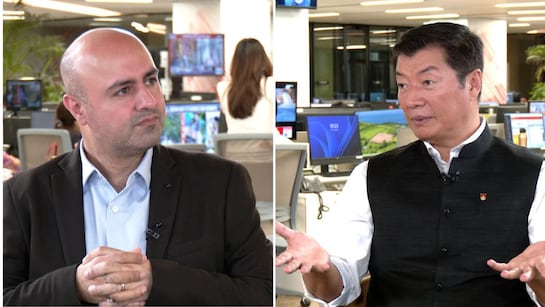
Dr Lobsang Sangay has issued a stark warning that China's embassy in New Delhi is attempting to influence Indian politicians and potentially orchestrate regime change.
New Delhi:
In a revealing interview with NDTV, Dr Lobsang Sangay, former President (Sikyong) of the Tibetan Government in Exile, has made concerning allegations about China's strategic efforts to influence Indian leadership circles.
"Elite co-option represents a centuries-old Chinese tactic," Dr Sangay explained during the interview. "They systematically cultivate leaders, intellectuals, business figures, media professionals, and now even social media personalities. This approach facilitated their control over Tibet, Xinjiang, and Mongolia—and they're implementing similar strategies in India."
The Tibetan leader cautioned that India faces genuine risks from Beijing's political machinations. "Observe the attendees at Chinese Embassy events in Delhi, particularly their National Day celebrations. You'll notice photographs featuring politicians, business figures, and other prominent individuals. While not all are compromised, China persists in its efforts," Dr Sangay observed.
He drew concerning parallels from neighboring countries where Beijing has allegedly supported amenable governments. "In Nepal, political parties openly align either with China or India. Throughout Sri Lanka, Bangladesh, and the Maldives, China has developed relationships with governing elites. In Pakistan, major political parties uniformly support China. This exemplifies their elite capture strategy," he elaborated.
Dr Sangay indicated this approach extends globally. "I've witnessed European ministers who initially praised China, later accepting directorial positions in Chinese corporations with annual compensation of $100,000 or more—sometimes even $888,000. This illustrates how China purchases influence," he stated.
He urged vigilance among Indian leaders across the political spectrum. "Caution is essential for everyone—governing parties, opposition groups, business leaders, and journalists. China remains indifferent about who they influence, provided it advances their objectives."
The former Tibetan leader further connected Beijing's influence campaigns to its broader geopolitical ambition of restricting India. "Consider China's support for Maldives, Bangladesh, Sri Lanka, and Nepal. Consider their obstruction of UN resolutions against terrorists targeting India. Their goal is to constrain India and dominate South Asia," he asserted.
Drawing parallels between economic leverage and political manipulation, he highlighted India's substantial trade imbalance. "India imports $113 billion in Chinese goods while exporting merely $14 billion. This $99 billion deficit translates to fewer manufacturing facilities and jobs in India. Engagement with China isn't merely unbalanced—it's hazardous," he warned.
Dr Sangay also criticized Henry Kissinger's once-popular theory that commercial engagement would democratize China. "Western nations invested in this misconception for three decades. Rather than democratizing, China has grown increasingly confrontational. I hope India avoids repeating this error," he remarked.
With border tensions already elevated, Dr Sangay's statements serve as a sobering reminder that China's challenge to India extends beyond military concerns to political and economic domains. His warning was direct: "If you believe engagement with China will yield benefits, you're mistaken. Beijing's strategy centers on elite capture, and India must safeguard against this before it becomes too late."