
Trump Administration Expands Travel Ban to 20 Additional Countries and Palestinian Authority: Full Analysis and Impact
- Date & Time:
- |
- Views: 72
- |
- From: India News Bull
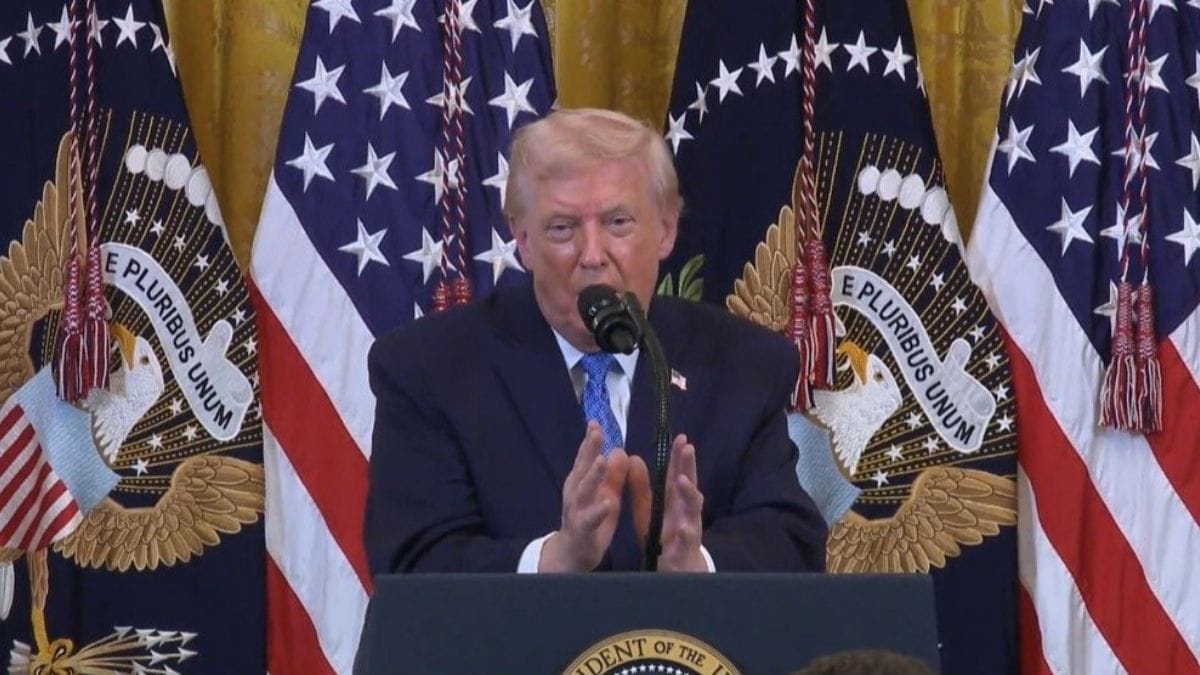
The restrictions apply to both individuals seeking to visit the US and those wishing to immigrate permanently.
Washington:
On Tuesday, the Trump administration announced an expansion of travel restrictions to an additional 20 countries and the Palestinian Authority, effectively doubling the number of nations affected by the comprehensive limitations on US travel and immigration introduced earlier this year.
The administration added five more countries and travelers using Palestinian Authority-issued documents to the list of those facing complete travel bans to the United States, while imposing new limitations on 15 other nations.
This move represents a continuation of the administration's efforts to strengthen US entry requirements for travel and immigration, which critics argue unfairly restricts travel for people from a wide range of countries. The administration indicated it would broaden these restrictions following the arrest of an Afghan national suspect in the shooting of two National Guard members during the Thanksgiving weekend.
Exemptions to these restrictions include individuals who already possess visas, US lawful permanent residents, certain visa categories such as diplomats or athletes, or those whose entry is deemed to serve US interests. According to the proclamation, these changes will take effect on January 1.
In June, President Donald Trump declared that citizens from 12 countries would be banned from entering the United States, with seven others facing restrictions, reviving a signature policy from his first term.
The June ban encompassed Afghanistan, Myanmar, Chad, the Republic of Congo, Equatorial Guinea, Eritrea, Haiti, Iran, Libya, Somalia, Sudan and Yemen, with heightened restrictions on visitors from Burundi, Cuba, Laos, Sierra Leone, Togo, Turkmenistan and Venezuela.
The Republican administration's Tuesday announcement expanded the list of countries whose citizens are prohibited from entering the US to include Burkina Faso, Mali, Niger, South Sudan and Syria. The administration also fully restricted travel for individuals with Palestinian Authority-issued travel documents, marking the latest US travel limitation affecting Palestinians. South Sudan was already subject to significant travel restrictions.
An additional 15 countries have been placed under partial restrictions: Angola, Antigua and Barbuda, Benin, Ivory Coast, Dominica, Gabon, Gambia, Malawi, Mauritania, Nigeria, Senegal, Tanzania, Tonga, Zambia and Zimbabwe.
These restrictions apply both to individuals seeking to visit the US temporarily and those intending to immigrate permanently.
In its announcement, the Trump administration stated that many of the countries facing travel restrictions had "widespread corruption, fraudulent or unreliable civil documents and criminal records," making it difficult to properly vet their citizens for US travel.
The administration also cited high rates of visa overstays, refusal to accept deported citizens, and "general lack of stability and government control" as factors complicating the vetting process. Additional justifications included immigration enforcement concerns, foreign policy considerations, and national security issues.
The Afghan individual accused of shooting two National Guard troops near the White House has entered a not guilty plea to murder and assault charges. Following this incident, the administration announced multiple immigration restrictions, including further limitations on people from the initial 19 countries already present in the US.
The expanded travel ban is expected to face strong opposition from critics who argue that the administration is using national security concerns as justification to collectively exclude people from numerous countries.
"This expanded ban is not about national security but instead is another shameful attempt to demonize people simply for where they are from," said Laurie Ball Cooper, vice president of US Legal Programs at the International Refugee Assistance Project.
Advocates for Afghans who supported the United States' two-decade war in Afghanistan also raised concerns on Tuesday, noting that the updated travel ban no longer contains an exception for Afghans eligible for the Special Immigrant Visa—a category specifically designed for Afghans who closely assisted US war efforts at great personal risk.
No One Left Behind, a longstanding advocacy organization for the Special Immigrant Visa program, expressed being "deeply concerned" about this change. The organization acknowledged the president's commitment to national security but emphasized that allowing thoroughly vetted Afghans who served the US to enter the country also contributes to America's security.
"Though intended to allow for review of inconsistent vetting processes, this policy change inadvertently restricts those who are among the most rigorously vetted in our history: the wartime allies targeted by the terrorists this proclamation seeks to address," the organization stated.
Countries newly added to the banned or restricted list responded late Tuesday that they were evaluating the announcement. The government of Dominica, a Caribbean island nation, stated it was treating the matter with the "utmost seriousness and urgency" and reaching out to US officials to clarify the restrictions' implications and address any concerns.
Antigua and Barbuda's ambassador to the United States, Ronald Saunders, described the matter as "quite serious" and indicated he would seek additional information from US officials regarding the new restrictions.
The Trump administration also increased restrictions on certain countries—Laos and Sierra Leone—that were previously on the partially restricted list, while easing some limitations on Turkmenistan due to improvements. All other travel restrictions announced in June remain in effect, according to the administration.
The new restrictions affecting Palestinians come months after the administration imposed limitations making it nearly impossible for Palestinian Authority passport holders to obtain travel documents for visiting the US for business, work, leisure, or educational purposes. Tuesday's announcement goes further by prohibiting people with Palestinian Authority passports from immigrating to the US.
In justifying Tuesday's decision, the administration cited the active operation of "US-designated terrorist groups in the West Bank or Gaza Strip" that have killed American citizens. The administration also stated that the recent conflict in these areas had "likely resulted in compromised vetting and screening abilities."
Source: https://www.ndtv.com/world-news/trump-expands-travel-ban-curbs-to-20-more-countries-check-full-list-9829136