
White House Chief of Staff Reveals Candid Insights About Trump's Inner Circle and Administration Tensions
- Date & Time:
- |
- Views: 58
- |
- From: India News Bull
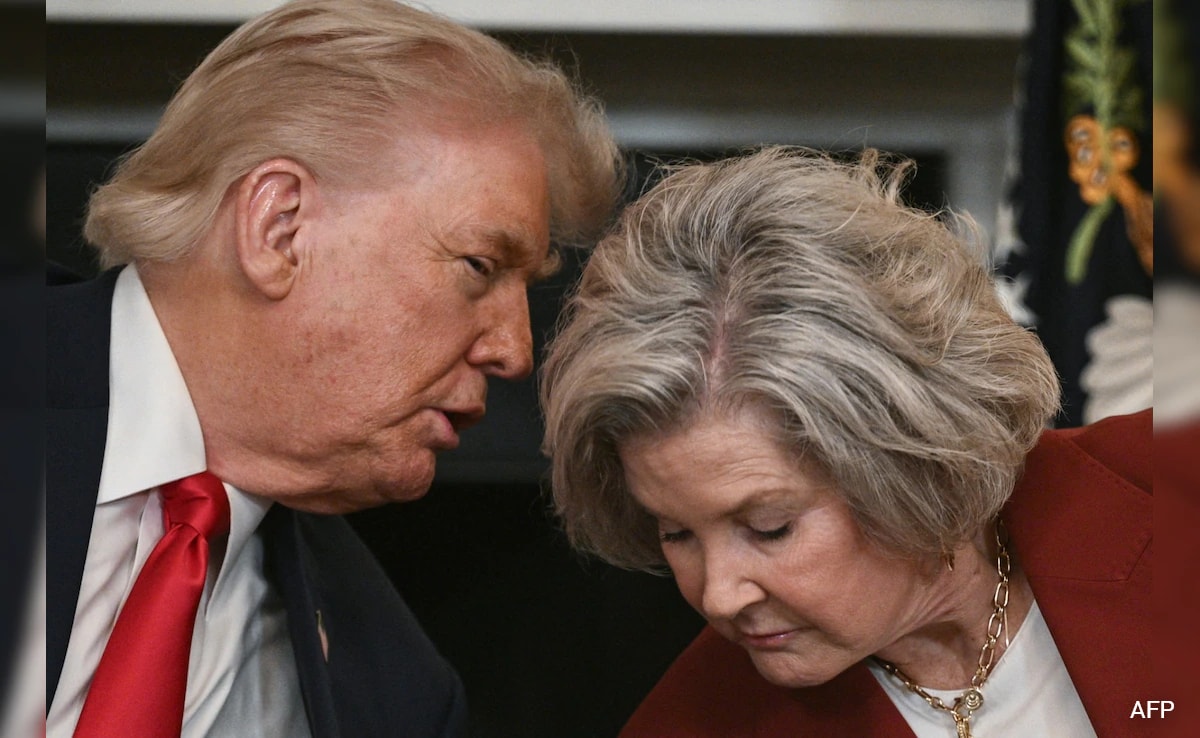
White House Chief of Staff Susie Wiles described Elon Musk as an "avowed" ketamine user in a candid interview with Vanity Fair, alongside other revealing comments about President Donald Trump's inner circle.
In the series of interviews conducted throughout the year, Wiles referred to Vice President JD Vance as a "conspiracy theorist," described budget director Russ Vought as a "right-wing absolute zealot," and criticized Attorney General Pam Bondi's management of Jeffrey Epstein-related files.
Following publication, the White House quickly moved to minimize the impact of her comments. Wiles posted on social media claiming "significant context was disregarded" in what she called "a disingenuously framed hit piece." White House Press Secretary Karoline Leavitt expressed support, stating that Trump "has no greater or more loyal advisor than Susie" and that "the entire Administration is grateful for her steady leadership and united fully behind her."
Nevertheless, the revealing interview threatened to rekindle questions about the president's administration and policies, particularly regarding tensions with Musk.
"He is a complete solo actor," Wiles said of Musk. "The challenge with Elon is keeping up with him." When asked about Musk sharing a post on X that blamed public sector workers for atrocities committed by Hitler, Stalin, and Mao, Wiles responded: "I think that's when he's microdosing." She acknowledged, however, having no firsthand knowledge of any drug use.
Musk and Tesla representatives did not immediately respond to comment requests. Earlier this year, Musk denied using ketamine following allegations in a New York Times report about his extensive use of that substance and other drugs. He stated he had tried ketamine under prescription years ago but had not taken it since.
As leader of Trump's Department of Government Efficiency initiative aimed at reducing federal government size and workforce, Musk targeted the US Agency for International Development for closure. These actions shocked Washington and resulted in humanitarian program terminations.
Wiles admitted being "initially aghast" and confronting Musk when he closed programs Trump wanted preserved. "Elon's attitude is you have to get it done fast," Wiles told Vanity Fair. "And so with that attitude, you're going to break some china. But no rational person could think the USAID process was a good one. Nobody."
Musk's public falling out with the president led him to exit the administration and threaten creating his own third party. Their relationship appeared to improve when Musk attended a White House dinner last month for the Saudi crown prince. According to Axios, Musk has begun funding Republican congressional campaigns for the 2026 midterms and indicated willingness to contribute more.
Regarding the Epstein files, Wiles criticized the attorney general's handling of the matter. In February, Bondi provided binders labeled "The Epstein Files: Phase 1" to conservative influencers, exciting supporters expecting fulfillment of Trump's campaign promise to release documents related to the convicted sex offender.
The files, however, contained only previously released information. Bondi later told Fox News that Epstein's client list was "sitting on my desk" for review, but the Justice Department and FBI subsequently stated that Epstein kept no client list and no additional documents would be released, angering parts of Trump's base.
"First she gave them binders full of nothingness. And then she said that the witness list, or the client list, was on her desk. There is no client list, and it sure as hell wasn't on her desk," Wiles stated.
The White House chief mentioned she had read "the Epstein file," noting that Trump "is in the file" but "not in the file doing anything awful." In November, Trump signed legislation directing the Justice Department to release Epstein-related files.
Wiles spoke candidly about Vance's transition from Trump critic to ally. When comparing Vance's evolution to Secretary of State Marco Rubio's, she said of Rubio: "Marco was not the sort of person that would violate his principles. He just won't. And so he had to get there."
Regarding Vance, she observed, "His conversion came when he was running for the Senate. And I think his conversion was a little bit more, sort of political."
Vance explained his shift to Vanity Fair: "I realised that I actually liked him, I thought he was doing a lot of good things. And I thought that he was fundamentally the right person to save the country."
In the interview, Wiles acknowledged that Department of Justice cases against Trump critics New York Attorney General Letitia James and former FBI Director James Comey represented political retribution, describing it as "score settling." She mentioned asking the president to confine his planned retaliation to his term's first three months.
"We have a loose agreement that the score settling will end before the first 90 days are over," she said in a March interview.
By August, however, Wiles claimed, "I don't think he's on a retribution tour." She elaborated: "A governing principle for him is, 'I don't want what happened to me to happen to somebody else.' And so people that have done bad things need to get out of the government. In some cases, it may look like retribution. And there may be an element of that from time to time. Who would blame him? Not me."
Wiles spoke frankly about the chaotic implementation of Trump's reciprocal tariffs on trading partners in April—a key economic policy that triggered strong market reactions and prompted the president to pause the levies days later to allow further negotiations.
"So much thinking out loud is what I would call it," she said, recognizing "huge disagreement" among Trump's advisers regarding the tariffs' merit.
Wiles revealed enlisting Vance—unsuccessfully—to delay Trump's announcement. She described the process as "more painful than I expected" but predicted in April that Trump's approach would ultimately succeed.
Recent polls indicate Trump's approval rating declining, with voters expressing growing concerns about the president's economic policies.
Source: https://www.ndtv.com/world-news/white-house-chief-labels-musk-drug-user-jd-vance-a-conspiracy-theorist-9828448