
The Al Busaidi Dynasty: Three Centuries of Royal Rule Shaping Oman's History and Diplomatic Relations
- Date & Time:
- |
- Views: 56
- |
- From: India News Bull
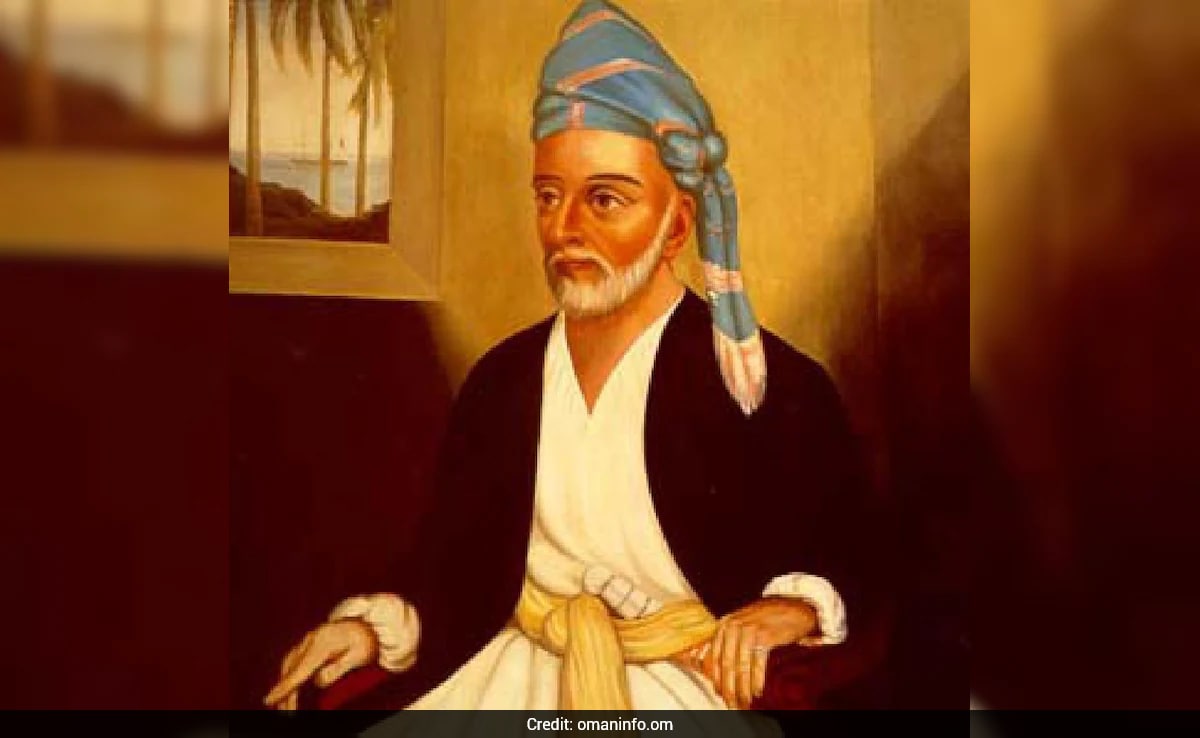
The Al Busaidi dynasty was established by Sayyid Ahmad bin Said in 1744, creating a royal lineage that continues to govern Oman to this day.
Prime Minister Narendra Modi embarked on a significant three-nation diplomatic journey to Jordan, Ethiopia, and Oman on December 15. His itinerary began in Jordan, followed by Ethiopia, with Oman serving as the final destination of his international tour.
This visit coincides with the 70th anniversary of diplomatic relations between India and Oman. During his stay in Muscat, PM Modi is scheduled for formal discussions with the Sultan of Oman and will engage with the vibrant Indian community residing there.
Oman stands as a stable, historic monarchy positioned on the southeastern corner of the Arabian Peninsula. For nearly three centuries, the nation has been under the continuous governance of the Al Busaid dynasty, which has profoundly influenced Omani identity, governance structures, and international relations.
Sayyid Ahmad bin Said's establishment of the Al Busaid dynasty in 1744 represented a pivotal moment in Oman's historical narrative. From its inception, the dynasty has been instrumental in guiding national development, maintaining internal unity, addressing external challenges, and advancing a sustainable vision of statehood.
This vision was intrinsically connected to Oman's maritime heritage, an area where Omanis possessed extensive expertise and historical knowledge. Upon ascending to power, Sayyid Ahmad bin Said prioritized rebuilding the Omani naval fleet, recognizing maritime power as crucial for national defense against both foreign threats and domestic instability. His control of Muscat proved strategically vital, enabling the consolidation of authority along coastal regions and facilitating the expansion of Omani influence throughout the coastal territories.
The Al Busaid dynasty reached its zenith during the 19th century under Said bin Sultan's leadership from 1806 to 1856. Said established diplomatic connections with the United States in 1833 and France in 1844, while strengthening existing relations with Great Britain.
His authority extended throughout East Africa, bringing Arab and Swahili territories from Mogadishu to Cape Delgado under Omani control. Despite ongoing challenges from Wahhabi incursions and tribal unrest in Oman's mountainous interior, Said, with British support, successfully managed these threats. In acknowledgment of this crucial backing, he transferred the Khuriya Muriya Islands to Great Britain in 1854.
Following Said's death in 1856, British authorities divided the Al Busaid territories between his two sons. Thuwayni assumed control of Oman, while Majid governed Zanzibar. Though the family maintained power in Zanzibar under British protectorate status, their rule there concluded in 1964 when the islands became part of Tanzania.
In Oman, opposition emerged from the mountainous interior during the early 20th century, challenging Al Busaid authority. This conflict led to the Treaty of Al-Sib in 1920, which divided governance between the sultan, who controlled coastal regions, and the imam, who administered the interior. New resistance arose in the 1950s, with tribal leaders seeking Saudi support for independence, but Sultan Said bin Taimur, supported by Britain, successfully suppressed the rebellion.
A Marxist-led uprising in the Dhofar region during the 1960s revealed deeper societal tensions. These pressures culminated in 1970 when Qaboos bin Said deposed his father and initiated comprehensive transformation of Oman. He developed modern infrastructure, expanded social services, and reformed governance while pursuing a balanced foreign policy that welcomed investment and maintained strong relations with Western and moderate Arab partners. Following his death in 2020, Qaboos was succeeded by Haitham bin Tariq, who has committed to policy continuity after years in senior diplomatic and planning roles.
Despite periodic challenges, Oman's historical journey under the Al Busaid dynasty has yielded remarkable achievements. The Sultanate successfully ended foreign occupation, constructed a vast East African empire during the early 19th century, and established a significant maritime presence across the Indian Ocean. It has maintained balanced diplomatic relations with global powers including Britain, France, and the United States, successfully navigated internal and regional challenges, and effectively protected its national interests throughout the centuries.
Source: https://www.ndtv.com/world-news/inside-the-house-of-al-busaidi-family-that-has-ruled-oman-for-centuries-9823763