
US Offers NATO-like Security Guarantees to Ukraine While Territory Remains Central Dispute in Peace Talks
- Date & Time:
- |
- Views: 44
- |
- From: India News Bull
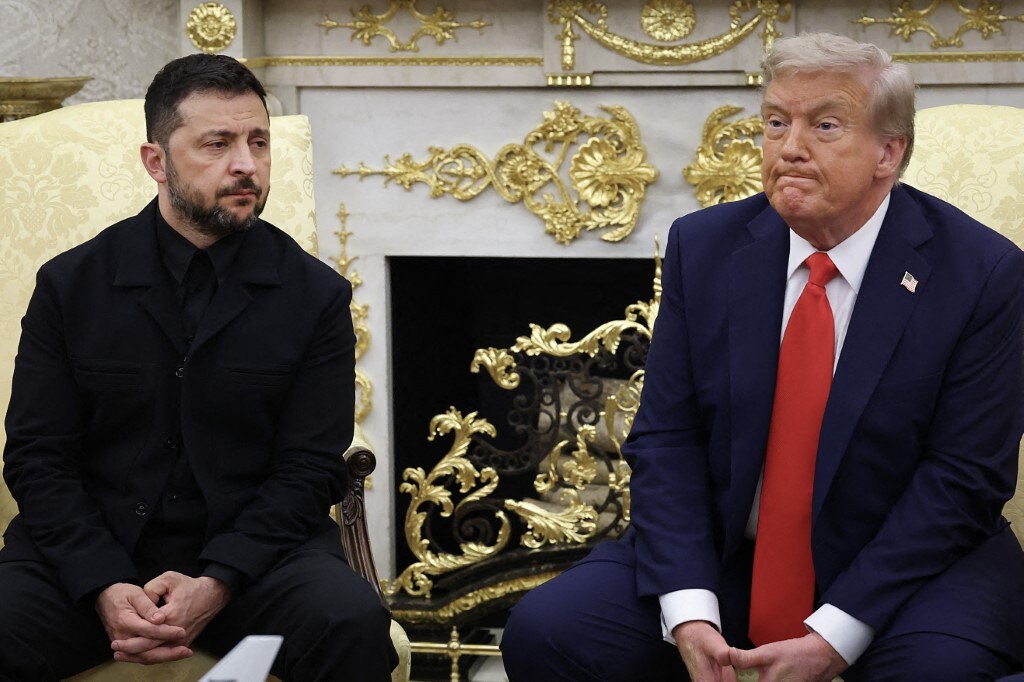
Ukrainian President Volodymyr Zelensky indicated that Kyiv might reconsider its NATO membership ambitions in exchange for robust security agreements.
The United States negotiators have proposed enhanced security guarantees for Ukraine during talks aimed at resolving the Russia-Ukraine conflict, offering "Article 5-like" protections similar to NATO's mutual defense provision. This development comes as part of President Donald Trump's renewed diplomatic initiative to end the war, though territorial concessions remain a contentious issue in pressuring Kyiv.
German Chancellor Friedrich Merz described the American security guarantee proposal as "remarkable," suggesting that achieving peace by Christmas "now depends entirely on the Russian side."
Officials gathered in Berlin on Monday expressed optimism about the discussions. Working-group conversations may continue in the United States, potentially in Miami, which previously hosted similar talks. President Trump is expected to participate remotely in a dinner meeting of European leaders hosted by Chancellor Merz, with NATO Secretary General Mark Rutte and European Commission President Ursula von der Leyen in attendance.
Merz emphasized that "an agreement has been reached that a ceasefire should be secured by substantial legal and material security guarantees from the US and Europe," calling it "a truly far-reaching and substantial agreement, which we did not have before."
Rustem Umerov, Zelensky's senior security official, noted "real progress" in Berlin following approximately five hours of discussions between the Ukrainian delegation and American officials led by special envoy Steve Witkoff and Jared Kushner, Trump's son-in-law.
Despite the Trump administration's diplomatic efforts, significant obstacles remain. Russian President Vladimir Putin continues to demand extensive territorial concessions, including portions of eastern Donbas that Russian forces haven't managed to capture. Ukraine has consistently refused to surrender its territory since the February 2022 Russian invasion.
These territorial disputes have undermined previous negotiations. While American officials maintain that Trump isn't attempting to pressure Ukraine and believe Russia could accept the terms discussed in Berlin, Moscow was not present at these talks. Previous negotiations sparked controversy when a pro-Russia draft proposal developed by Washington and Moscow angered Ukrainian and European officials.
Despite acknowledging progress regarding security guarantees, Zelensky emphasized the considerable gap between Moscow and Kyiv on territorial issues, urging continued American mediation on this "painful" matter. The Ukrainian leader noted that many "destructive" elements from Witkoff's initial plan had been removed, stating, "We're making efforts to make our position clear."
According to sources familiar with the discussions, American and Ukrainian officials addressed territorial matters, with the US supporting Russia's demand for Ukraine to withdraw from areas in eastern Donetsk that Moscow has failed to capture since 2014. Zelensky repeatedly rejected this proposal, and alongside European allies, insists on maintaining the current contact line for any ceasefire agreement.
On Sunday, the Ukrainian president suggested Kyiv might reconsider its NATO membership aspirations if it secured bilateral security agreements with the United States, European nations, and potentially Canada and Japan. Speaking at the same Berlin conference, Merz pledged continued support for Ukraine.
Umerov praised Witkoff and Kushner for their "extremely constructive" peace efforts and expressed Ukraine's immense gratitude to Trump.
Ukraine has long sought NATO membership as a security guarantee, though the United States and some European nations have hesitated to support its membership due to Russian opposition. Putin consistently demands Ukraine abandon NATO aspirations as part of any peace settlement. The Trump administration has already ruled out supporting Ukrainian NATO membership.
Kremlin foreign policy aide Yuri Ushakov has indicated that Russia is unlikely to accept modifications proposed by Europe and Ukraine to the US-led proposals that have generally favored Moscow. Witkoff and Kushner met with Putin in Moscow on December 2 for five hours to discuss the plan.
"If relevant amendments are made, we will have very strong objections, because we had outlined our position very clearly and the US seemed to have understood it," Ushakov stated in pre-recorded remarks broadcast Sunday on state television. "There will be provisions which are completely unacceptable for us, including on territorial issues."
European Union foreign ministers also planned discussions on Ukraine during their Brussels meeting on Monday. EU foreign affairs chief Kaja Kallas acknowledged increasing difficulties in reaching agreement on a reparations loan to Ukraine backed by frozen Russian state assets.
Meanwhile, Blaise Metreweli, the new chief of British foreign intelligence service MI6, accused Putin of deliberately extending peace negotiations. "We all continue to face the menace of an aggressive, expansionist and revisionist Russia, seeking to subjugate Ukraine and NATO members," she stated in her first public appearance since becoming MI6 head in September. Regarding Putin, she added: "He is dragging out negotiations and shifting the cost of war onto his own population."
Source: https://www.ndtv.com/world-news/us-offers-security-deal-in-ukraine-talks-but-territory-still-key-9823791