
The Hashemite Dynasty: Jordan's Royal Family and Their Century of Rule
- Date & Time:
- |
- Views: 38
- |
- From: India News Bull
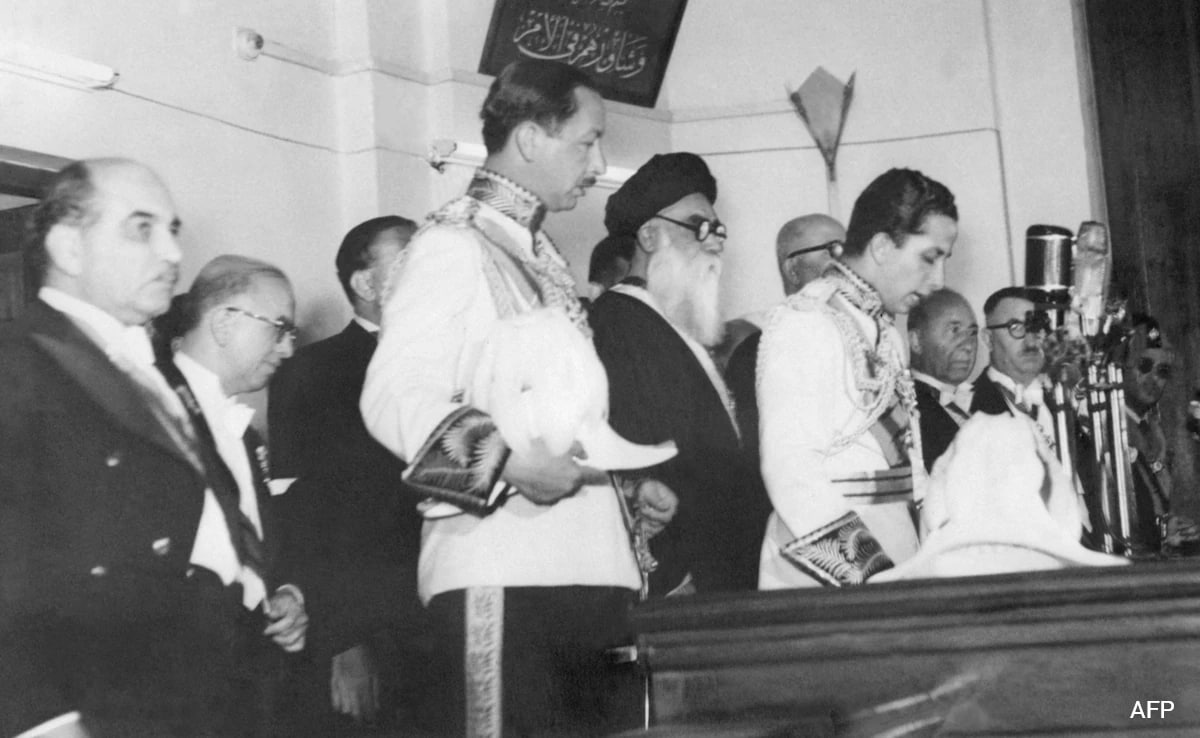
The young King Faisal II of Iraq (Hashemite monarchy) takes the oath at the age of 18 in 1953
Prime Minister Narendra Modi arrived in Jordan's capital Amman on December 15, marking a significant diplomatic milestone as the first comprehensive bilateral engagement between India and Jordan in 37 years. This historic visit coincides with the 75th anniversary of established diplomatic relations between the two nations.
This momentous occasion brings attention to Jordan's Hashemite monarchy, a dynasty that has been instrumental in establishing the kingdom's political stability and international relations for over a century.
The Hashemite royal family is fundamentally intertwined with Jordan's national identity. Since the modern state's establishment in 1921, the monarchy has been the cornerstone of the country's political framework, cultural identity, and regional diplomatic position. Understanding modern Jordan requires examining the Hashemite dynasty, whose roots combine ancient history and Islamic faith.
The Hashemites, or Bani Hashem, claim ancestry from the Quraysh tribe of Mecca, who descended from Prophet Ismail, son of Prophet Ibrahim (Abraham). This tribe settled in Mecca during the second century CE and rose to prominence when Qusayy bin Kilab became the city's leader around 480 CE.
The dynasty's name originates from Hashem, Qusayy's grandson and the great-grandfather of Prophet Muhammad (PBUH). Through the Prophet's daughter Fatima and her husband Ali bin Abi Talib, the fourth Islamic caliph, the Hashemites maintain direct lineage to the Prophet.
Ali and Fatima's sons, Al-Hassan and Al-Hussein, established two distinct lineages. Hassan's descendants became known as the Sharifs (nobles), while Hussein's line became the Sayyids (lords). Jordan's royal family descends from the Sharifian line, reinforcing their religious and historical legitimacy in the region.
Sharifian families governed the Hijaz region between the 10th and 13th centuries. King Hussein's branch ruled Mecca from 1201 until 1925, acknowledging Ottoman sovereignty from 1517 onward. This legacy represents over a millennium of political governance and nearly two thousand years of documented presence in Islam's holiest city.
During the Great Arab Revolt of 1916, Sharif Hussein bin Ali led the uprising against Ottoman control. His sons subsequently assumed leadership roles across the Arab world. Abdullah became the ruler of Transjordan, while Faisal briefly governed Syria before later ruling Iraq. The Emirate of Transjordan was officially established on April 11, 1921, and achieved complete independence from Britain in 1946, transforming into the Hashemite Kingdom of Jordan.
King Abdullah I established the foundations of modern Jordan by introducing constitutional governance, conducting elections, and gradually securing independence through diplomatic channels. His life ended tragically in 1951 when he was assassinated at Al-Aqsa Mosque in Jerusalem.
Following King Talal's brief reign, King Hussein ascended to the throne in 1952 at just 17 years old. His extended rule brought stability during decades of regional conflict. Upon his death in 1999, his son King Abdullah II assumed the throne. Abdullah II was already a major-general in the Jordanian army when he succeeded his father at age 37.
In 2021, internal tensions emerged within the royal family. Prince Hamzah, King Abdullah II's younger half-brother and former crown prince, openly criticized the country's leadership. He later claimed he had been placed under house arrest as part of broader restrictions on dissent. In a video shared with the BBC, Prince Hamzah accused Jordan's leadership of corruption, incompetence, and persistent harassment, revealing rare public divisions within the Hashemite monarchy.
In February 2024, King Abdullah II firmly rejected US President Trump's proposal to resettle Palestinians in Jordan. Following King Abdullah's White House meeting with Trump, the Jordanian royal court stated on X that "King Abdullah II stresses the need to put a stop to (Israeli) settlement expansion, expressing rejection of any attempts to annex land and displace the Palestinians."
For most Jordanians, the Hashemites remain the guarantors of stability and continuity in an otherwise turbulent region.
Source: https://www.ndtv.com/world-news/the-hashemites-inside-the-royal-family-that-has-ruled-jordan-for-over-100-years-9823412