
Al-Husseiniya Palace: Inside PM Modi's Royal Meeting with King Abdullah II of Jordan
- Date & Time:
- |
- Views: 71
- |
- From: India News Bull
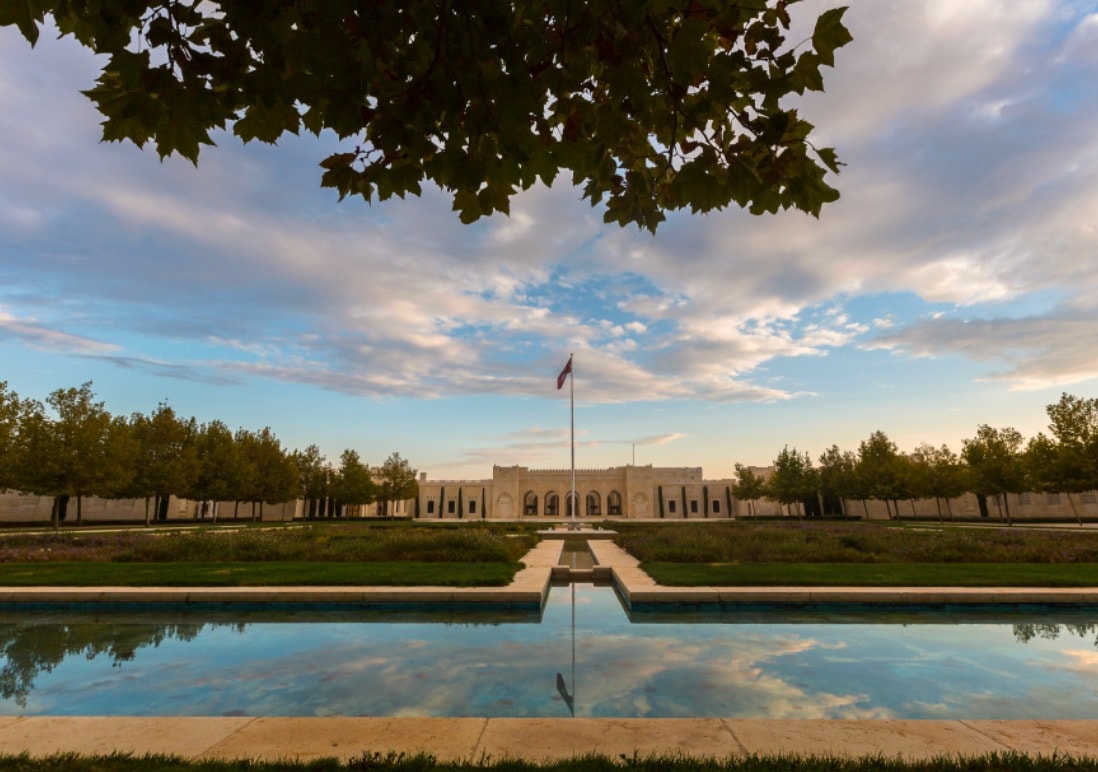
AlHusseiniya Palace stands as a contemporary royal residence situated in the western part of Amman, Jordan.
Prime Minister Narendra Modi landed in Amman, Jordan, on Monday to commence his three-nation diplomatic journey. His Majesty King Abdullah II extended a warm welcome to PM Modi at the Al-Husseiniya Palace, where they enjoyed a distinguished royal dinner together.
During his two-day diplomatic visit, spanning December 15 to 16, PM Modi will engage in discussions with King Abdullah II to evaluate India-Jordan bilateral relations and address regional developments. Jordan, positioned strategically between Saudi Arabia and Israel, is under the rule of King Abdullah II, who is regarded as a 41st-generation descendant of Prophet Muhammad. The monarch's family has maintained governance over Jordan for more than 1400 years, and he ranks among the wealthiest royals in the region.
Exploring Al-Husseiniya Palace of Jordan
Al-Husseiniya Palace, constructed in 2006, functions as one of the principal operational headquarters for the Jordanian Royal Family in western Amman.
The palace complex houses the official workspaces of His Majesty King Abdullah II, Her Majesty Queen Rania Al Abdullah, and His Royal Highness Crown Prince Al Hussein bin Abdullah II.
The majority of the King's daily engagements, formal interviews, and administrative responsibilities take place within this palace. The name "Al-Husseiniya" derives from its proximity to the King Hussein bin Talal Mosque, a significant architectural landmark in Amman.
Architectural Features of Al-Husseiniya Palace
The architectural design of Al-Husseiniya Palace harmoniously blends Arab-Islamic traditional elements with modern aesthetic principles. The structure features distinctive arches and intricate designs adorning walls and doorways that reflect Jordanian and Islamic cultural heritage.
The interior spaces exhibit a refined elegance in their simplicity. Courtyards and reception areas frequently showcase local artisanship and traditional motifs, particularly when hosting official ceremonies and events.
Other Significant Royal Palaces In Jordan
Raghadan Palace (constructed 1924-1927) represents the inaugural Hashemite palace in Amman and serves as both political and ceremonial headquarters.
Basman Palace (established 1950) accommodates royal offices and underwent restoration following damage sustained during the 1967 war.
Zahran Palace (built 1957) hosts significant family celebrations, including royal matrimonial ceremonies.
Nadwa Palace (completed 1964) served as the residence of the late King Hussein.
Musallah Palace in the Jordan Valley functioned as a winter residence and gathering venue for intellectual discourse.
Mawa Palace (developed during the 1970s) operated as both a royal residence and administrative center.
The Little Palace holds historical significance as the birthplace of King Hussein and former home to King Abdullah I, King Talal, and Queen Zein.
Sharif Hussein bin Ali's House in Aqaba (dating from 1917) has been transformed into a museum commemorating the Great Arab Revolt.
Source: https://www.ndtv.com/world-news/al-husseiniya-the-jordan-palace-where-pm-modi-dined-with-king-abdullah-ii-9823347