
'No More False Parity Of Pakistan With Rising India': US Congressman To NDTV
- Date & Time:
- |
- Views: 70
- |
- From: India News Bull
United States views India as a key strategic, economic, and security partner, while Pakistan continues to struggle with internal terrorism and economic instability, according to US Congressman Ami Bera in an exclusive NDTV interview.
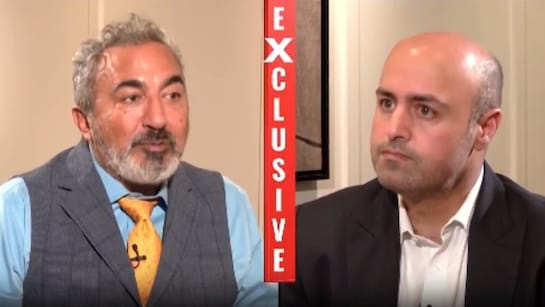
Bera highlighted the contrast in how Washington now perceives the two neighboring nations, dismissing any notion of parity between them.
The congressman's remarks come amid growing concerns over Pakistan-sponsored terrorism against India, including the recent deadly attack in Pahalgam, Kashmir, as well as the surprising White House welcome extended to Pakistan Army Chief General Asim Munir.
As a member of the House Foreign Affairs Committee, Bera emphasized that India is "a country on the rise," while Pakistan remains entangled in economic difficulties and internal security threats. "These are not equivalent countries," he stated firmly, rejecting attempts to create false equivalence.
The Democratic representative pointed out Pakistan's history of harboring terrorist organizations like Jaish-e-Mohammed, Lashkar-e-Taiba, and Hizbul Mujahideen, all of which continue to receive support from the Pakistani state.
Following the tragic Pahalgam attack that claimed 26 tourist lives, Bera noted that India's response through Operation Sindoor was both anticipated and justified. He advised Pakistan to focus on addressing its domestic instability rather than promoting terrorism beyond its borders.
Regarding General Asim Munir's reception at the White House, Bera acknowledged this was an unusual diplomatic gesture. The Pakistan Army chief's participation in high-level meetings, including the CENTCOM Commander's farewell, has raised questions about potential shifts in the Trump administration's approach and its willingness to engage directly with Pakistan's military leadership. Trump's scheduled bilateral meeting with Prime Minister Shehbaz Sharif and General Munir during the UN General Assembly represents an extraordinary diplomatic outreach, especially considering Pakistan's compromised international standing.
However, Bera assured that American lawmakers maintain a realistic perspective. "Our long-term strategic, economic, and security interests lie with India," he emphasized, noting the bipartisan consensus in Congress that views New Delhi as a critical partner for the 21st century.
On broader regional security matters, Bera voiced concern regarding the Saudi-Pakistan military agreement, cautioning against attempts to establish a "Muslim NATO" that might destabilize South Asia. Instead, he encouraged Gulf nations to strengthen their connections with India's growing economy.
As Washington refines its South Asia policy, Bera's statements highlight a clear reality: while the US may engage with Pakistan's military establishment on tactical matters, America's long-term strategic commitment remains firmly with India.