
Trump Asks Pregnant Women To Avoid This Painkiller Over Link To Autism
- Date & Time:
- |
- Views: 75
- |
- From: India News Bull
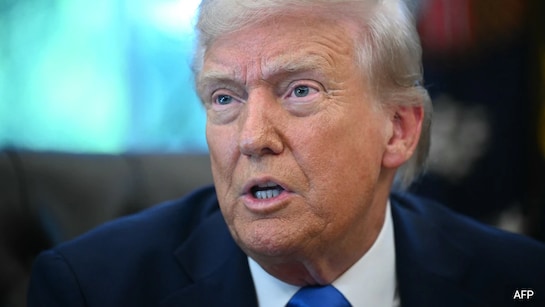
Trump emphasized that "taking Tylenol is not good."
Washington:
President Donald Trump on Monday cautioned expectant mothers against using Tylenol, citing an unsubstantiated connection to autism, while also advocating for significant modifications to infant vaccination schedules.
This announcement comes as the White House pledges to transform healthcare in the United States, prompting widespread concern among scientific and medical professionals regarding the administration's health initiatives.
For years, medical experts have recommended acetaminophen as one of the safest pain relievers during pregnancy, particularly because untreated fever and pain can pose serious risks to both mother and developing fetus.
Nevertheless, Trump maintained that "taking Tylenol is not good."
"For this reason, they are strongly recommending that women limit Tylenol use during pregnancy unless medically necessary. That's for instance, in cases of extremely high fever that you feel you can't tough it out," he stated.
During his press conference, Trump also advocated for substantial changes to standard infant vaccination protocols, claiming without evidence that there's "no reason" to vaccinate newborns against Hepatitis B, which is incurable and highly contagious.
Echoing anti-vaccination rhetoric, Trump remarked, "I would say, wait until the baby is 12 years old and formed."
This assertion directly contradicts decades of medical consensus, which holds that vaccinating newborns within 24 hours of birth is the most effective method to prevent maternal transmission of the disease, which can lead to liver damage and cancer.
His comments follow recent developments where an influential advisory panel selected by health chief Robert F. Kennedy Jr. stopped short of recommending a one-month delay for the initial Hepatitis B vaccine dose.
The panel determined that further discussion was needed—temporarily alleviating concerns among public health experts who warned that delaying this vaccination could have serious consequences.
New therapy approved
Identifying autism's cause—a complex condition affecting brain development that many experts believe has predominantly genetic origins—has been a key focus for Trump's controversial health secretary Robert F. Kennedy Jr.
Earlier this year, Kennedy—known for his anti-vaccine positions and conspiracy theories—promised to release findings on autism's cause by September 2025.
The administration's recent initiative investigating autism's origins has faced widespread criticism. Kennedy has spent decades promoting discredited claims linking vaccines to autism.
He endorsed leucovorin, a vitamin B formulation initially used for chemotherapy side effects, describing it as an "exciting therapy" potentially beneficial for children with autism.
The FDA announced Monday it was approving the tablet form of this drug to help certain children with "cerebral folate deficiency."
The Trump administration's apparent focus on acetaminophen, Tylenol's active ingredient, will likely face substantial criticism.
The American College of Obstetricians and Gynecologists is among prominent medical organizations that have identified Tylenol as one of the safest options for pain relief and fever reduction during pregnancy. Physicians already caution against its prolonged use.
Another common pain reliever, ibuprofen, is generally considered unsafe for pregnant individuals, particularly after the 20th week.
'Nuanced and uncertain'
A literature review published last month suggested a possible connection between Tylenol exposure and autism—though other studies have found contrary results.
Researchers behind the August report emphasized the need for additional research and advised pregnant individuals not to discontinue medication without consulting healthcare providers.
David Mandell, a psychiatric epidemiologist at the University of Pennsylvania, told AFP that research indicates the potential risks of taking Tylenol while pregnant appear "to be lower than the risk of having an uncontrolled infection during pregnancy."
The psychiatry professor also highlighted that investigating the interaction between genetic and environmental factors requires rigorous research spanning decades with substantial funding—characterizing the Trump administration's approach as hasty.
The Coalition of Autism Scientists previously stated it was "highly irresponsible and potentially dangerous to claim links between potential exposures and autism when the science is far more nuanced and uncertain."
"Secretary Kennedy's announcement will cause confusion and fear," the group declared in a statement.