
US-Pakistan Military Engagement: A Major Challenge to India-US Strategic Partnership
- Date & Time:
- |
- Views: 60
- |
- From: India News Bull
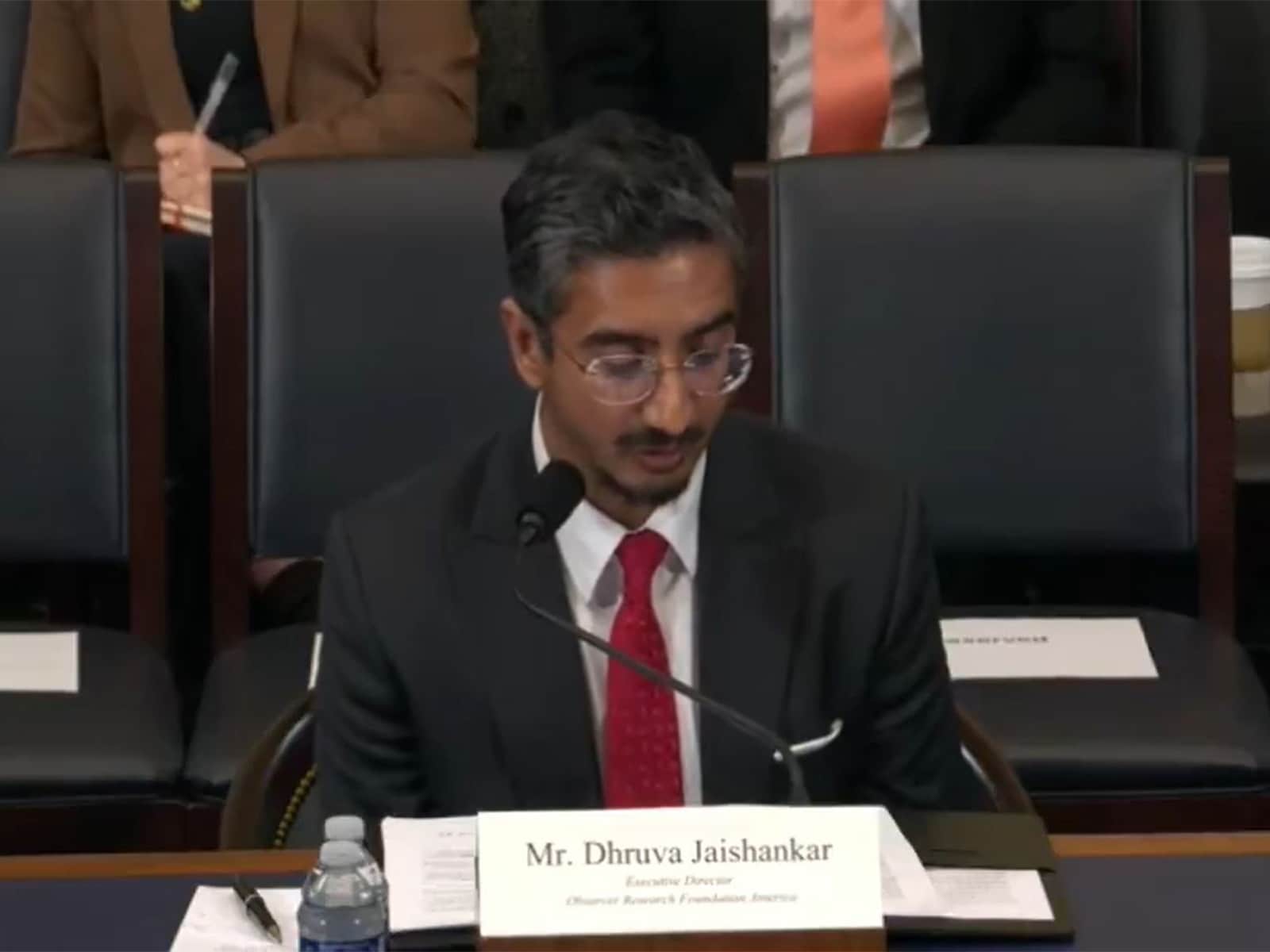
Executive Director of the Observer Research Foundation America, Dhruva Jaishankar
Dhruva Jaishankar, Executive Director of the Observer Research Foundation America, has identified Washington's renewed engagement with Pakistan's military leadership as a significant challenge in India-US relations.
He expressed these views during the House Foreign Affairs South and Central Asia Subcommittee's hearing on "The US-India Strategic Partnership: Securing a Free and Open Indo-Pacific."
Addressing India's concerns, Jaishankar noted, "The second challenge in India relates to the United States' renewed engagement with Pakistan's military leadership. Pakistan has a long and well-documented history of using non-state terrorist proxies against India. As a result, over many years, India's experience is that third-party mediation has often contributed to Pakistan's adventurism. So the United States has pursued a policy of de-hyphenation between India and Pakistan, engaging with both but minimising involvement in their disputes. There remains considerable progress for future collaboration should differences over trade and Pakistan be successfully managed between the United States and India..."
His comments come as the United States announced a major investment in Pakistan's Balochistan province mining sector. The US Export-Import Bank (EXIM) recently approved USD 1.25 billion in financing to support the development of the Reko Diq critical minerals project.
Natalie A. Baker, Charge d'Affaires ad interim at the US Embassy in Islamabad, shared on X that the Trump administration has made such commercial deals central to its diplomatic approach. "I'm pleased to highlight that the US Export-Import Bank recently approved financing of USD 1.25 billion to support the mining of critical minerals at Reko Diq in Pakistan," she stated.
Baker further explained that EXIM's financing would support "up to USD 2 billion in high-quality US mining equipment and services needed to build and operate the Reko Diq mine, along with creating an estimated 6,000 jobs in the US and 7,500 jobs in Balochistan, Pakistan."
She described Reko Diq as a model mining project benefiting "US exporters, as well as local Pakistani communities and partners, by bringing employment and prosperity to both our nations."
Baker emphasized, "The Trump administration has made the forging of deals exactly like this one central to American diplomacy."
The US Embassy in Islamabad also posted on X that this new commitment "will drive economic growth in Balochistan" and called the project a "game-changer for US businesses and local Pakistani communities."
This initiative follows increasing economic outreach from Washington to Islamabad.
In July, US President Donald Trump announced a separate trade initiative with Pakistan focused on developing the country's oil reserves. On Truth Social, Trump wrote, "We have just concluded a Deal with the Country of Pakistan, whereby Pakistan and the United States will work together on developing their massive Oil Reserves. We are in the process of choosing the Oil Company that will lead this Partnership. Who knows, maybe they'll be selling Oil to India someday!"
Trump announced this just hours after imposing 25 per cent tariffs, along with additional penalties, on India.
Earlier this year, around June, following the May conflict when India launched Operation Sindoor in response to the Pahalgam terror attack that claimed 26 lives, Trump hosted Pakistan Army Chief Asim Munir at the White House for a lunch meeting. At that time, Trump praised Munir for preventing further military escalation. "The reason I had him here was I wanted to thank him for not going into the war and ending it..." Trump said.
Munir later visited the United States again in August, where he made comments against India. According to Pakistan-based media outlet ARY News and The Dawn, Munir told members of the Pakistani-American community in Tampa, Florida, "We will wait for India to build a dam, and when they do so, we will destroy it." He also repeated Pakistan's position on Kashmir, calling it Pakistan's "jugular vein" and claiming it was not India's internal matter.
Before the Pahalgam attack, India had rejected similar remarks from Munir on Kashmir.
Responding to questions at a media briefing on April 17, Ministry of External Affairs spokesperson Randhir Jaiswal dismissed the claims as baseless. "How can anything foreign be in a jugular vein? This is a union territory of India. Its only relationship with Pakistan is the vacation of illegally occupied territories by that country..." Jaiswal said.
Pakistan had also nominated the US President for the Nobel Peace Prize, citing his "decisive diplomatic intervention and pivotal leadership" during the May conflict.
Later, Pakistan Prime Minister Shehbaz Sharif, during his speech at the United Nations General Assembly (UNGA), dedicated a significant portion to praising Donald Trump, calling him a "man of peace" and nominating him for the Nobel Peace Prize for allegedly brokering a ceasefire between India and Pakistan.
However, India had agreed to a cessation of hostilities only after the Pakistani Army's Director General of Military Operations (DGMO) contacted his Indian counterpart.
Source: https://www.ndtv.com/world-news/us-ties-with-pak-army-a-challenge-in-india-us-relation-external-affairs-minister-s-jaishankars-son-dhruva-jaishankar-9790400