
Trump's India Tariffs Push Modi Closer to Putin: Congressional Warning on Strategic Misstep
- Date & Time:
- |
- Views: 98
- |
- From: India News Bull
Democrats are criticizing Trump's approach to India, particularly highlighting the $100,000 fee imposed on H-1B visas predominantly held by Indians.
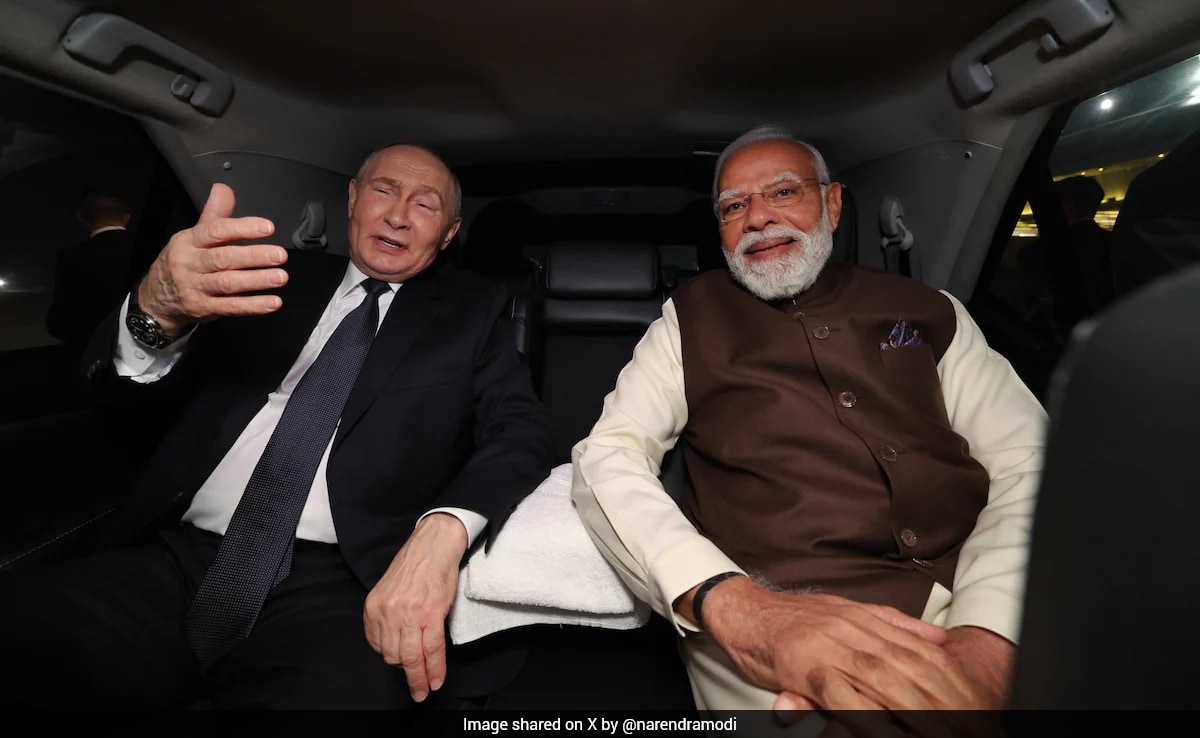
The now-viral photograph of Prime Minister Narendra Modi riding in a car with Russian President Vladimir Putin during his recent India visit has made its way to the US Congress. Democratic lawmaker Sydney Kamlager-Dove used this image to argue that President Donald Trump's confrontational tariff policies are pushing a crucial American ally toward Moscow.
During a House Foreign Affairs Subcommittee hearing on US-India strategic relations, Ranking Member Kamlager-Dove displayed the Modi-Putin photo prominently, asserting that the United States, not India, was undermining their partnership.
"Trump's policies towards India can only be described as cutting off our nose to spite our face, creating real and lasting damage to the strategic trust between our countries," Kamlager-Dove stated firmly.
Pointing toward the displayed image, she emphasized, "Being a coercive partner has a cost, and this poster is worth a thousand words."
"You do not get a Nobel Peace Prize by driving US strategic partners into the arms of our adversaries," she added critically.
The Democratic representative accused Trump of dismantling decades of bipartisan progress. She noted that the Biden administration had delivered "a bilateral relationship at its strongest," featuring "a revitalized Quad, an emerging defense tech partnership, and a trusted supply chain ally," only to see these gains rapidly deteriorating.
She offered a stark historical warning: "Unless he changes course, Trump will be the American President who lost India."
Central to the dispute are Trump's 25 percent "Liberation Day tariffs," compounded by an additional 25 percent tax on India's Russian oil imports—creating a substantial 50 percent tariff burden. "India currently faces higher tariff rates than China," she noted, calling this approach counterproductive.
During President Putin's two-day Delhi visit last week, PM Modi personally welcomed him at the airport and shared a car ride to the Prime Minister's residence, gestures both nations portrayed as demonstrations of their warm personal relationship.
The leaders previously shared transportation during the Shanghai Cooperation Organisation Summit in China, traveling in a Russian-made Aurus sedan—a moment widely interpreted as showcasing their close rapport.
Democrats further criticized Trump for attacking people-to-people connections through the substantial $100,000 fee imposed on H-1B visas, "70 percent of which are held by Indians," characterizing it as "a rebuke of the incredible contributions Indians have made" to American society.
Dhruva Jaishankar from ORF America testified that trade negotiations "began before February 13" and by July, "the two sides had nearly reached" an agreement. He mentioned that India is actively pursuing free trade agreements and that "a solution is available" if political will exists in Washington.
Expert witnesses warned that tariff disputes risk overshadowing critical strategic priorities, including countering China and stabilizing supply chains. "This has been a low-cost, high-benefit partnership for the United States," Smith informed the panel. "Discarding the trust we've built would constitute strategic malpractice of the highest order."
The hearing clearly demonstrated that the tariff confrontation has become the most politically charged issue in US-India relations—with far-reaching geopolitical implications.
Source: https://www.ndtv.com/world-news/pm-modi-putin-car-ride-becomes-warning-shot-over-trumps-handling-of-india-ties-9788993