
Global Immigration Crackdowns in 2025: How Five Major Western Nations Tightened Their Borders
- Date & Time:
- |
- Views: 39
- |
- From: India News Bull
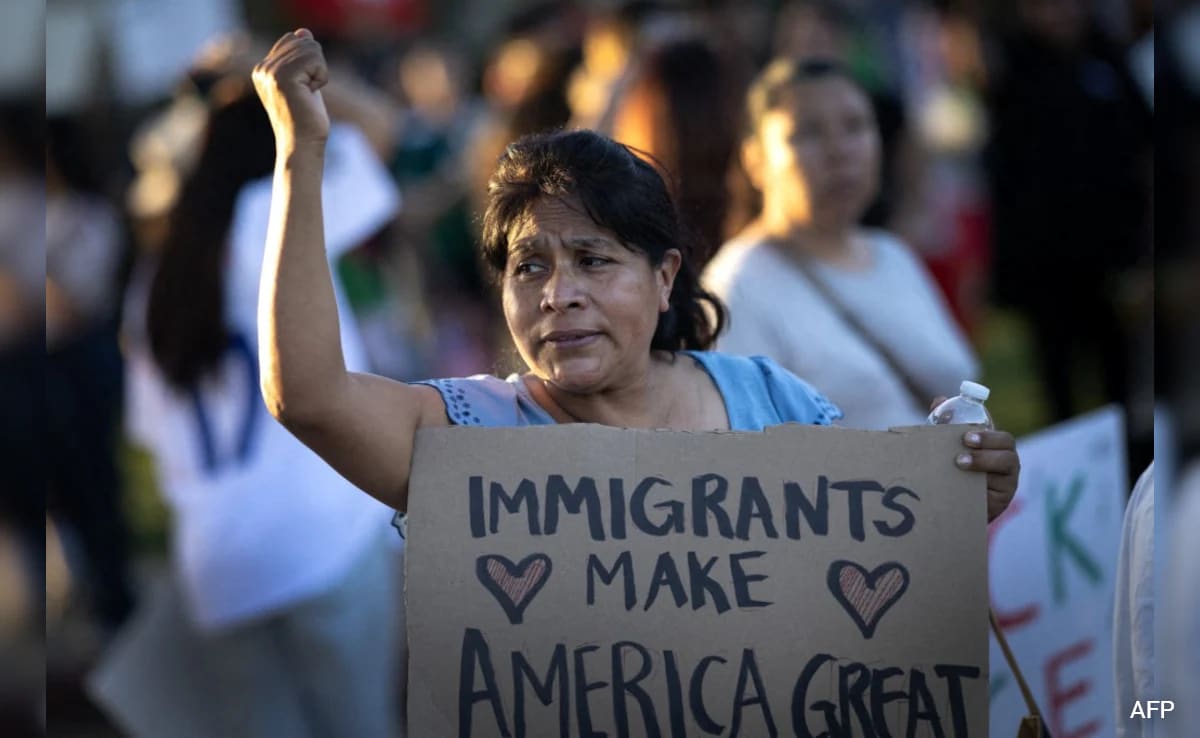
The year 2025 began with President Trump implementing comprehensive anti-immigration measures across America.
Immigration emerged as the dominant global issue in 2025, with numerous Western governments introducing restrictive policies to limit migrant inflows. The year commenced with US President Donald Trump executing his extensive anti-immigration agenda, featuring enhanced border security and travel prohibitions affecting dozens of nations. Various factors including conflicts, economic challenges, and housing shortages intensified tensions, establishing immigration as a primary global political concern.
The year also witnessed widespread anti-immigration demonstrations from London to Sydney and Toronto, sparked by increasing opposition to long-standing open-border policies. While each country confronted unique challenges, a common theme emerged across nations: governments' inadequate management of migration flows, particularly in prioritizing skilled immigrants over low-skilled workers and refugees.
Here's an examination of the five most significant immigration crackdowns of 2025.
United States
Photo Credit: AFP
Following Donald Trump's January 2025 inauguration, his administration has intensified immigration enforcement, pledging to deport millions of migrants – a central component of the Republican president's reelection campaign. Measures have included Immigration and Customs Enforcement (ICE) operations in major US cities like Los Angeles, Chicago, and prestigious American university campuses. These actions were followed by immigration arrests, deportation flights, and an executive order suspending refugee admissions while implementing stricter visa regulations.
Last month, after the shooting incident near the White House, Trump strengthened his anti-immigration position by expanding the 2025 travel ban, initially targeting 19 countries but potentially growing to include up to 30 nations. The Trump administration frequently cites national security concerns to advance its immigration agenda, with supporters arguing these measures are necessary to address system vulnerabilities allegedly exploited by immigrants entering or already residing in the United States.
Canada
Photo Credit: AFP
Canada has begun restricting entry for visitors and temporary residents by approving fewer visas and rejecting more individuals arriving at its borders with official documentation. Ottawa's restrictions on international students have particularly affected Indian applicants, according to government statistics. Approximately 74 percent of Indian applications for Canadian post-secondary study permits in August were rejected, compared to roughly 32 percent in August 2023, according to immigration department data provided to Reuters.
Prime Minister Mark Carney's government has proposed the Strong Borders Act (Bill C-2), which increases restrictions on asylum applications by prohibiting migrants who have been in Canada for over one year from seeking asylum. Currently, there is no time limitation for migrants to file asylum claims.
Australia
Photo Credit: AFP
Australia similarly implemented immigration restrictions in 2024-2025 to address housing pressures resulting from rapid population growth through newcomers. Regulations targeted low-wage temporary migrants and students, emphasizing high-skilled permanent residents to reduce overall migration. Prime Minister Anthony Albanese's government eliminated the Business Innovation and Investment Program, redirecting focus toward skilled migration instead.
A recent study revealed that immigration concerns at the 2025 Australian election doubled to 6 percent, the highest ever recorded, attributed to "the post-pandemic influx of immigrants and the resulting pressure on housing and infrastructure." Simon Jackman, co-author of the long-running Australian Election Study, noted: "Immigration is clearly getting more political oxygen in the last few months than in the campaign."
United Kingdom
Photo Credit: AFP
In its most significant immigration reform in nearly fifty years, the UK plans to introduce new regulations to address rising immigration figures. According to Keir Starmer's government, the new policy aims to reward those who contribute positively and follow rules. The policy will double the standard qualifying period for settlement status in Britain to 10 years and implement stricter English language requirements, with assessments of language skill improvements integrated into visa regulations for applicants and their dependents.
Overseas student visas, a category dominated by Chinese and Indian applicants, may also see the post-study graduate route visa reduced from the current two years to 18 months.
European Union (EU)
Photo Credit: AFP
While the EU hasn't implemented immigration crackdowns as extensive as the US, its policy shift remains significant. Across the political spectrum, centrists are joining conservatives to advocate stricter policies on undocumented migrants and reduce protections to facilitate deportations.
Denmark's "zero" refugee policy has become a popular model that other EU member states seek to replicate. According to a New York Times report, European Union officials are developing new regulations that would help transfer asylum seekers to third countries. The bloc recently arranged to deploy agents in Bosnia and Herzegovina, a non-EU member, to enhance border security.
Source: https://www.ndtv.com/world-news/us-canada-to-uk-a-look-at-5-biggest-immigration-crackdowns-of-2025-9777997