
Pakistan's Field Marshal Asim Munir Threatens Swift Response to Any Indian Aggression as Chief of Defence Forces
- Date & Time:
- |
- Views: 48
- |
- From: India News Bull
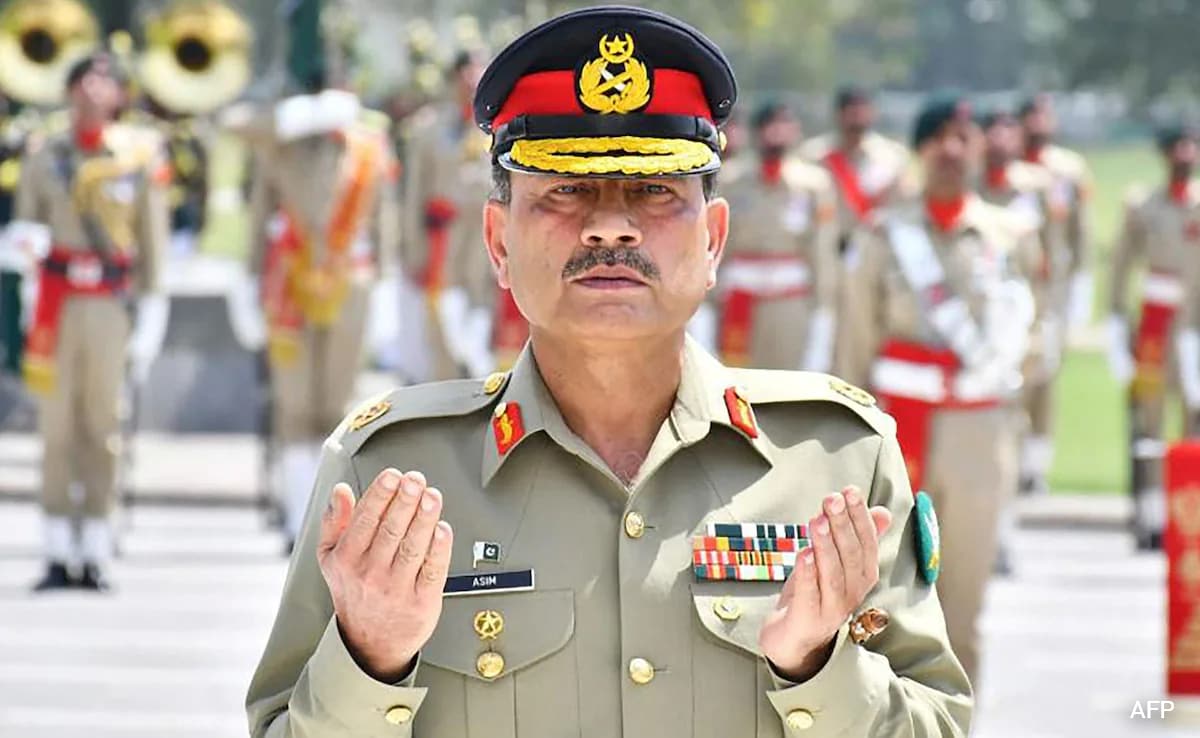
Asim Munir was presented with a guard of honour by contingents of all three services
Pakistan's newly appointed Chief of Defence Forces (CDF), Field Marshal Asim Munir, has issued another provocative statement against India, cautioning that any future aggression would face an even more "swift, severe, and intense" response.
"India should not be in any delusion [as] Pakistan's response [in case of any aggression] will be even more swift and intense," stated Munir during a ceremony honoring his appointment as Pakistan's first CDF, where he addressed officers of the armed forces.
India conducted Operation Sindoor on May 7, targeting terrorist infrastructure in Pakistan and Pakistan-occupied Kashmir following the Pahalgam attack that resulted in 26 civilian casualties. The military actions ended after four days of intense confrontations with an understanding reached on May 10.
Munir claimed Pakistan is peace-loving but emphasized that no one would be permitted to challenge Islamabad's territorial integrity or sovereignty.
During the ceremony, the Field Marshal received a guard of honour from contingents representing all three services – the Pakistan Army, Pakistan Navy and Pakistan Air Force.
Addressing Pakistan-Afghanistan tensions, Munir delivered a clear message to the Afghan Taliban regime in Kabul. "The (Afghan) Taliban have no option but to choose between Fitna al-Khawarij [TTP] and Pakistan," he declared.
The Pakistani government previously designated the banned Tehreek-e-Taliban Pakistan as "Fitna al-Khawarij," referencing a historical Islamic group associated with violence.
Munir described the newly established Defence Forces Headquarters as representing a fundamental historic change.
"In view of the growing and changing threats, it is necessary that we further improve multi-domain operations under the unified system of the three forces," he emphasized.
He noted that each service would maintain its unique operational preparedness, with the CDF headquarters coordinating service operations.
The event was attended by Pakistan Air Force Chief, Air Chief Marshal Zaheer Ahmed Baber Sidhu, Chief of the Naval Staff Admiral Naveed Ashraf, and senior officers from all military branches.
Munir assumed his role as the first CDF after the government issued an official notification appointing him for a five-year term; he will simultaneously serve as Chief of Army Staff.
The CDF position consolidates Munir's authority over all three service branches and grants him oversight of the National Strategic Command, which manages Pakistan's nuclear weapons and missile systems, making him the country's most powerful military figure.
The CDF was established following the 27th Constitutional Amendment last month and subsequent modifications to the Pakistan Army, Air Force, and Navy (Amendment) Bills 2025.
This isn't Munir's first provocative statement against India. While Pakistan conducted airstrikes on Afghan civilians in October, Munir escalated anti-India nuclear rhetoric, claiming Islamabad's growing military capabilities could "shatter the misconceived immunity of India's geographical warspace."
Munir delivered a similar provocative speech days before terrorists killed 26 civilians in Jammu and Kashmir's Pahalgam, referring to Kashmir as Islamabad's "jugular vein."
Amid Munir's power consolidation, India has issued a strong observation regarding Pakistan's political situation, stating that "democracy and Pakistan don't go together."
Ministry of External Affairs spokesperson Randhir Jaiswal, responding to a question about diminishing democratic institutions in Pakistan, noted that India was monitoring events but would not elaborate further.
His remarks came during a weekly press briefing following a question about Pakistan's democratic situation, particularly concerning former prime minister Imran Khan and ongoing demonstrations.
"We keep a close eye on every development in Pakistan. But regarding democracy, you're saying that 'democracy in Pakistan is becoming weak and its strengths are being weakened'. Democracy and Pakistan don't go together. The less we talk the better," he stated.
Source: https://www.ndtv.com/world-news/asim-munirs-new-anti-india-rhetoric-in-1st-address-as-paks-defence-chief-9775736