
Explained: What Wider Recognition Of Palestine Means For Palestinians, Israel?
- Date & Time:
- |
- Views: 67
- |
- From: India News Bull
Israel's primary ally, the United States, has consistently stated its support for a Palestinian state as a long-term objective (File)
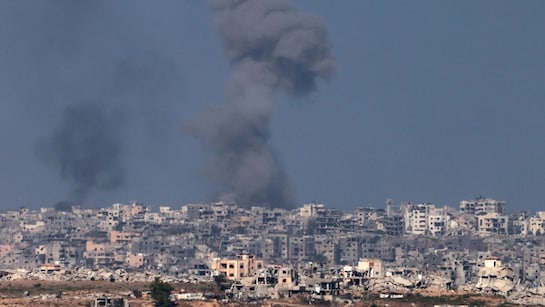
Several additional nations are anticipated to formally acknowledge a Palestinian state at a global summit organized by France and Saudi Arabia on Monday, following Australia, Britain, Canada, and Portugal's recognition decisions that angered Israel.
WHAT IS THE CURRENT STATUS OF PALESTINIAN STATEHOOD?
The Palestine Liberation Organization declared an independent Palestinian state in 1988, with most of the global South quickly extending recognition. Currently, approximately 150 of the 193 United Nations member states have recognized this claim.
The United States, Israel's main ally, has consistently expressed support for a Palestinian state, but maintains this should only occur after Palestinians and Israel agree on terms for a two-state solution through negotiations. Until recently, major European powers shared this position.
However, no Israeli-Palestinian negotiations have taken place since 2014, and Israeli Prime Minister Benjamin Netanyahu has now stated that a Palestinian state will never exist.
A delegation representing the State of Palestine holds observer status at the United Nations but lacks voting rights. Regardless of how many countries recognize Palestinian independence, full UN membership would require Security Council approval, where Washington possesses veto power.
Palestinian diplomatic missions worldwide operate under the Palestinian Authority, internationally recognized as representing the Palestinian people.
The PA, led by President Mahmoud Abbas, exercises limited self-governance in parts of the Israeli-occupied West Bank under agreements with Israel, issuing Palestinian passports and managing Palestinian health and education systems.
Hamas has administered the Gaza Strip since 2007, when it expelled Abbas's Fatah movement following a brief civil war.
WOULD COUNTRIES ESTABLISH NEW EMBASSIES?
Palestinian diplomatic missions in countries recognizing a Palestinian state are expected to be upgraded to full embassy status. However, countries are unlikely to establish new fully-operational embassies in Palestinian territories, where Israel controls access.
Approximately 40 countries maintain consulates or representative offices either in the PA's West Bank base of Ramallah or in parts of Jerusalem captured by Israel in 1967, where Palestinians hope to establish their capital.
Israel considers Jerusalem its undivided capital. Most fully-operational embassies in Israel are located in Tel Aviv, though the United States relocated its embassy to Jerusalem during President Donald Trump's administration.
WHAT IS THE PURPOSE OF RECOGNIZING A PALESTINIAN STATE?
Countries moving to recognize a Palestinian state indicate the action aims to pressure Israel to end its devastating Gaza offensive, limit construction of new Jewish settlements in the occupied West Bank, and recommit to a peace process with Palestinians.
French President Emmanuel Macron, the first major Western leader to endorse recognition, stated the move would include a commitment by the PA to implement reforms, improving Palestinian governance and establishing it as a more credible partner for post-war Gaza administration.
WHAT HAS RECOGNITION MEANT PRACTICALLY?
Critics who view recognition as merely symbolic point to the limited influence in the conflict from countries such as China, India, Russia, and many Arab states that recognized Palestinian independence decades ago.
Without full UN membership or border control, the PA has restricted capacity to conduct bilateral relations.
Israel limits access for goods, investment, and educational or cultural exchanges. There are no Palestinian airports. The landlocked West Bank is accessible only through Israel or the Israeli-controlled border with Jordan, and Israel now controls all access to Gaza since capturing its border with Egypt during the ongoing conflict.
Nevertheless, countries planning recognition and the PA itself maintain that recognition would be more than symbolic.
Husam Zomlot, head of the Palestinian mission to the UK, suggested it could facilitate partnerships between entities on equal footing.
It might also prompt countries to review aspects of their relationships with Israel, according to Vincent Fean, a former British diplomat in Jerusalem.
For Britain, this could result in prohibiting products from Israeli settlements in occupied Palestinian territories, though the practical economic impact on Israel would be minimal.
HOW HAVE ISRAEL AND THE UNITED STATES RESPONDED?
Israel, facing international criticism over its conduct in Gaza, claims that recognition rewards Hamas for the attacks on Israel that triggered the war in October 2023.
"A Palestinian state will not be established west of the Jordan River," Prime Minister Benjamin Netanyahu declared.
The United States opposes recognition moves by its European allies. It has imposed sanctions on Palestinian officials, including preventing Abbas and other PA representatives from attending the UN General Assembly by denying and revoking visas.