
Global Aviation Crisis: 5 Major System Failures That Disrupted Air Travel in 2025
- Date & Time:
- |
- Views: 45
- |
- From: India News Bull
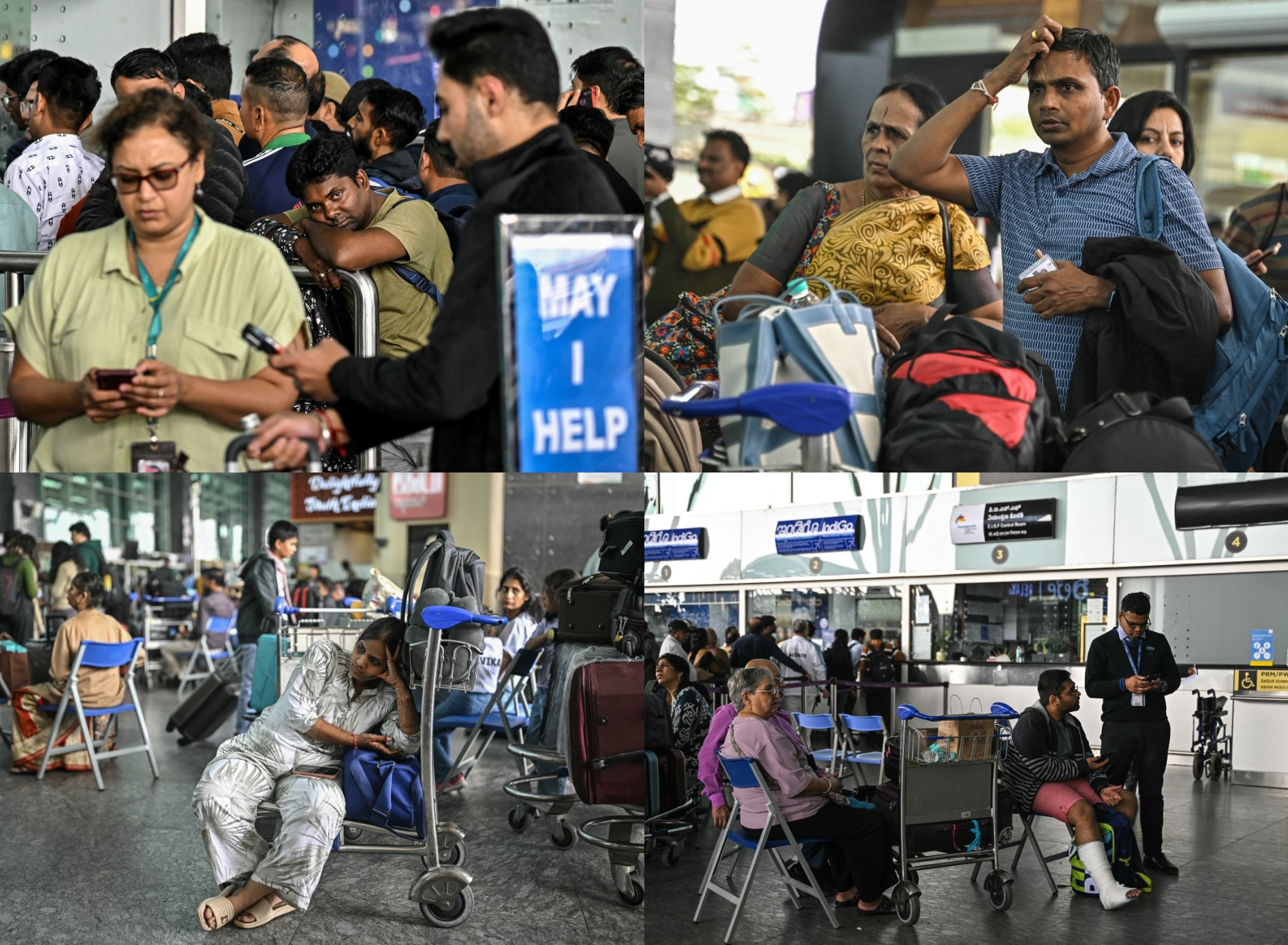
IndiGo, India's largest domestic carrier, experienced its most severe operational crisis this month, disrupting travel nationwide.
The aviation industry faced unprecedented challenges throughout 2025, with several significant disruptions affecting thousands of travelers globally. These incidents revealed critical vulnerabilities in aviation systems, digital infrastructure, and regulatory frameworks.
Unlike typical weather-related delays, these major events stemmed from fundamental system failures, including aircraft safety defects, air traffic control breakdowns, and severe operational difficulties.
Let's examine the five most significant aviation disruptions that impacted global air travel in 2025:
1. Airbus A320 Solar Radiation Safety Crisis
In late November, aviation faced widespread disruption when Airbus mandated urgent safety inspections and software updates for its A320 family aircraft. Engineers discovered that intense cosmic radiation from solar activity could interfere with critical altitude data computers on approximately 6,000 A318, A319, A320, and A321 aircraft worldwide.
European, British, and American regulators issued emergency airworthiness directives, restricting affected aircraft to passenger-free "ferry flights" until repairs could be completed. While UK airports experienced minimal delays, carriers such as British Airways and Air India reported limited impact on their operations.
Airbus confirmed on November 28 that solar radiation could corrupt data "critical to the functioning of flight controls." The manufacturer implemented immediate precautionary measures through an Alert Operators Transmission, later formalized in an Emergency Airworthiness Directive by the European Union Aviation Safety Agency. Though Airbus acknowledged "operational disruptions," they emphasized that safety remained paramount.
Sources indicated most aircraft required "a few hours" to update, while approximately 1,000 planes needed work spanning "weeks." In India, roughly 3,438 aircraft were affected, with Indian carriers operating about 560 A320-family aircraft—one of the world's largest such fleets. IndiGo, Air India, and Air India Express faced the most significant impact.
2. US Federal Government Shutdown Aviation Crisis
A political impasse in the United States triggered major aviation disruptions when a federal government shutdown beginning October 1 left essential aviation personnel either working without pay or furloughed. As unpaid air traffic controllers increasingly missed work due to stress and financial pressure, major airports experienced unprecedented delays and cancellations.
The shutdown, which ended on November 12 after becoming the longest in US history, cost Delta Air Lines approximately $200 million according to CEO Ed Bastian.
The Federal Aviation Administration implemented emergency measures requiring commercial airlines to reduce domestic flights by up to 6%. Transportation Secretary Sean Duffy stated this decision was essential for maintaining safety standards.
Flight cancellations affected forty US airports starting November 7, including major hubs in New York, Atlanta, Los Angeles, and Chicago. At twelve of these locations, the FAA also restricted business jets and private flights from landing.
Key statistics revealed that 5.2 million passengers faced shutdown-related delays or cancellations since October 1, according to Airlines for America. FlightAware data showed 10,100 flights were canceled between November 7 and November 12. Denver, Atlanta, Chicago, Dallas, and New York experienced the highest cancellation rates, while smaller regional carriers like SkyWest and Republic suffered disproportionately as they operated many routes cut by major airlines.
3. UK Air Traffic Control System Failure
On July 30, the United Kingdom experienced a significant air traffic control outage causing widespread disruption at airports throughout the country and beyond. Though the technical fault lasted only 20 minutes, it resulted in approximately 150 flight cancellations and delays extending into the following day.
NATS, the UK's air traffic control operator, attributed the issue to a "radar-related" problem in the display system at their Swanwick control center. They quickly resolved the situation by activating their backup systems.
The disruption affected Heathrow Airport, Britain's largest and Europe's busiest air hub. Ryanair reported that the disruption persisted for "over four hours," causing numerous delays and diversions that inconvenienced thousands of travelers. The airline characterized the problem as "utterly unacceptable" and called for the resignation of Martin Rolfe, the air traffic control provider's chief executive.
This incident, while serious, was less severe than the major outage in August 2023, which affected over 700,000 passengers and resulted in 500 flight cancellations.
4. London Heathrow Substation Fire Emergency
Europe's busiest airport, London Heathrow, faced a near-complete 24-hour shutdown following a major fire at the North Hyde high-voltage substation on March 20. The blaze, which erupted at 11:21 pm approximately 3 kilometers north of the airport, forced a comprehensive closure of operations throughout most of March 21.
The shutdown impacted 1,350 flights and nearly 300,000 passengers, resulting in millions of dollars in losses for airlines.
London Fire Brigade contained the fire by 6:28 am on March 21, though crews remained on-site due to lingering hotspots. The incident also caused power outages in 67,000 homes.
A comprehensive investigation by the National Energy System Operator concluded that moisture infiltrating wire insulation "most likely" caused the fire. The report also revealed that National Grid, the substation's owner, had been aware of the issue since 2018.
5. IndiGo Operational Crisis
IndiGo, India's largest domestic airline, plunged into an unprecedented operational crisis when a wave of flight cancellations and delays began in early December. The disruption stranded thousands of passengers and created chaos across major Indian airports.
The first mass cancellations appeared on December 2. By December 3, at least 150 flights were canceled across Delhi, Bengaluru, Hyderabad, and Mumbai. The situation deteriorated rapidly in subsequent days, with IndiGo canceling more than 2,000 flights daily due to severe staff shortages and implementation challenges with new crew regulations.
Major Indian aviation hubs—including Delhi, Mumbai, Bengaluru, and Hyderabad—experienced extensive queues, stranded passengers, baggage issues, and last-minute cancellations even after boarding or check-in procedures were completed. Thousands of travelers missed important events such as weddings, business meetings, and medical appointments, often incurring substantial costs for emergency rebookings.
Despite ongoing challenges, flight operations began showing gradual improvement. IndiGo reported operating 706 flights on Friday, increasing to 1,565 on Saturday, with expectations of reaching approximately 1,650 flights on Sunday. Of its 2,300 scheduled domestic and international flights, 650 remained canceled. The airline maintained operations at 137 of its 138 destinations and announced comprehensive waivers for cancellations and rescheduling requests for bookings through December 15.
Delhi airport reported 118 canceled flights on Sunday, while Mumbai airport experienced 121 cancellations. IndiGo anticipated a return to normal operations between December 10 and 15.
Source: https://www.ndtv.com/world-news/turbulence-in-aviation-5-major-failures-that-shook-global-travel-in-2025-indigo-crisis-us-shutdown-airbus-a320-solar-radiation-london-heathrow-fire-9770912