
Did the Trump Administration Commit War Crimes in Caribbean Maritime Drug Operations? A Legal Analysis
- Date & Time:
- |
- Views: 42
- |
- From: India News Bull
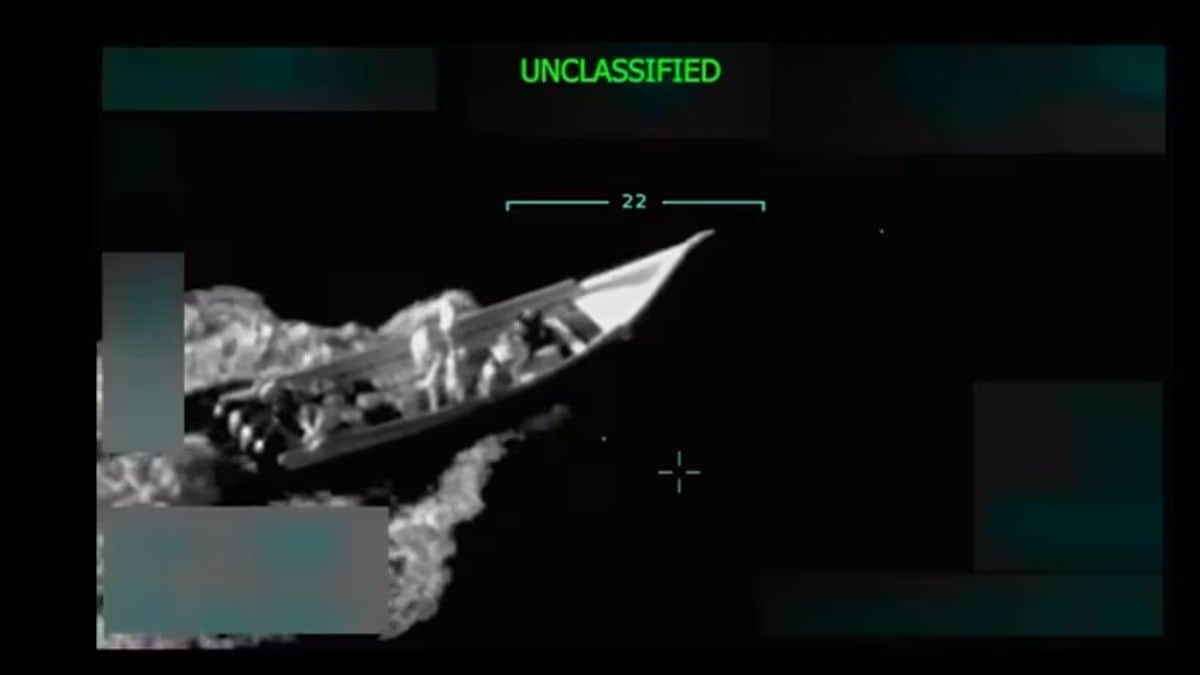
This screengrab shows a video posted on Donald Trump's Truth Social account on Tuesday.
Congressional members have announced investigations into whether US military actions violated the law by allegedly killing two survivors of a Caribbean strike on a suspected drug trafficking vessel. The White House maintains the strike was conducted lawfully.
Here we examine potential legal violations in the attack, which human rights organizations have described as potentially constituting murder or a war crime.
The White House confirmed that US Defense Secretary Pete Hegseth authorized strikes on September 2 that destroyed a Caribbean vessel carrying 11 individuals. This attack marked the beginning of a campaign against suspected drug traffickers operating near Venezuela's coast.
Hegseth, who has pledged to reestablish a "warrior culture" within military ranks, faces scrutiny following a Washington Post report claiming the operation's commander ordered a second strike to kill two survivors clinging to wreckage, allegedly to fulfill the Pentagon chief's directive that everyone be eliminated.
White House officials have refuted the Post's report, though circumstances surrounding the attack remain unclear.
Hegseth stated he observed the initial strike remotely in real time but did not witness survivors in the water before attending another meeting. He later learned Admiral Frank Bradley had ordered a subsequent strike.
While Hegseth and the White House have not acknowledged survivors from the first attack, they have defended the follow-up strike. Trump indicated he would not have authorized a second strike and promised to investigate the incident.
Hegseth expressed support for Bradley's operational handling, stating "we have his back."
Since September 2, at least 21 strikes on suspected drug shipments have occurred, resulting in over 80 fatalities. These operations coincide with the Trump administration's intensified pressure campaign against Venezuelan President Nicolas Maduro, whom the administration considers illegitimate.
Under both US and international law, killing suspected drug traffickers who pose no imminent threat of serious injury to others constitutes murder. However, the United States has characterized these attacks as warfare against drug cartels, classifying them as armed groups.
Administration officials maintain these operations comply with international regulations known as the law of war or armed conflict. These laws require distinguishing between civilians and combatants, avoiding disproportionate civilian harm, limiting force to legitimate military objectives, and preventing unnecessary suffering.
These laws permit deadly force in self-defense, and the Trump administration argues drug cartels pose an immediate threat to the United States, describing illegal narcotics as weapons responsible for thousands of American deaths.
Human rights organizations including Amnesty International have condemned these operations as murder, with multiple legal experts noting drug cartels do not match the internationally accepted definition of armed groups, which are understood as organizations like al Qaeda capable of sustained violent attacks supporting political or ideological objectives.
Critics contend that designating these groups as terrorists does not legitimize the attacks. US strikes against al Qaeda were considered legal not because of terrorist designation but because Congress authorized military action against groups linked to the September 11, 2001 attacks.
Congress, which holds war declaration authority, has not authorized military action against drug cartels.
Even if Congress had authorized the anti-trafficking boat campaign, some former military lawyers assert that the September 2 second strike against survivors would violate war law and constitute a war crime if military personnel knowingly targeted survivors.
The Defense Department's Law of War Manual prohibits attacks on incapacitated, unconscious, or shipwrecked combatants who abstain from hostilities or aren't attempting escape. The manual specifically cites firing upon shipwreck survivors as a "clearly illegal" order that should be refused.
US lawmakers can challenge these operations through subpoenas, presidential military force limitations, and funding restrictions.
While Republicans controlling Congress have generally avoided confronting the president, some party members have expressed growing concerns about these strikes. Bradley faces questioning from Congressional members in a classified briefing on Thursday.
Legal challenges would encounter significant obstacles in US courts, as judges typically defer to presidential security decisions, and standing to sue remains unclear.
The only survivors from the four-month campaign have returned to their home countries. Had they been detained, they might have challenged their detention and the strikes' legality, according to legal experts.
US allies including France have raised concerns about the strikes' legality, though international tribunals likely won't enforce action. The United States isn't an International Criminal Court signatory, which handles serious, large-scale war crimes cases. The US maintains veto power at the UN Security Council.
US military and Justice Department authorities can investigate and pursue charges against law violators.
Investigators must determine who ordered the second strike, the order's intent, the boat's post-first-strike navigability, survivor presence, and when survivors were discovered.
If investigations confirm unlawful killings occurred, prosecutors could pursue murder or war crime charges. Both Hegseth and Bradley could face legal liability, though precedent for combat-related charges against senior officers is limited.
As a civilian, Hegseth would face Justice Department investigation and federal court prosecution.
US military members have previously been convicted of war crimes, and high-ranking officers have faced convictions for personal misconduct through military justice channels.
Bradley and other military personnel involved could face court-martial prosecution. Defendants cannot claim they followed orders if those orders were clearly illegal. They might argue Hegseth's statements unfairly prejudiced their prosecution.
Trump could pardon anyone convicted of federal or war crimes.
Source: https://www.ndtv.com/world-news/explained-did-trump-administration-commit-war-crime-in-boat-attack-off-venezuela-9750406