
LandSpace: China's Rising SpaceX Competitor in Reusable Rocket Technology
- Date & Time:
- |
- Views: 64
- |
- From: India News Bull
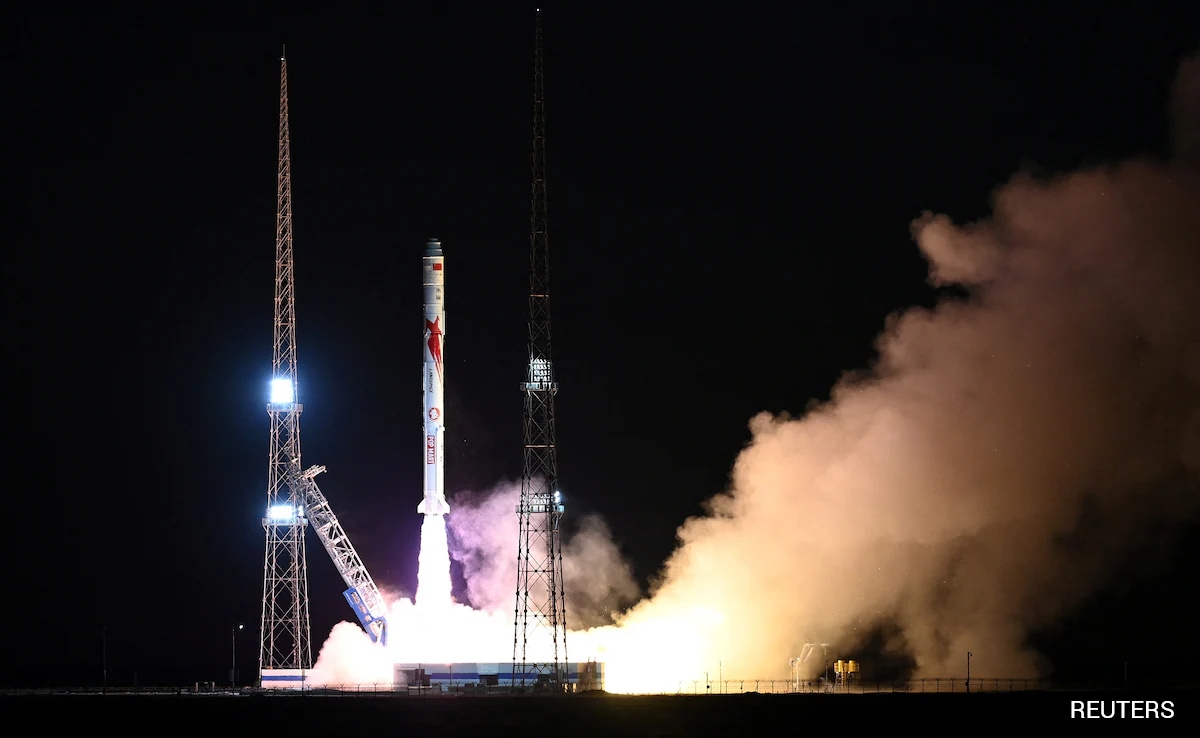
The Zhuque-2 Y-3 carrier rocket, a methane-liquid oxygen rocket developed by Chinese company LandSpace.
Beijing:
LandSpace has emerged as China's most sophisticated private rocket company and the nation's closest rival to Elon Musk's SpaceX, following the American approach of investing in reusable rocket technology.
LandSpace, established in 2015 and headquartered in Beijing, was among the pioneer startups entering China's space industry after the government opened segments of its space sector to private investment in 2014.
The company has secured billions of yuan from various investors including venture capital firm HongShan (formerly Sequoia Capital China), Country Garden's investment division, and the state-supported China SME Development Fund.
In 2020, LandSpace raised 1.2 billion yuan ($170 million), followed by an additional 900 million yuan from a state-owned fund supporting advanced manufacturing in December. The company has also received backing from local governments in Huzhou and Jiaxing.
LandSpace made history in July 2023 by launching Zhuque-2, the world's first methane and liquid oxygen-powered rocket, beating American competitors like SpaceX and Jeff Bezos' Blue Origin to this milestone.
The company is now developing Zhuque-3, a significantly larger stainless steel rocket designed to transport approximately 20 to 25 tonnes to low-Earth orbit, which represents several times the capacity of Zhuque-2.
If Zhuque-3 successfully launches and lands intact, LandSpace would become the first private Chinese company—and only the third globally after SpaceX and Blue Origin—to land a large space booster for potential reuse.
This ambitious project positions LandSpace at the forefront of China's private initiatives to develop more economical and reusable rockets, while major state-owned space enterprises advance more gradually in this direction.
Zhuque-3 represents China's first serious endeavor to create a large reusable rocket at a time when Beijing is encouraging private companies to secure international launch contracts and support the deployment of its own extensive satellite networks for communications and Earth observation.
Globally, reusable rockets have attracted substantial interest and investment because they potentially offer significantly reduced costs for satellite deployment. However, the engineering challenges are immense, and so far only SpaceX has achieved regular successful operations with its Falcon 9 rocket.
With Zhuque-3's development and inaugural flight, LandSpace has advanced closer to this goal than any other non-American competitor.
Elon Musk has acknowledged this progress. In October, responding to a social media post about Zhuque-3's design on X, Musk suggested the Chinese rocket could eventually outperform the Falcon 9. SpaceX currently relies on Falcon 9 rockets to expand its Starlink internet constellation, which has substantially more satellites than any competitor in either the US or China.
For Beijing, companies like LandSpace represent an opportunity to combine the expertise of established state space organizations with the agility and innovation of startups, as China works to develop its own Starlink equivalent in the coming years.
After Zhuque-3's maiden launch, LandSpace stated that as low-orbit constellation deployment accelerates, Zhuque-3 will progress from recovery demonstrations to routine reuse and toward airline-style operational frequency, contributing to China's space power objectives and advanced industrial capabilities.
A successful Zhuque-3 program—and the company's efforts to become second only to SpaceX in reusable rocket technology—is expected to strengthen its fundraising potential, including a planned listing on Shanghai's technology-focused Star Market, which was announced in July.
Source: https://www.ndtv.com/world-news/how-landspace-became-spacexs-biggest-chinese-challenger-in-reusable-rockets-9741992