
Amid Trump's H-1B Chaos, China Opens Door For Global Talent With 'K Visa'
- Date & Time:
- |
- Views: 80
- |
- From: India News Bull
Amid Trump's H-1B Visa Fee Surge, China Unveils 'K Visa' to Attract Global Talent
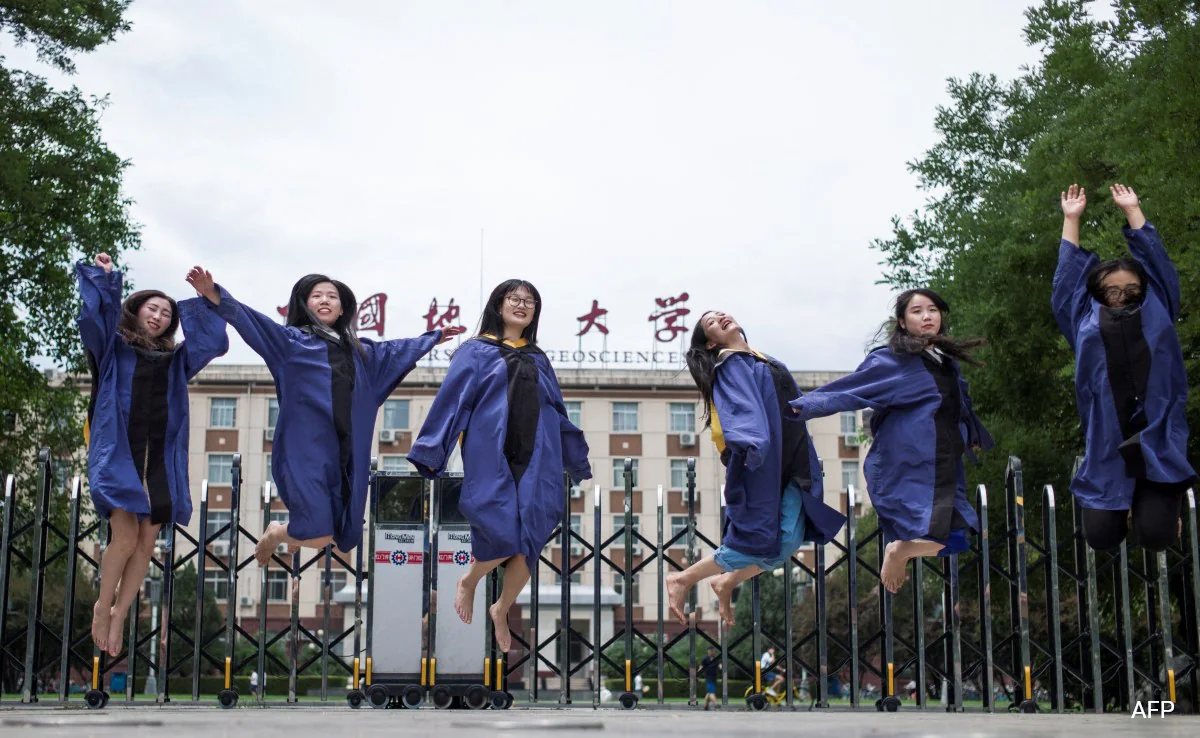
China has witnessed a significant rise in international visitors crossing its borders recently.
Beijing:
While President Donald Trump's newly implemented $100,000 visa fee creates turmoil and uncertainty in the United States, China has revealed a new visa classification targeting young science and technology professionals. The Chinese government is introducing a 'K visa' to its standard visa categories, designed for qualified young science and technology experts.
China's Premier Li Qiang has officially signed a decree authorizing amendments to regulations governing foreigners' entry and exit procedures. According to Xinhua news agency, these updated regulations will become effective on October 1.
K visa provisions offer substantial advantages compared to the existing 12 ordinary visa categories, providing enhanced flexibility regarding permitted entries, validity duration, and length of stay.
Upon entering China, K visa holders will be permitted to participate in educational, cultural, and scientific exchanges, along with related entrepreneurial and commercial activities.
The report indicates that applicants must satisfy qualifications established by relevant Chinese authorities and submit appropriate supporting documentation.
Beyond specific age requirements, educational qualifications, and professional experience, K visa applications do not require sponsorship from a domestic employer or organization, and the application process has been simplified.
In an official statement, Beijing emphasized that national development requires talent from around the world, and China's growth simultaneously creates opportunities for international professionals.
Officials at a press conference explained that this initiative aims to implement China's workforce development strategy for the new era, facilitate entry of young foreign scientific talent, and promote international collaboration among young technology professionals.
This latest development represents China's ongoing efforts to streamline visa regulations and enhance international exchanges. As of late July, China had established unilateral visa-free entry or reciprocal visa-exemption agreements with 75 countries.
Encouraged by these relaxed visa policies—particularly the expansion of visa-free travel programs—China has experienced increasing numbers of international visitors.
According to data from Beijing's National Immigration Administration, foreign nationals made 38.05 million trips to or from China during the first half of 2025—a 30.2 percent increase year-on-year. Of these trips, 13.64 million involved visa-free entries, representing a 53.9 percent increase compared to the same period last year.
Meanwhile, all new H-1B visa petitions submitted after September 21 in the United States, including those for the FY2026 lottery, will require payment of the $100,000 fee, as mandated by President Trump's recent proclamation. Trump presented this substantial fee as part of his effort to safeguard American jobs and national security. Additionally, he introduced a "Trump Gold Card" visa program offering U.S. residency for $1 million.
The U.S. Citizenship and Immigration Services (USCIS) released an H-1B FAQ document on Sunday, stating that the September 19 proclamation represented an "important, initial, and incremental step" toward reforming the H-1B visa program to address abuses and protect American workers.
For international graduate students, the H-1B visa has traditionally provided a crucial pathway to remain in the United States after completing their education. India was the predominant beneficiary of H-1B visas last year, accounting for 71 percent of approved applicants, while China ranked second at 11.7 percent, according to U.S. government statistics.
Trump's policy change is anticipated to compel thousands of young professionals to abandon their American aspirations and seek alternatives elsewhere.