
Trump Confirms Call with Venezuela's Maduro Amid Escalating US Military Presence in the Caribbean
- Date & Time:
- |
- Views: 59
- |
- From: India News Bull
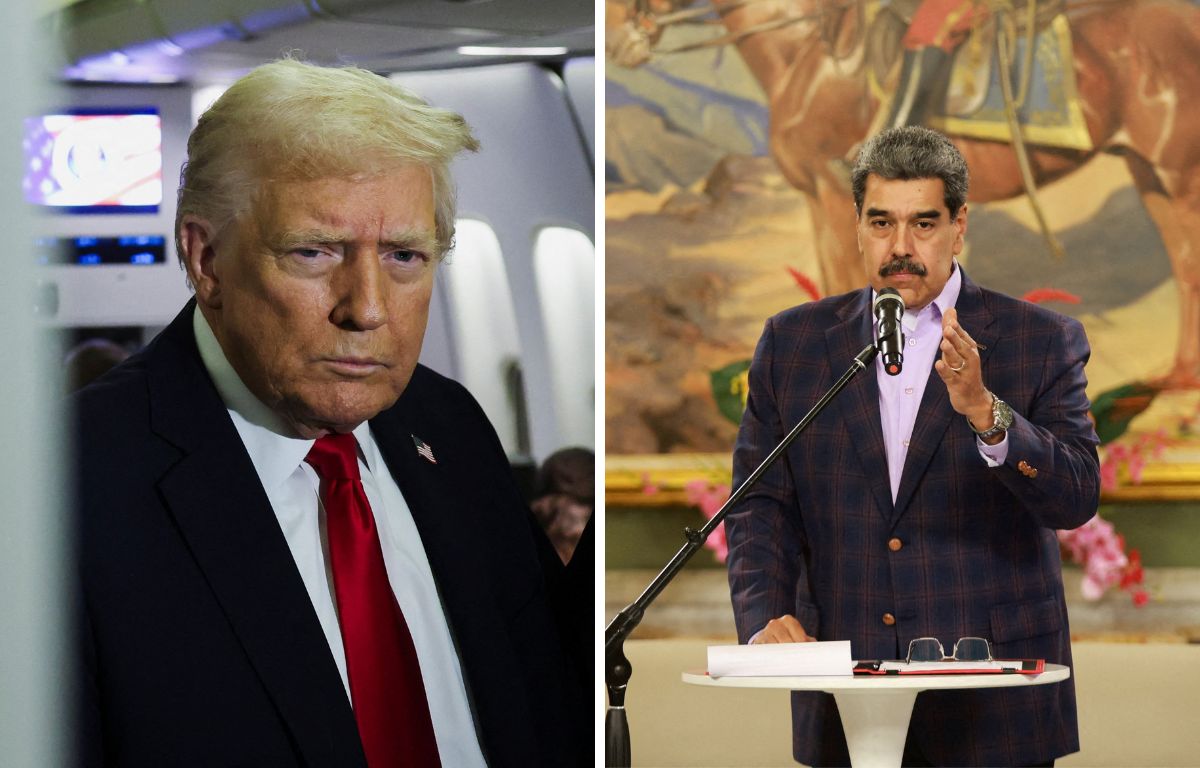
US President Donald Trump confirmed on Sunday that he had recently spoken with Venezuelan leader Nicolas Maduro amid escalating tensions between the two nations, while Venezuela condemned what it described as US preparations for an attack.
The United States has been increasing pressure on Venezuela through a significant military deployment in the Caribbean, designating an alleged drug cartel led by Maduro as a terrorist organization, and Trump issuing a stern warning that Venezuelan airspace is "closed."
While Washington claims the military deployment initiated in September aims to combat drug trafficking in the region, Caracas maintains that regime change is the actual objective.
When asked about the conversation with Maduro, Trump told reporters aboard Air Force One: "I wouldn't say it went well or badly. It was a phone call."
According to The New York Times, Trump and Maduro discussed a potential meeting, while The Wall Street Journal reported that their conversation included amnesty conditions should Maduro step down from power.
Republican Senator Markwayne Mullin stated on CNN's "State of the Union" that the United States has offered Maduro an opportunity to leave Venezuela for Russia or another country.
The United States has accused Maduro, who succeeded Venezuela's late leftist leader Hugo Chavez, of heading the "Cartel of the Suns" and has offered a $50 million reward for his capture. However, Venezuela and its allies insist no such organization exists.
Several Venezuela experts suggest that what Washington calls the Cartel of the Suns actually refers to the corruption of high-ranking officials by criminal organizations.
The United States does not recognize Maduro as the legitimate winner of last year's presidential election.
Although Trump has not publicly threatened military action against Maduro, he recently stated that efforts to halt Venezuelan drug trafficking "by land" would commence "very soon."
Venezuela has requested assistance from the Organization of the Petroleum Exporting Countries (OPEC), of which it is a member, to help "stop this (American) aggression, which is being readied with more and more force."
The request came in a letter from Maduro to the organization, read by Vice President Delcy Rodriguez, who also serves as Venezuela's oil minister, during a virtual OPEC ministerial meeting.
In the letter, Maduro claimed that Washington "is trying to seize Venezuela's vast oil reserves, the biggest in the world, by using military force."
Since September, US air strikes targeting alleged drug-trafficking vessels in the Caribbean Sea and eastern Pacific Ocean have killed at least 83 people.
Trump's administration has not provided concrete evidence supporting the allegations behind its campaign, and numerous experts have questioned the legality of these operations.
US media reported that during one strike in September, the US military conducted a follow-up attack that killed survivors of the initial strike.
The Washington Post and CNN reported that Defense Secretary Pete Hegseth had issued a directive to "kill everybody," but Trump denied this, saying Hegseth had refuted giving such an order.
"We'll look into it, but no, I wouldn't have wanted that -- not a second strike," Trump told reporters. "Pete said he did not order the death of those two men."
Jorge Rodriguez, the head of Venezuela's legislature, stated that he met with relatives of Venezuelans killed in these strikes on Sunday.
While not commenting on a possible Trump-Maduro call, Rodriguez said regarding the reported Hegseth order: "If a war had been declared and led to such killings, we would be talking about war crimes."
"Given that no war has been declared, what happened...can only be characterized as murder or extrajudicial executions," he added.
The ongoing US military buildup has included the deployment of the world's largest aircraft carrier to Caribbean waters, while American fighter jets and bombers have repeatedly flown near Venezuelan coasts in recent days.
Despite six airlines canceling services to Venezuela, Caracas airport was operating normally on Sunday.
Source: https://www.ndtv.com/world-news/donald-trump-nicolas-maduro-us-venezuela-tensions-wouldnt-say-it-went-well-or-badly-trump-on-call-with-venezuelas-maduro-9727737