
From Isolation to Violence: The Troubled Journey of Afghan Refugee Behind White House National Guard Attack
- Date & Time:
- |
- Views: 38
- |
- From: India News Bull
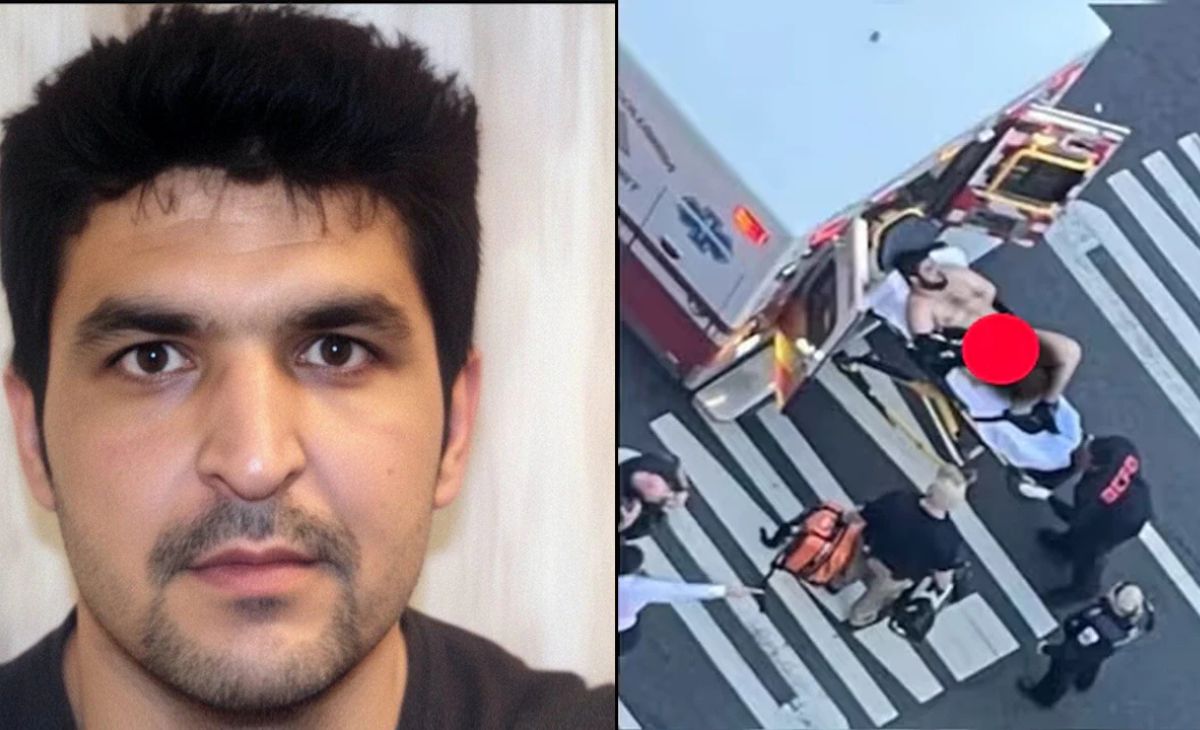
In Afghanistan, Lakanwal served in a specialized Afghan Army unit called a Zero Unit, which received CIA backing.
The Afghan national charged with shooting two National Guard members near the White House had been experiencing a gradual decline for years, struggling with employment stability and alternating between prolonged periods of isolation and impulsive cross-country travel. Rahmanullah Lakanwal's mental state deteriorated to such an extent that a community advocate sought assistance from a refugee organization, concerned about potential suicidal tendencies.
Emails acquired by The Associated Press indicate escalating warnings about the asylum-seeker whose unstable behavior raised concerns well before Wednesday's attack that shocked Washington D.C. on Thanksgiving Eve. These previously undisclosed concerns provide the most comprehensive understanding yet of his difficulties adapting to life in the United States.
Nevertheless, when the community member who assists Afghan families in Washington state learned that Lakanwal was identified as the attack suspect, they expressed shock, finding it difficult to reconcile the violent act with memories of Lakanwal playing with his young children. The individual requested anonymity while sharing private details as they cooperate with the FBI investigation.
West Virginia National Guard Specialist Sarah Beckstrom, 20, lost her life in the shooting, while Staff Sgt. Andrew Wolfe, 24, sustained critical injuries. Lakanwal, 29, faces charges of first-degree murder.
During his time in Afghanistan, Lakanwal worked in a CIA-supported special Afghan Army unit known as a Zero Unit. He entered the United States in 2021 through Operation Allies Welcome, a program that evacuated and resettled tens of thousands of Afghans following the American withdrawal. Many participants had worked alongside US troops and diplomats.
As authorities work to establish a motive, Homeland Security Secretary Kristi Noem stated Sunday on NBC's "Meet the Press" that officials "believe he was radicalized since arriving in this country. We believe it occurred through connections in his home community and state, and we'll continue interviewing those who interacted with him, including family members." She provided no additional evidence supporting this statement.
Lakanwal relocated to Bellingham, Washington with his wife and five sons, all under age 12, but struggled to adapt, according to the community member who shared emails sent to the U.S. Committee for Refugees and Immigrants, a nonprofit organization providing refugee services.
"Rahmanullah has not functioned effectively as a person, father and provider since March of last year, 03/2023. He quit his job that month, and his behavior changed significantly," the person wrote in a January 2024 email.
The correspondence described a man struggling with assimilation, unable to maintain steady employment or commit to English courses while cycling between "periods of dark isolation and reckless travel." Sometimes, he would spend weeks in his "darkened room, communicating with no one, not even his wife or older children." In 2023, the family faced possible eviction after failing to pay rent for several months.
The community member, during an interview, expressed concern that Lakanwal's depression was severe enough that he might harm himself. However, they observed no indications that Lakanwal would commit violence against others.
Lakanwal's family often resorted to sending his toddler sons into his room with the phone or messages because he would not respond to anyone else, according to one email. On occasions when his wife left him with the children for a week to visit relatives, the children would go unbathed, wearing the same clothes, and eating poorly. Their school expressed concerns about these circumstances.
However, there were also "interim" weeks when Lakanwal attempted to make amends and "do the right things," re-engaging with the Washington State Department of Social and Health Services as required by the terms of his U.S. entry.
"But that quickly evolved into 'manic' episodes lasting one or two weeks, where he would take off in the family car, and drive nonstop," the email detailed. He once traveled to Chicago, and another time to Arizona.
Jeanine Pirro, the US attorney in the District of Columbia, stated this past week that Lakanwal drove across the country from Bellingham, approximately 80 miles (130 kilometers) north of Seattle, to Washington D.C.
In response to the emails, the US Committee for Refugees and Immigrants (USCRI) visited Bellingham a few weeks later in March 2024 and attempted to contact Lakanwal and his family, according to the community member, who, after receiving no updates, concluded that Lakanwal had declined their assistance.
USCRI did not immediately respond to requests for comment or clarification.
Source: https://www.ndtv.com/world-news/afghan-man-behind-national-guard-attack-struggled-with-isolation-for-years-9727134