
Elon Musk Defends H-1B Visa Program Despite Acknowledging System Abuse: America Needs Global Talent
- Date & Time:
- |
- Views: 72
- |
- From: India News Bull
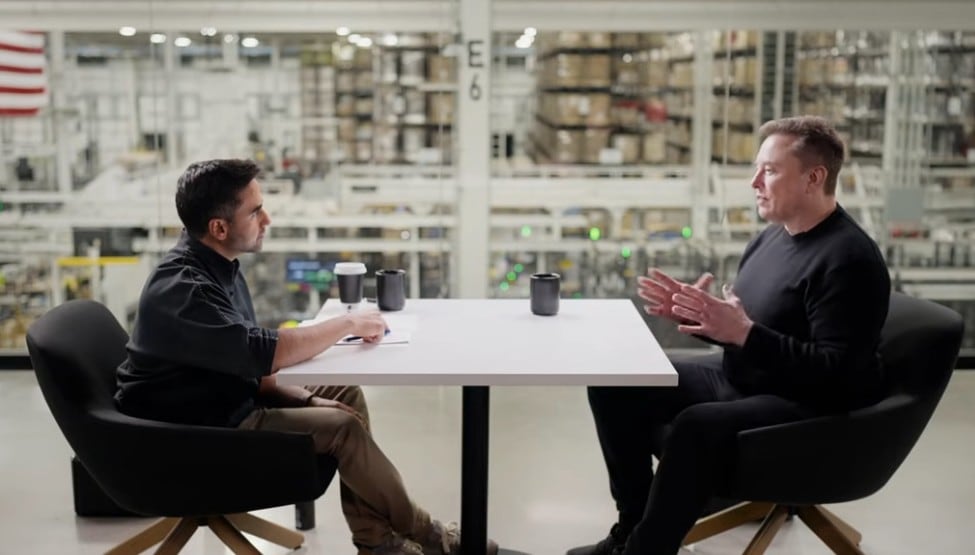
Elon Musk recently highlighted America's significant benefits from talented Indian professionals during his appearance on Zerodha co-founder Nikhil Kamath's "People by WTF" podcast. The tech entrepreneur explained that certain American anti-immigration sentiments stemmed from alleged "misuse" of the H-1B visa program and previous administration's unrestricted approach.
His comments arrive at a time when numerous Indians face increasing challenges with their American aspirations, as heightened visa restrictions and policy uncertainties threaten their dreams of quality education, prosperous careers, and improved living standards.
Addressing perceptions that immigrants take American jobs, Musk stated, "I don't know how real that is. My direct observation is that there's always a scarcity of talented people. From my standpoint, we have significant difficulty finding enough talented individuals for complex tasks, so more talented people would be beneficial."
The billionaire, who leads Tesla, SpaceX, X, and XAI, emphasized that his companies prioritize recruiting "the most talented people in the world."
While acknowledging "some misuse of the H-1B visa" program and noting that "outsourcing companies have kind of gamed the system," Musk firmly opposes eliminating the program. "I'm certainly not in the school of thought that we should shut down the H-1B program. I think they don't realize that would actually be very bad," he remarked.
For many years, H-1B visas have provided opportunities for young engineers and scientists from India, China, and elsewhere to convert their education into well-compensated positions with potential paths to permanent residency.
However, in September, President Trump announced a dramatic fee increase for new H-1B applications to $100,000 (approximately Rs 89,47,000), up from the previous $2,000-$5,000 employer sponsorship costs. This decision followed calls from supporters to restrict H-1B visas amid claims of program abuse and allegations that visa holders were displacing American workers.
More recently, Trump modified his stance, stating he would "welcome" skilled immigrants who can "teach" American workers to develop sophisticated products like semiconductor chips and missiles. He acknowledged that companies cannot establish major chip manufacturing facilities "with people that don't even know what a chip looks like," defending the H-1B program by noting America must attract global talent to address domestic skill gaps.
According to US government data, India dominated H-1B visa approvals last year, representing 71 percent of beneficiaries, while China followed at just 11.7 percent. These visas, typically valid for three years and renewable for an additional three, have enabled US technology firms to employ millions of skilled foreign professionals to fill crucial talent shortages.
During the podcast, Musk also addressed border control issues, criticizing the Biden administration's approach: "Under the Biden administration, it was basically a total free-for-all with no border controls. Unless you've got border controls, you're not a country. You had massive amounts of illegal immigration under Biden. It actually had somewhat of a negative selection effect, creating a diffusion gradient for people to come to the US due to government benefits incentives. That obviously made no sense. You've got to have border controls. It's kind of ridiculous not to."
Source: https://www.ndtv.com/world-news/elon-musk-on-nikhil-kamath-podcast-us-benefitted-immensely-from-indians-9726041