
How New Visa Rules By Trump Is Shattering American Dream For Many Indians
- Date & Time:
- |
- Views: 62
- |
- From: India News Bull
Donald Trump's recent proclamation mandates a $100,000 fee for H-1B visa applications, disrupting countless career plans.
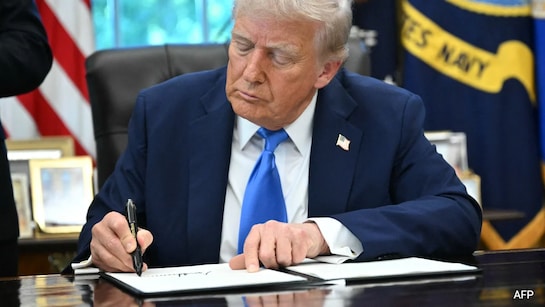
For Sudhanva Kashyap, a 21-year-old aerospace engineering student from Bengaluru, the American dream suddenly became far less attainable. His carefully constructed plans to attend a prestigious American university like Stanford now face unexpected obstacles due to Washington's abrupt visa policy changes.
The modifications to the sought-after H-1B visas, particularly the introduction of a substantial $100,000 fee, have sent shockwaves through the technology sector and left American companies grappling to understand the implications.
Adding to the confusion, the White House hastily clarified that the new charge would be a one-time payment rather than the annual fee initially announced by US Commerce Secretary Howard Lutnick while standing alongside Trump in the Oval Office.
The policy change has profoundly affected students like Kashyap who had envisioned transitioning from American universities into the US job market. "When the fee was lower, converting a student visa to an H-1B seemed achievable," Kashyap told AFP. "I'm very disappointed... my primary dream has been derailed as things currently stand."
H-1B visas enable companies to sponsor foreign specialists—including scientists, engineers, and computer programmers—for work in the United States, initially for three years with possible extension to six.
The United States distributes 85,000 H-1B visas annually through a lottery system, with Indian nationals comprising approximately three-quarters of recipients.
During the Oval Office announcement, Lutnick detailed the visa changes while Trump simultaneously introduced a $1 million "gold card" residency program he had previously mentioned months earlier.
The uncertainty prompted several leading companies to advise their H-1B visa-holding employees against international travel while they assessed the implications. Some employees who had already boarded flights disembarked, fearing potential re-entry complications.
Statistics from the US Department of Homeland Security reveal that 422,335 Indian students were studying in the United States in 2024, representing an 11.8 percent increase from the previous year.
India's IT industry association Nasscom promptly expressed concerns following Friday's announcement. The organization highlighted potential disruptions to "business continuity" at technology companies and emphasized how Indian IT firms contribute substantially to the US economy while posing "by no means" a security threat.
Shashwath VS, a 20-year-old chemical engineering student in Bengaluru, believes the substantial new fee will discourage companies from sponsoring foreign candidates. "I'll now explore other countries... going to the US was once my priority, but not anymore," Shashwath stated.
He mentioned that many in his position might redirect their ambitions toward countries like Germany, the Netherlands, and the United Kingdom.
Shashwath noted that "Indians contribute significantly to the American economy—whether as students or workers," adding that "they (the US) will also experience negative consequences, in one way or another."
Trump has targeted the H-1B program since his first presidential term, and this latest visa modification represents another component of his extensive immigration crackdown during his second term.
Silicon Valley corporations depend heavily on Indian workers who either relocate permanently to the United States or travel regularly between both countries.
India's expansive outsourcing industry has likewise relied on these work permits for decades, though this dependence has diminished somewhat in recent years.
Industry leader Tata Consultancy Services alone secured approval for more than 5,000 H-1B visas during the first half of fiscal year 2025.
Sahil, a 37-year-old senior manager at an India-based consultancy firm who returned from the United States last year after living there on an H-1B visa for almost seven years, observed that "every second or third person in the IT sector dreams of settling in the US or visiting to work."
He predicted, "We will see fewer Indians migrating to the US in the future. That likely means these individuals will begin exploring opportunities in other countries."