
Ancient Human-Made Neolithic Pits Near Stonehenge Confirmed by Archaeological Research
- Date & Time:
- |
- Views: 56
- |
- From: India News Bull
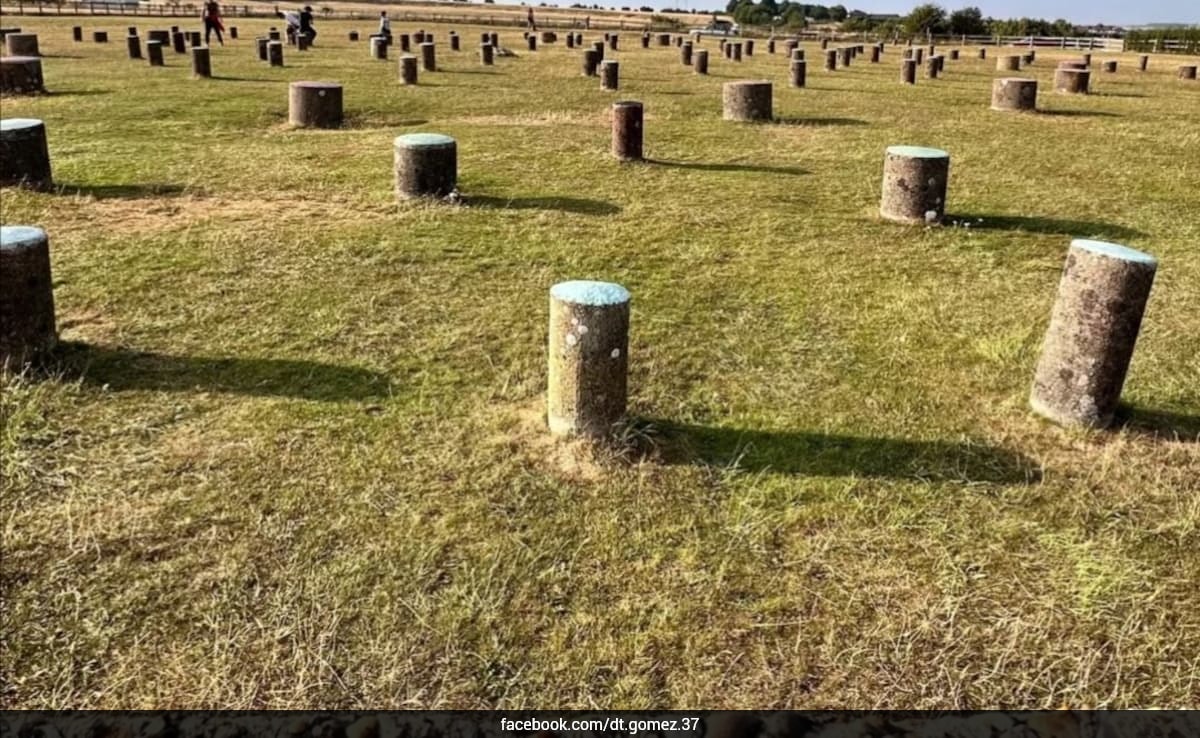
Recent research has provided compelling scientific evidence that the substantial pits discovered in proximity to Stonehenge were deliberately created by human hands over 4,000 years ago.
The research, published in Internet Archaeology journal, definitively establishes that the enigmatic Durrington pit circle is of human origin rather than a natural formation.
This circular arrangement comprises approximately 20 deep excavations spanning more than a mile in diameter, with the Neolithic settlements of Durrington Walls and Woodhenge positioned at its center. Researchers believe some of these pits measure nearly 10 meters across and 5 meters in depth, suggesting considerable planning, effort, and engineering expertise from ancient societies.
When initially discovered in 2020, the structure was heralded as one of Britain's largest prehistoric monuments ever unearthed. Early hypotheses suggested it might represent one of humanity's earliest examples of numerical counting, as creating such a precisely scaled circle would have required careful measurement beyond simple visual alignment.
Despite these theories, some scholars questioned whether these depressions occurred naturally. The current study, led by Professor Vincent Gaffney from the University of Bradford, aims to resolve this debate conclusively.
The research team employed an unprecedented combination of scientific techniques for a site of this nature. They utilized electrical resistance tomography to measure the depths of the pits, while radar and magnetometry revealed their precise dimensions and contours.
To determine whether these features were human-made, scientists extracted sediment cores and analyzed them using advanced methods including optically stimulated luminescence dating, which determines when soil was last exposed to sunlight, and sedimentary DNA analysis to identify ancient organic remains.
The findings revealed consistent soil patterns across multiple pits that researchers conclude could not have formed through natural processes. "We think we've nailed it," Professor Gaffney stated confidently.
While the specific function of these pits remains subject to speculation, researchers believe they were excavated during the late Neolithic period and may reflect ancient beliefs associated with an underworld concept. If this interpretation proves accurate, the structure adds significant depth to our understanding of the spiritual and cultural landscape surrounding Stonehenge.
Source: https://www.ndtv.com/world-news/archaeologists-confirm-humans-carved-massive-neolithic-pits-near-stonehenge-9717875