
"Decorate Every Shop With Swadeshi": PM Modi On Eve Of GST Implementation
- Date & Time:
- |
- Views: 69
- |
- From: India News Bull
Prime Minister Narendra Modi announced on Sunday that the GST reforms taking effect from Monday will accelerate India's economic growth, highlighting its significance as a major step toward "aatmanirbhar Bharat" (self-reliant India) and connecting the promotion of 'swadeshi' products to national prosperity.
In his address to the nation on the eve of Navaratri, when the revised GST rates will be implemented, PM Modi emphasized that swadeshi will strengthen the country's prosperity just as it empowered India's independence movement.
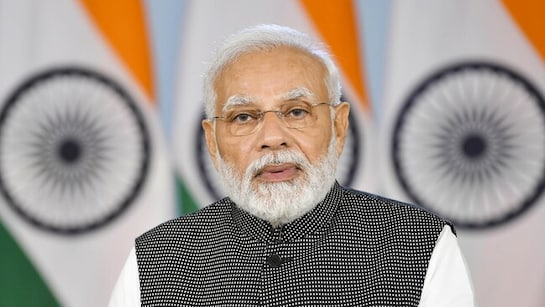
"We must make every home a symbol of swadeshi. We need to decorate every shop with swadeshi (goods)," he stated. The implementation of next-generation GST reforms, following his government's increase of income tax exemption on annual earnings up to Rs 12 lakh, will provide a "double bonanza" for citizens, helping them fulfill their aspirations by reducing expenses and increasing savings. Citizens will save approximately Rs 2.5 lakh crore from these combined decisions.
He called on states to enhance manufacturing and create favorable conditions for investment, noting that when the Center and states collaborate, the vision of a self-reliant India will be achieved.
Modi also had a message for citizens. He said every Indian should proudly declare that they buy or sell made-in-India products, emphasizing that this attitude will accelerate the nation's development.
In his 19-minute address, Modi explained that the revised GST rates reflect his government's philosophy of "naagrik devo bhawah" (citizens are like gods), as these changes will reduce prices of everyday items and cut costs in construction and health sectors.
He described the coming day as the beginning of a "GST saving festival," bringing happiness to every family. "On the first day of Navratri, our country is taking an important and significant step toward Atmanirbhar Bharat. With tomorrow's sunrise, the next generation GST reforms will come into effect, initiating a 'GST bachat utsav' (savings festival)."
"You will be able to purchase items you desire more easily. The poor, middle class, neo middle class, youth, farmers, women, traders, and shopkeepers will all benefit from this," he added.
Modi congratulated everyone on the next generation GST reforms, stating, "These reforms will accelerate India's growth story, increase ease of doing business, and attract more investors."
He recalled how the 2017 GST reforms marked a historic beginning, realizing the 'one nation-one tax' dream, and highlighted how the previous complex web of taxes and tolls had created hardships for businesses and consumers.
The Prime Minister noted that these GST changes would significantly benefit MSMEs and urged the sector to work toward restoring the prestige of made-in-India products, observing that domestically manufactured goods were the foundation of India's past economic strength.
He emphasized that India's micro, small, and cottage industries will play a crucial role in building a self-reliant India and called for maximizing domestic manufacturing.
Modi also encouraged people to be more mindful in their choices, noting that many are unaware of the origin of everyday items they use. Foreign products have unconsciously become part of daily life, he observed, urging citizens to prioritize products with indigenous origins.
One should take pride in saying "I buy swadeshi" or "I sell swadeshi," he remarked.
The Prime Minister expressed satisfaction that businesses were taking the lead in passing GST rate cut benefits to consumers.
He explained that under the new structure, primarily 5% and 18% tax slabs remain. Many everyday items like food products, medicines, soap, toothbrush, toothpaste, health and life insurance will either be tax-free or subject to only a 5% tax.
Nearly 99% of items previously taxed at 12% now fall under the 5% tax bracket, he added.
Modi recounted reading a foreign newspaper article shortly after taking office in 2014, which described how a company found transporting goods from Bengaluru to Hyderabad (570 km) more challenging due to multiple taxes than sending products to Europe and back to Hyderabad.
He worked with all stakeholders, including states, to address their concerns and gain their support for implementing "one nation one tax" in 2017.
Starting Monday, numerous goods and services will become more affordable as reduced GST rates on approximately 375 items take effect, ranging from kitchen essentials to electronics, medicines, equipment, and automobiles.
The GST Council, comprising the Centre and states, had decided to reduce tax rates on goods and services effective September 22 – the first day of Navaratri.
The GST will now follow a two-tier structure with most goods and services taxed at either 5% or 18%. Ultra-luxury items will attract a 40% tax, while tobacco and related products will remain in the 28% plus cess category.
Previously, Goods and Services Tax (GST) was levied in 4 slabs: 5%, 12%, 18%, and 28%, with an additional compensation cess on luxury and demerit or sin goods.
Common consumption items such as ghee, paneer, butter, namkeen, ketchup, jam, dry fruits, coffee, and ice creams, along with aspirational goods like TVs, ACs, and washing machines, will become less expensive.