
Religious Unity and Leadership: Why the Indian Armed Forces Value Collective Faith Above Personal Beliefs
- Date & Time:
- |
- Views: 62
- |
- From: India News Bull
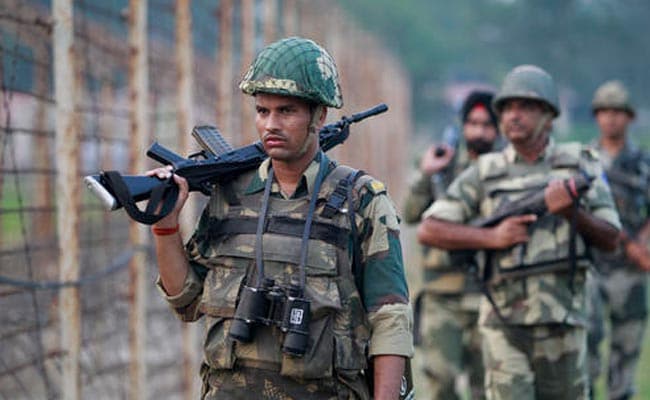
The Supreme Court recently upheld the dismissal of a young Indian Army officer who refused to participate in religious rituals outside his faith. The officer claimed this violated his fundamental religious rights, while the Court countered that as a leader, he must "respect the collective sentiment of your command and lead by example." This case has sparked debate between progressive ideals and the unique requirements of India's armed forces.
Growing up in secular India, many citizens develop a respect for all religious places and deities. This principle is embedded in military training at the National Defence Academy (NDA), which features a Sarva Dharm Sthal complex where commanders of all personal faiths lead various religious ceremonies. Cadets training to become officers internalize this inclusive approach during their formative years.
My first military posting was at Air Force Station Jammu, which houses a Pir Baba shrine beside the runway that personnel of all faiths venerate. A common belief holds that this shrine protects the airfield – a sentiment I experienced both as a young officer in the 1970s and later as Station Commander during Operation Parakram in 2002 when conflict seemed imminent. I visited the dargah and prayed for the Pir's blessings to guide our station through potential warfare, embracing the 'sarva dharm' philosophy.
The Sarv Dharm sthal
Leh followed in my career path. The armed forces, particularly the Army, maintain profound connections with the divine, exemplified by the Pathar Sahib pilgrimage site that now appears on international tourism maps.
I first visited Pathar Sahib in 1978 when it was merely a small tin structure. For those unfamiliar, Pathar Sahib contains an impression of Guru Nanak Dev on a stone that legend says was rolled down by a demon to harm his congregation but stopped by the meditating Guru's body. Today, this gurudwara has expanded into a major pilgrimage destination voluntarily maintained by an Army battalion with continuous langar service. Troops moving through Leh regularly stop to pay respects. Similarly, the shrine of 'Op Baba' at Siachen Glacier Base Camp receives homage from all soldiers regardless of faith before and after their deployments. Such religious devotion runs deeply throughout the Indian Army.
A Different Kind Of Brotherhood
The Air Force and Navy share similar approaches to religious inclusion. When establishing the Indian Air Force contingent for the UN Mission in Sudan, our first act on the empty land was to conduct a 'bhoomi puja' using locally crafted soil idols. The senior-most officer served as the priest, while Corporal Gurwinder Singh offered Sikh ardas prayers and NCE Abdul Dorji from Srinagar performed Muslim sajdah prayers. Our camp subsequently featured adjacent tented places of worship—mandir, masjid, and church—where we celebrated all festivals with enthusiasm, from Diwali and Eid to Christmas and Gurparb.
Our Mandir, Masjid and Church
The 'bhumi pujan' in Sudan
As the senior officer, I led ceremonies across these different worship spaces. Any officer would have done likewise because in India's Armed Forces, an officer's personal religion remains private within their living quarters. Beyond those walls, officers project a religion-neutral presence that all subordinates look up to regardless of background. The military transcends the divisions—race, religion, state—that often separate civilian society.
The Army officer dismissed for refusing to participate in a 'Mandir Parade' failed to meet a fundamental leadership requirement in the Indian Armed Forces: subordinating personal religious preferences to unite with those under his command. Some social media commentators argue that the Army should modernize, that 'Mandir Parades' are colonial relics, and that India's Constitution guarantees religious freedom.
These arguments must be understood with an important qualification: in combat, soldiers fight not for abstract patriotism but for their comrades with whom they share life's experiences and spiritual connections. Their faith represents a shared bond with the Almighty, reinforced through collective worship led by commanding officers. An officer cannot separate himself from this brotherhood if he expects unwavering obedience when facing enemy fire. This represents the fundamental ethos of India's armed forces.
(The author is former Additional Director General, Centre for Air Power Studies, and a retired Air Vice Marshal of the Indian Air Force)
Disclaimer: These are the personal opinions of the author
Source: https://www.ndtv.com/opinion/why-an-army-officers-dismissal-over-religion-deserves-a-special-look-9716479