
Trinamool Congress Accuses Election Commission of Negligence in Booth Officials' Deaths During West Bengal Electoral Roll Revision
- Date & Time:
- |
- Views: 59
- |
- From: India News Bull
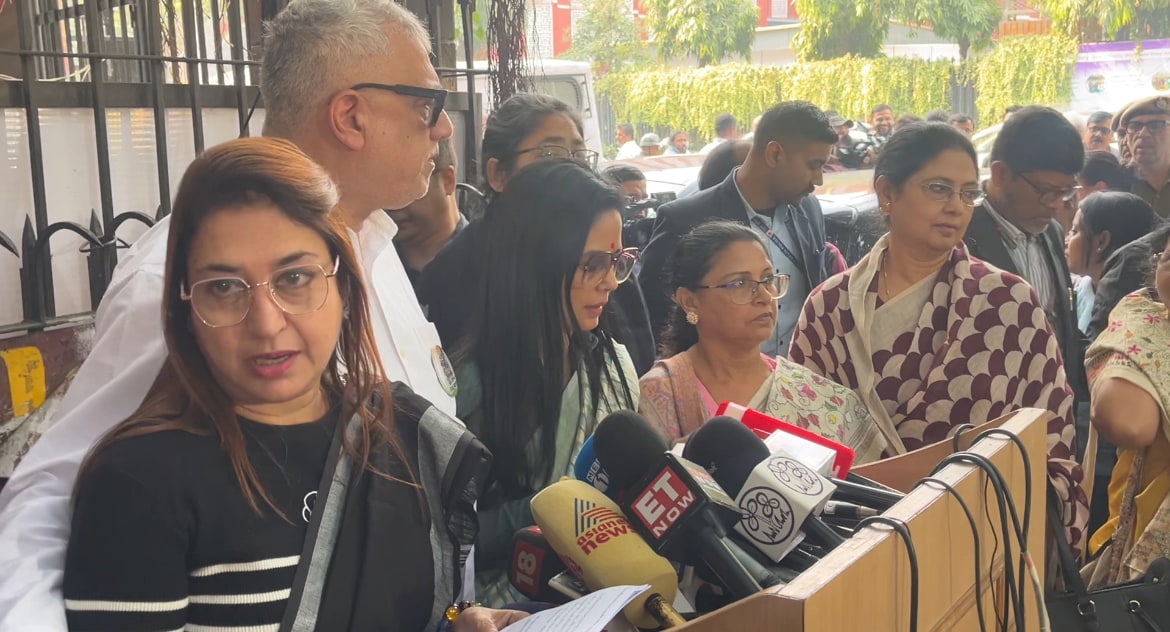
The Trinamool Congress delegation leveled serious accusations against the Election Commission following their meeting.
New Delhi:
The Trinamool Congress (TMC) launched a scathing attack on the Election Commission of India (ECI) on Friday, accusing Chief Election Commissioner Gyanesh Kumar of having "blood on his hands" over the deaths of Booth Level Officers (BLOs) in West Bengal. The party further alleged that the ongoing Special Intensive Revision (SIR) of electoral rolls represents a calculated BJP-orchestrated conspiracy specifically targeting Bengali and minority voters in West Bengal.
The Election Commission has not yet provided any official response to these serious allegations.
A high-powered TMC delegation consisting of ten members, led by Rajya Sabha MP Derek O'Brien, engaged in a nearly two-hour confrontation with CEC Gyanesh Kumar and his team at Nirvachan Sadan located on Ashoka Road.
According to the TMC representatives, the meeting was distinctly "one-sided" – they spoke for approximately 40 minutes and posed five specific questions, while the CEC delivered an uninterrupted hour-long monologue without addressing any of their inquiries.
"We began by informing the CEC that he has blood on his hands," Derek O'Brien told reporters outside the ECI headquarters. "We presented a list of 38 BLOs and other officials who have died during this brutal SIR process. The Commission offered absolutely no response to our questions – zero."
The delegation included prominent MPs Mahua Moitra, Kalyan Banerjee, Saket Gokhale, Dola Sen, Shatabdi Roy, Sajda Ahmed, Pratima Mondal, Mamata Bala Thakur, and Prakash Chik Baraik.
TMC's key questions to the Election Commission:
1. Why is Bengal being targeted specifically?
The TMC questioned why other states sharing international borders with Bangladesh and Myanmar – including Tripura, Meghalaya, Mizoram, Arunachal Pradesh, Nagaland, and Manipur – have been completely excluded from the SIR exercise. Even Assam has been subjected to a comparatively less rigorous "Special Revision." The party suggested that the actual objective may be to undermine Bengali identity and methodically remove Bengali voters from electoral rolls.
2. How did voter lists suddenly become unreliable?
The party highlighted that the very same electoral rolls now characterized as "unreliable" by the ECI were used without any objections during the 2024 Lok Sabha elections and three subsequent Assembly by-elections. The TMC demanded clarification on how these rolls abruptly became questionable and suggested that if they are indeed unreliable, perhaps the current Lok Sabha should be dissolved.
3. Who bears responsibility for the deaths of Booth Level Officers?
TMC alleged that numerous BLOs across various states have either died or been driven to suicide due to unreasonable deadlines, inadequate training, and excessive pressure. The party directly questioned whether the Election Commission, or specifically Chief Election Commissioner Gyanesh Kumar personally, would accept responsibility, pointedly asking: "Is the blood of these preventable deaths not on the Chief Election Commissioner's hands?"
4. Is the ECI exhibiting clear partisan bias?
The Trinamool Congress claimed to have repeatedly raised serious concerns – including issues regarding the appointment of external Booth Level Agents (BLAs) and the exclusion of operators from Bangla Sahayata Kendras – yet no action has been taken. Conversely, they asserted that any complaint raised by the BJP receives immediate attention. TMC questioned whether this pattern demonstrates partisan conduct that compromises the constitutional independence of the Election Commission.
5. Is the Election Commission operating under BJP's directives?
Citing examples from Bihar where Model Code of Conduct rules were allegedly manipulated to benefit the BJP, and noting the ECI's silence despite Bengal BJP leaders openly claiming that one crore voters would be removed from the state's electoral rolls, the TMC questioned if the Election Commission now functions under direct instructions from the BJP and is willing to violate fundamental principles of electoral democracy.
No response from the Election Commission
MP Mahua Moitra stated that the CEC "did not answer a single question" and instead delivered what she described as a prepared monologue. Kalyan Banerjee reportedly warned the CEC that "history will not forgive you" for the deaths and alleged bias.
The TMC had requested that the meeting be live-streamed for transparency and insisted all ten MPs be permitted to attend (the ECI initially agreed to only five). Both requests were denied.
38 deaths documented
The party submitted detailed documentation naming 38 officials who died during SIR duties, claiming most deaths resulted from overwork, mental harassment, and unrealistic targets imposed during winter without adequate training or logistical support.
West Bengal's Voter Roll Revision Approaching Completion Amid Controversy
West Bengal's voter roll revision has seen 7.64 crore forms distributed, with 82% digitized and 99.8% of voters covered as this extensive pre-2026 election exercise nears completion.
The SIR, initiated by the ECI in early November across twelve states and union territories including West Bengal, aims to purify electoral rolls before the 2026 assembly polls by verifying and eliminating fraudulent entries. It's described as a standard house-to-house enumeration process to ensure "error-free" lists, with the final West Bengal voter roll scheduled for release on February 7, 2026.
Supreme Court Affirms SIR's Legality, Confirms Fair Process
The Supreme Court has previously confirmed the validity of the SIR process, emphasizing that while the Representation of the People Act establishes basic eligibility criteria – requiring individuals to be at least 18 years old and ordinary residents – the ECI possesses broad superintendence powers under Article 324 of the Constitution to conduct such revisions. In hearings on November 11 and 26, a bench led by Chief Justice-designate Justice Surya Kant dismissed claims of unprecedented procedure, noting that electoral roll revisions represent a recurring democratic safeguard rather than a threat. The court observed that any fair and transparent methodology can be implemented, provided it complies with statutory rules, and questioned petitioners' concerns by referencing past successful implementations that required up to three years but did not disenfranchise voters en masse. While issuing notices to the ECI regarding challenges from states including West Bengal, the Supreme Court declined to halt the exercise, instead scheduling comprehensive hearings for December 9 on Bengal-specific petitions and indicating willingness to extend deadlines if substantial exclusions are demonstrated.
Political Ramifications
The TMC intends to position the SIR controversy as the central focus during the upcoming Winter Session of Parliament and has threatened statewide protests if the alleged "conspiracy" is not abandoned. Chief Minister Mamata Banerjee has already characterized the exercise as a "BJP-ECI plot" designed to remove poor, minority, and Matua voters – constituencies that form the core support base of her party.
The BJP in West Bengal dismissed these accusations as "desperate drama" by a "panicked TMC" fearful of losing illegal voters. Leader of Opposition Suvendu Adhikari claimed the state government is hindering BLOs to manufacture public sympathy.
The Election Commission has yet to release any official statement regarding Friday's meeting or the specific allegations raised.
The finalized electoral rolls for West Bengal are scheduled for publication on February 7, just months before the crucial 2026 Assembly election.
Source: https://www.ndtv.com/india-news/sir-west-bengal-trinamool-to-poll-body-over-booth-officials-deaths-9715729