
Pakistan's Global Arms Acquisition Concerning, China Remains Major Challenge: Vice Admiral K Swaminathan
- Date & Time:
- |
- Views: 58
- |
- From: India News Bull
Mumbai:
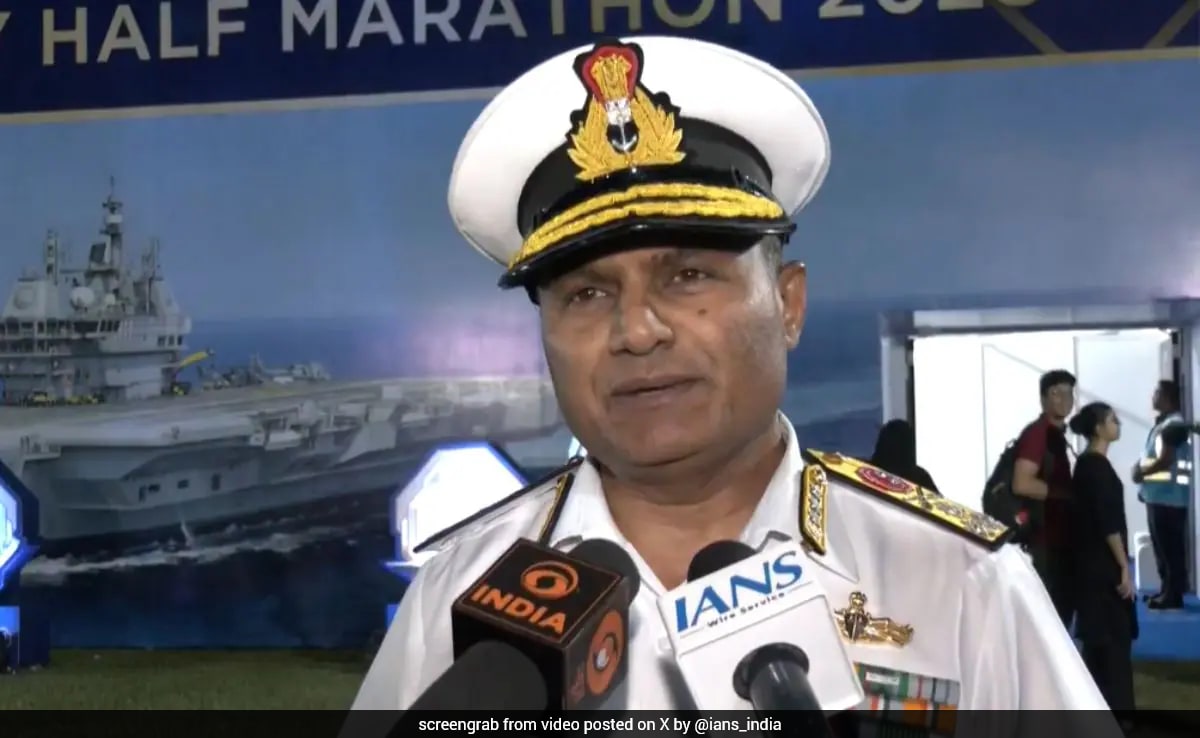
Vice Admiral K Swaminathan has expressed concern over Pakistan's accelerated arms acquisition from global sources following Operation Sindoor in May, while emphasizing that China continues to pose an enduring challenge due to its growing assertiveness in the region.
The Western Naval Command chief, speaking at a Mumbai security conference organized by the Bramha Research Foundation, highlighted that China's naval forces have become the world's largest, adding a fleet equivalent to the entire Indian Navy in just the past decade.
Vice Admiral Swaminathan pointed out that the commissioning of Fujian, China's third aircraft carrier, along with the demonstration of fifth and sixth-generation fighters, represents part of Beijing's strategic global messaging.
"China maintains five to eight vessels in the Indian Ocean Region, which is concerning for India," he stated.
These vessels include warships, research ships, satellite tracking vessels, and fishing craft, creating a significant Chinese presence in the region.
"China's assertiveness is increasing not only in the South China Sea but also in the Indian Ocean Region, making it an ongoing challenge for India," the Vice Admiral observed.
Operation Sindoor, which targeted terror infrastructure in Pakistan and PoK, and later multiple Pakistani air bases, has established a "new normal" in India-Pakistan relations, according to Swaminathan. This military response followed the April Pahalgam terror attack that claimed 26 lives, primarily tourists.
"This represents a significant shift in how we view Pakistan and its responses to regional events," the Vice Admiral emphasized.
"Following Operation Sindoor, Pakistan has embarked on an unprecedented arms acquisition campaign, which should concern everyone in the subcontinent," he added.
Swaminathan highlighted that Pakistan is pursuing this military buildup despite severe economic challenges facing its population.
"The Pakistani military is procuring arms globally with little regard for the country's other pressing issues," he remarked.
Operation Sindoor revealed several new geopolitical realities, including the overt Pakistan-China collaboration that had previously been suspected but not so openly displayed.
"We always knew about Pakistan-China collusion, but expected it to remain somewhat covert. Instead, it manifested openly and undeniably," the Vice Admiral stated.
He also noted Turkey's emergence as a key supporter and supplier to Pakistan as a development requiring careful monitoring.
Both China and Turkey provided open support to Pakistan during Operation Sindoor.
Regarding the May military operation, Vice Admiral Swaminathan described it as a demonstration of the Indian armed forces' ability to execute well-synchronized, coordinated, and planned strikes on selected targets.
The operation's success challenged regional assumptions that Pakistan's nuclear capabilities and external support would deter India from conducting conventional military operations.
During a panel discussion at the conference, Air Marshal Rakesh Sinha, Deputy Chief at the Integrated Defence Staff (Operations), emphasized how Operation Sindoor showcased the complete integration of India's Army, Navy, and Air Force.
While the Air Force played a central role in demonstrating strategic reach and precision targeting, the joint planning and execution at the highest levels caught Pakistan off guard.
"Through Operation Sindoor, India has established that it will deliver decisive responses to threats at times and places of its choosing, without accepting nuclear blackmail," Air Marshal Sinha affirmed.
The operation utilized all military domains and demonstrated India's capability to conduct effective multi-domain operations, with Indian drones proving particularly effective due to the country's robust Airborne Warning and Control System.
Source: https://www.ndtv.com/india-news/indian-navy-vice-admiral-k-swaminathan-pakistan-arms-shopping-china-challenge-9707624