
Delhi's Air Quality Crisis: 13 Days of 'Very Poor' AQI With No Relief in Sight
- Date & Time:
- |
- Views: 50
- |
- From: India News Bull
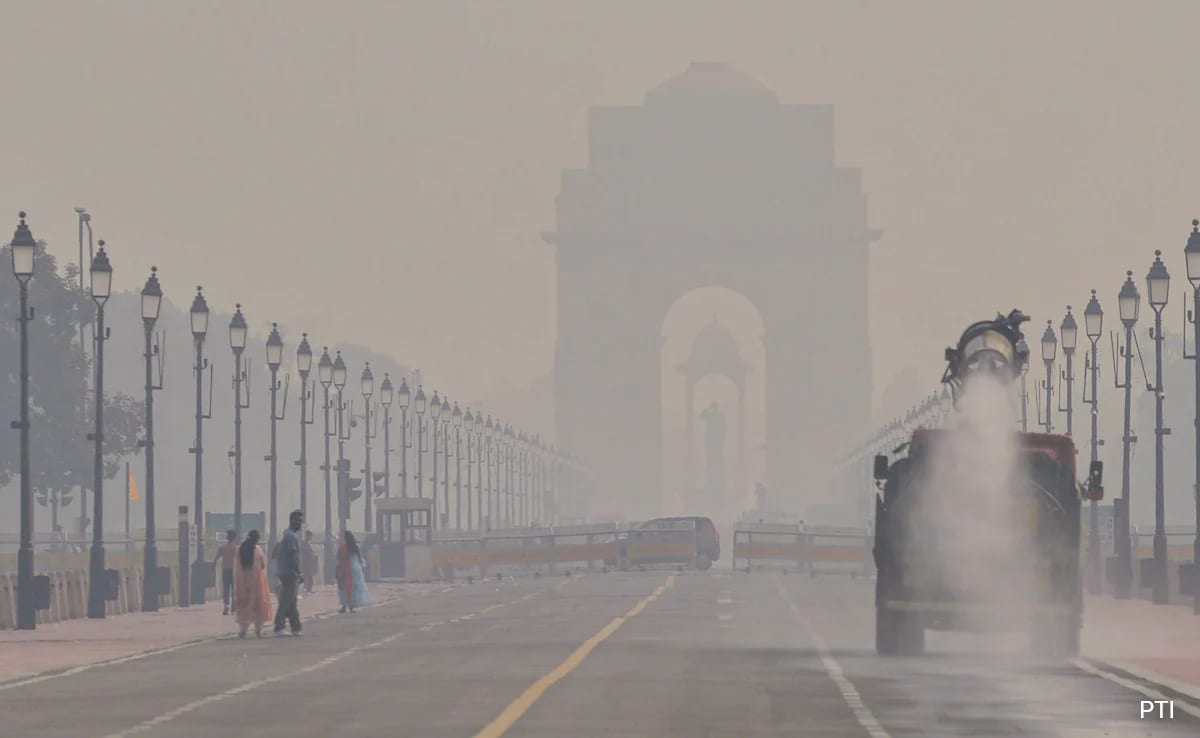
The air quality is expected to remain in the "very poor" category throughout the upcoming week.
New Delhi:
Delhi's air quality continued to be classified as "very poor" for the 13th day in a row on Wednesday, with the city recording an AQI of 327. Forecasts suggest no improvement in conditions over the coming days.
The 24-hour average Air Quality Index (AQI) was measured at 327 on Wednesday, showing a slight improvement from Tuesday's 352 and Monday's 382, but still firmly within the "very poor" classification for almost two weeks straight.
According to predictions issued by the Air Quality Early Warning System for Delhi, the poor air conditions are likely to persist throughout the week ahead.
The Central Pollution Control Board's (CPCB) Sameer app, which provides real-time pollution data from monitoring stations across Delhi, failed to update information until 5 pm Wednesday. On Tuesday, Rohini was the only station recording "severe" air quality with an AQI of 401, whereas Monday had seen 15 stations reaching "severe" levels.
Under CPCB standards, AQI values are categorized as follows: 0-50 "good", 51-100 "satisfactory", 101-200 "moderate", 201-300 "poor", 301-400 "very poor", and 401-500 "severe".
The Decision Support System (DSS) operated by the Indian Institute of Tropical Meteorology in Pune identified vehicular emissions as the primary pollution contributor at 21.6 percent on Wednesday, while stubble burning accounted for just 0.8 percent.
For Thursday, these contributions are forecast to be 19.5 percent and 0.7 percent respectively.
As Delhi's air quality continues to deteriorate into "very poor" and "severe" ranges this winter, medical professionals are emphasizing the importance of regular diagnostic screening to detect early signs of pollution-related health issues. This is particularly crucial for vulnerable groups including smokers, asthma patients, children, and individuals with pre-existing cardiac or respiratory conditions.
Health experts have highlighted that preventive health checks are becoming essential as toxic air causes airway inflammation, diminishes lung function, and worsens underlying health conditions.
For patients experiencing persistent breathing difficulties, doctors may recommend chest X-rays to identify chronic inflammation or structural changes in the lungs. More advanced diagnostic methods such as FeNO (fractional exhaled nitric oxide) tests are becoming increasingly relevant as they can detect airway inflammation before major symptoms become apparent.
Medical specialists advise that people regularly exposed to poor air quality—including outdoor workers, traffic personnel, and daily commuters—should establish a baseline spirometry profile and repeat testing every six months to monitor any potential decline in respiratory function.
Pulse oximetry can help individuals suffering from fatigue or breathlessness to monitor their oxygen saturation levels. An annual chest evaluation is also recommended for those with chronic exposure to air pollutants.
Source: https://www.ndtv.com/india-news/delhi-air-quality-remains-very-poor-for-13th-consecutive-day-9706381