
17 Years Later: The Complete Timeline and Impact of Mumbai's 26/11 Terror Attacks
- Date & Time:
- |
- Views: 31
- |
- From: India News Bull
Today marks the 17th anniversary of the tragic 26/11 Mumbai terror attacks.
Though 17 years have passed, the wounds from the Mumbai terror attacks remain vivid in our collective memory. On November 26, 2008, the world witnessed a series of 12 coordinated attacks across Mumbai that forever changed India's security landscape. These assaults, executed by 10 members of Pakistan-based terrorist organization Lashkar-e-Taiba (LeT), claimed at least 166 lives, including civilians, security personnel, and nine attackers, while injuring over 300 people. Mohammed Ajmal Amir Qasab, the only attacker captured alive, was arrested, sentenced to death in 2010, and executed two years later.
The devastating siege lasted 60 hours and stands as one of the deadliest terrorist attacks in Indian history. The terrorists specifically targeted prominent Mumbai landmarks including Chhatrapati Shivaji Terminus, the Oberoi Trident, the Taj Mahal Palace and Tower hotel, Leopold Cafe, and Nariman House.
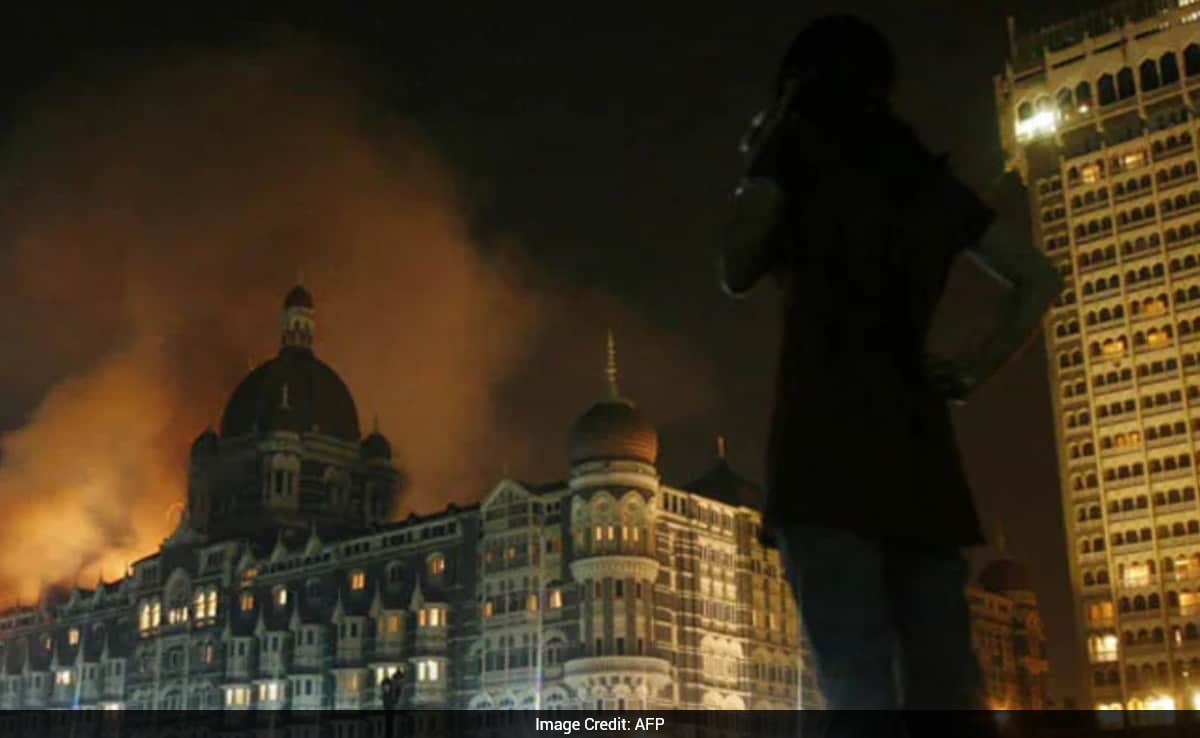
This image shows a reporter talking on her phone as smoke is seen coming from the Taj Hotel in Mumbai, November 27, 2008. Photo Credit: AFP
Fire engulfs the top floor of the Taj Mahal hotel on November 26, 2008. Photo Credit: AFP
Employees and guests of the Taj Mahal hotel are being rescued by firefighters after fire engulfed the top floor of the hotel. Photo Credit: AFP
Explosions and gunfire continued intermittently at the Taj Mahal hotel even two days after a chain of attacks across Mumbai. Photo Credit: AFP
This image shows the windows on the first floor of the Taj Mahal hotel being shattered after the use of a grenade launcher on November 28. Photo Credit: AFP
The images are juxtaposed to show the before and after of the Taj Mahal Palace.
The attack on the Taj Mahal hotel, a symbol of Mumbai's grandeur and heritage, struck at the very heart of the city. What was once an iconic landmark became a scene of death and horror, with bloodshed and casualties throughout the building.
The terrorists' targets were strategically selected—each location represented vital centers of Mumbai's economic and social fabric. These attacks were designed to wound India's financial capital both physically and symbolically.
Here's A Timeline Of How The Attacks Were Carried Out
The terrorists, equipped with AK-47 rifles, RDX explosives, and grenades, infiltrated Mumbai via sea routes from Pakistan before splitting into smaller teams to execute their coordinated attacks.
November 23, 2008
The terrorists departed from Karachi by boat and captured a fishing trawler near India's coastline. They killed four crew members and forced the remaining crew to navigate toward Mumbai. Upon approaching the city, they murdered the captain as well. Using inflatable boats to travel the final 7 kilometers offshore, six terrorists landed at Cuffe Parade's Macchimar Nagar, while the remaining four disembarked near Badhwar Park.
November 26, 2008
9:20 PM: The initial attack began at Chhatrapati Shivaji Terminus, resulting in 58 fatalities and 104 injuries. Two terrorists, Kasab and Ismail Khan, opened fire into crowds. Their images, often referred to as "backpackers with assault rifles," were captured during the attack.
This picture shows the aftermath of the Chatrapathi Sivaji Terminal railway station. Photo Credit: AFP
CCTV cameras captured the terrorist. Photo Credit: AFP
9:30 PM: The terrorists detonated explosives at Nariman (Chabad) House, which housed the Jewish Chabad Lubavitch outreach center. They fired from the windows, killing several hostages including the rabbi and his wife. Their two-year-old child miraculously survived.
Image from the Nariman House. Photo Credit: AFP
This image shows how NSG commandos came down a rope, from a helicopter to reach the top of the Nariman house. Photo Credit: AFP
9:30-9:48 PM: Nearly simultaneously, Leopold Cafe was attacked, with terrorists killing 10 people.
9:35-9:45 PM: The Taj Mahal Palace and Tower hotel came under attack, with at least six explosions reported. Two terrorists, Shoib and Umer, who had attacked Leopold Cafe, breached the hotel through a side door. Two additional terrorists, Abdul Rehman Bada and Abu Ali, entered through the main entrance and began shooting and throwing grenades. Marine commandos entered the hotel to engage them.
10:00 PM: Terrorists struck the Oberoi Trident hotel, with two attackers taking hostages.
This picture shows a hostage looking out from a window of the hotel. Photo Credit: AFP
10:30 PM: Kasab and Khan, after their initial attack at CST, arrived at Cama Hospital's rear entrance. Alert staff members warned others and secured patients' rooms. Leaving the hospital, the terrorists ambushed police officers, killing six, including Hemant Karkare, chief of Mumbai's Anti-Terrorism Squad. They then hijacked a police vehicle before being intercepted by officers from Gamdevi police station. Khan was killed, and Kasab was captured.
On November 26, 2008, a taxi blast rocked Ville Parle leaving three dead. Photo Credit: AFP
November 27, 2008
6:30 AM: The National Security Guards (NSG) took control of counter-terrorism operations, with evacuations continuing throughout the day at both hotels.
November 28, 2008
Commandos executed a rooftop entry at Nariman House and rescued numerous hostages from the Oberoi Trident hotel. By evening, terrorists at Nariman House had been neutralized, and the Oberoi siege ended that afternoon, with approximately 30 reported fatalities.
November 29, 2008
Indian security forces, including the National Security Guards (NSG), conducted a final operation to eliminate the remaining terrorists, ending the siege at the Taj Hotel.
The Heroes of 26/11
The 2008 Mumbai attacks witnessed extraordinary bravery from security personnel, including Major Sandeep Unnikrishnan, Hemant Karkare, and Tukaram Omble, who sacrificed their lives in the line of duty.
Investigation
The attacks triggered widespread international condemnation and prompted a firm response from the Indian government. Investigations confirmed that Lashkar-e-Taiba, a Pakistan-based terrorist organization, was responsible for orchestrating the attacks.
Source: https://www.ndtv.com/india-news/photographs-that-stopped-time-revisiting-2008-mumbai-attacks-after-17-years-9701603