
First Photographic Evidence of Endangered Himalayan Musk Deer in West Bengal After 70-Year Absence
- Date & Time:
- |
- Views: 57
- |
- From: India News Bull
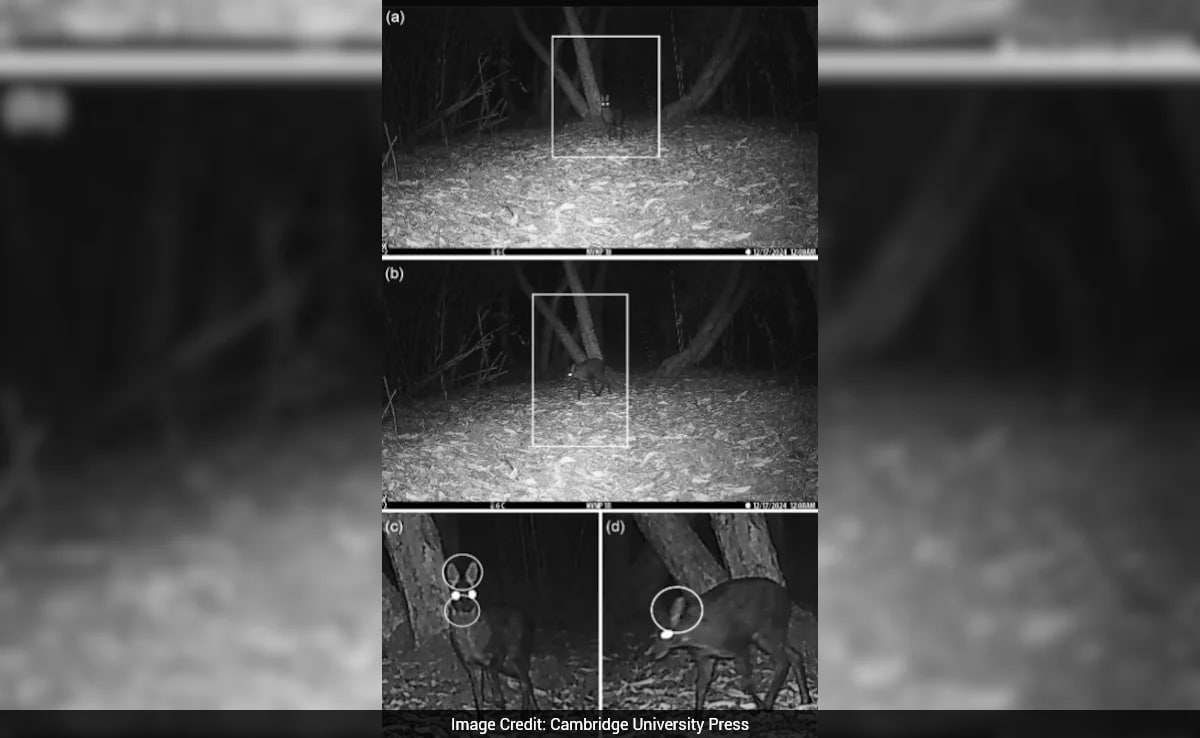
Camera trap images of musk deer from Neora Valley National Park, India.
In a remarkable scientific breakthrough, researchers have documented the first photographic evidence of the Himalayan Musk Deer in West Bengal's Neora Valley National Park. This significant discovery represents the first confirmed sighting of this endangered species in the region after approximately 70 years, with the findings published in a prestigious Cambridge University Press India journal.
The confirmation came through a camera trap survey that began in December 2023 as part of the Pan-India Assessment and Monitoring of Endangered Species program, which initially focused on the Red Panda. During December last year, researchers captured six images of a musk deer at an elevation of 3,112 meters using camera traps.
According to the published report, "This provides the first photographic documentation of a musk deer in West Bengal, confirming the genus' continued presence in the state after presumed extirpation, 70 years since the last known sighting."
The Himalayan Musk Deer currently holds an Endangered classification on the IUCN Red List. The species faces severe threats from poaching activities, primarily targeting their valuable musk glands used in traditional medicine and perfume production.
While researchers have confirmed musk deer populations in other Indian states including Arunachal Pradesh, Himachal Pradesh, Jammu and Kashmir, Sikkim, and Uttarakhand, their existence in West Bengal had remained uncertain for decades. The last reported sighting in the state dated back to 1955 in Singhalila National Park.
The Neora Valley National Park encompasses 160 square kilometers within the Central Himalaya region. This protected area constitutes a crucial component of the broader Kangchenjunga transboundary landscape, featuring diverse ecological zones including temperate, subtropical, and tropical habitats.
The research report noted, "The musk deer's presence in Neora Valley National Park may be attributed to the availability of suitable habitat, reinforcing the need for studies to identify the species, assess its population status and plan conservation actions."
Following this significant discovery, scientists have called for enhanced protection measures alongside long-term monitoring initiatives to ensure the survival and prosperity of this highly threatened deer species within the landscape.
Source: https://www.ndtv.com/india-news/scientists-capture-first-photographic-evidence-of-himalayan-musk-deer-in-west-bengal-after-70-years-9696249