
BJP's Mission Bengal: Targeting 160+ Seats with Strategy Focused on Grassroots Workers, Not Mamata Directly
- Date & Time:
- |
- Views: 47
- |
- From: India News Bull
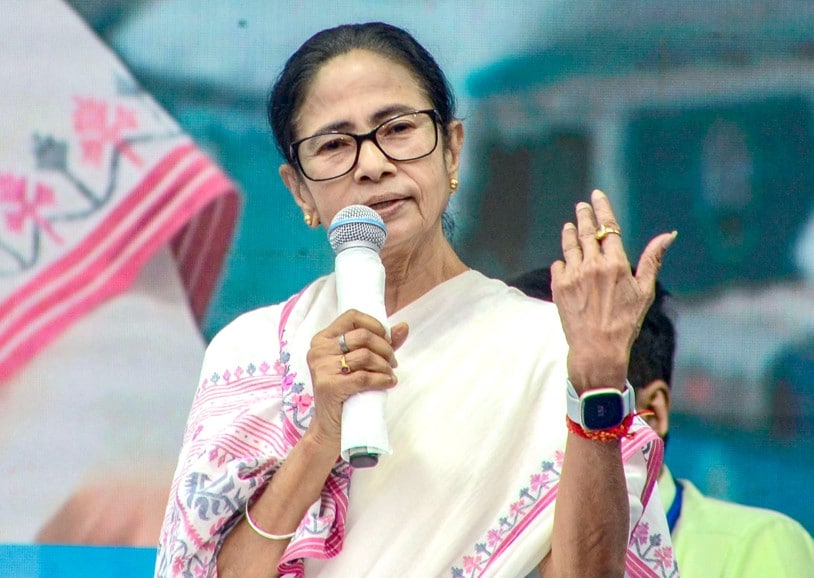
Bengal Chief Minister and Trinamool Congress boss Mamata Banerjee (File).
New Delhi:
Delhi - won. Bihar - won. Next up, West Bengal.
The BJP's powerful election machinery, having survived recent voter fraud allegations, is now turning its attention eastward, targeting Mamata Banerjee's Trinamool Congress stronghold.
Bengal will conduct elections in March-April next year, and according to sources who spoke to NDTV on Monday, the BJP has shifted focus from celebrating its overwhelming Bihar victory to planning another attempt at unseating Mamata Banerjee in Kolkata.
Sources revealed that the BJP's strategy won't focus exclusively on Mamata Banerjee herself. Instead, they will target Trinamool workers who lack genuine loyalty to Abhishek Banerjee, her nephew and three-time Lok Sabha MP from Diamond Harbour in Kolkata. The objective is to undermine the party's grassroots support structure.
Nevertheless, the Trinamool leadership won't escape scrutiny. The BJP plans to highlight issues of dynastic politics – a tactic frequently employed against the Congress and Nehru-Gandhi family – with criticism aimed at Banerjee's nephew.
Bengal Chief Minister Mamata Banejree (R) and her nephew, Abhishek Banerjee (File)..
A BJP strategist familiar with the plan indicated that Banerjee's apparent positioning of her nephew as a future chief minister represents a shift in Bengal, where dynastic politics hasn't traditionally been prominent.
They noted that Abhishek Banerjee doesn't command the same loyalty as his aunt, potentially allowing the BJP to attract ground-level resources from the Trinamool.
Focus on workers, not turncoats
Before the 2021 state election, the BJP persuaded key Trinamool leaders to defect, most notably Suvendu Adhikari, who was displeased with Abhishek Banerjee's rise. Formerly Mamata Banerjee's trusted lieutenant, Adhikari subsequently defeated the Chief Minister in the symbolic Nandigram constituency.
This time, however, BJP sources told NDTV they aren't planning to recruit defectors.
One reason is that such defections aren't expected to significantly boost the party's vote share.
Trinamool party workers, conversely, represent low-risk additions; more personnel means the BJP can conduct more extensive, prolonged, and efficient campaigns while existing party leaders won't face disruption from accommodating newcomers.
The caste game
The BJP and allies, including Chief Minister Nitish Kumar's Janata Dal United, perfectly executed their caste arithmetic in Bihar by fielding candidates from various marginalized communities and backward castes to secure over 200 of the state's 243 seats.
For Bengal, a different approach is necessary since caste politics isn't as influential and polarization isn't as widespread as in other states. The BJP will therefore balance regional and religious considerations.
The Hindu-Muslim question
Muslims constitute approximately 30 percent of Bengal's population but their votes are considered decisive in only 30-40 seats, less than 14 percent of the assembly's total.
The BJP has calculated that while Trinamool receives substantial votes from Muslim-dominated areas, these votes are concentrated in relatively few seats, limiting their impact on the final seat tally, which ultimately determines election outcomes.
To counter this, the BJP hopes to benefit from polarization among Hindu voters elsewhere, and feels strongly positioned in this regard, according to a party leader who spoke anonymously to NDTV.
The 'outsider' issue
This has been a contentious topic recently, with the BJP criticizing Mamata Banerjee over Bangladesh border security and accusing her of ignoring illegal migration that allegedly increases her voter base.
Meanwhile, Trinamool has portrayed its rival as 'outsiders' in Bengal, characterizing Gujarat (home state of Prime Minister Narendra Modi and Home Minister Amit Shah) as representing 'anti-Bengal' forces.
The numbers
Over the last four elections (two state and two federal), the BJP has won more than 100 seats.
This indicates the party has established a foothold in Bengal and plans to focus on these areas to begin strongly toward its goal of securing 160-170 seats.
Careful candidate selection remains essential to reaching this target, reinforcing the strategy of not prioritizing turncoats and defectors.
The performance
The BJP is gradually strengthening its position in Bengal.
It maintains particularly strong footholds in northern and southern districts, where its vote share continues to increase. The party's best Bengal performance (in terms of seats and vote share) was during the 2019 Lok Sabha election, winning 18 seats with 40.25 percent of votes.
In the 2021 state election, the party secured 77 seats and 38.14 percent of votes.
There was a decline in this year's federal election, with the party losing six of its 12 seats.
By comparison, Trinamool's best Assembly vote share is nearly 48 percent, meaning the BJP needs to find an additional six percent of votes to win.
This represents a significant challenge that will thoroughly test the BJP's organizational capabilities and efficiency.
NDTV is now available on WhatsApp channels. Click on the link to get all the latest updates from NDTV on your chat.
Source: https://www.ndtv.com/india-news/west-bengal-news-bengal-election-news-bengal-assembly-election-bjp-mission-bengal-mamata-banerjee-news-9691257