
Fadnavis Schools Prashant Kishor: Why Numbers Trump Ideology in Indian Politics
- Date & Time:
- |
- Views: 77
- |
- From: India News Bull
New Delhi:
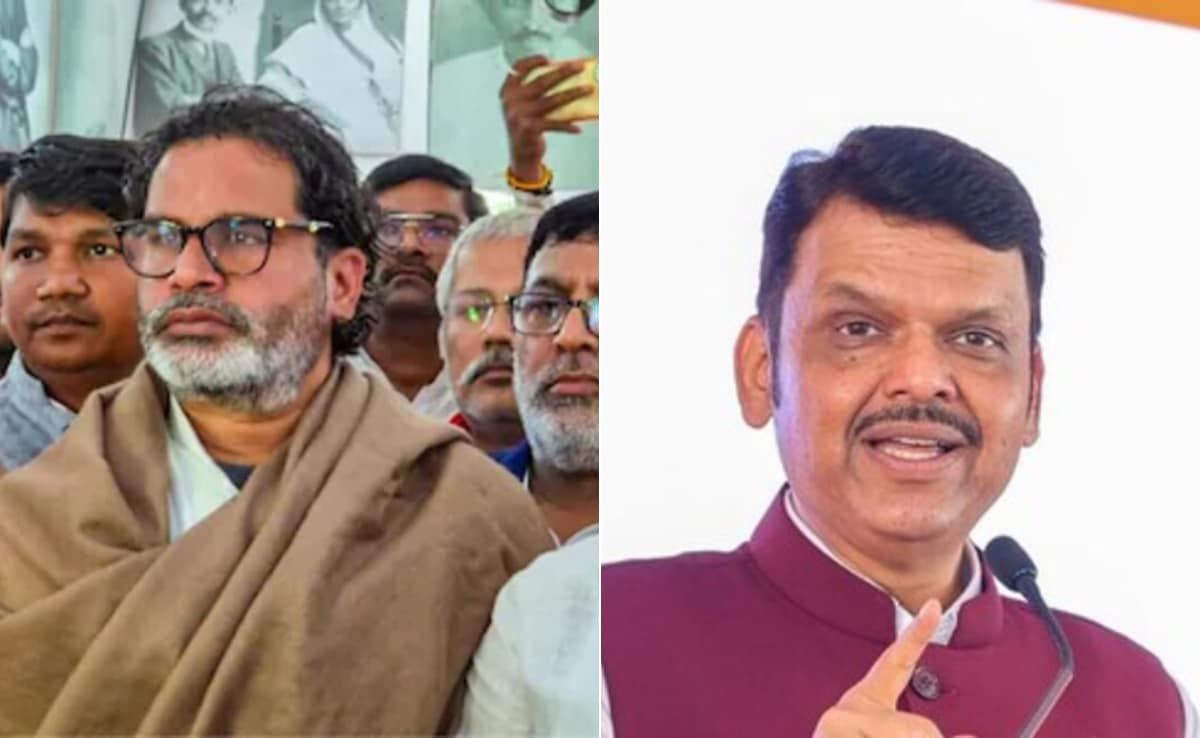
Maharashtra Chief Minister Devendra Fadnavis delivered a pointed political lesson to Jan Suraaj founder Prashant Kishor following the latter's disappointing Bihar election performance, emphasizing that in politics, numerical strength ultimately trumps ideological purity.
"Democracy functions in two ways - through ideology or through numbers. However, propagating ideology becomes impossible without numerical backing," stated Fadnavis at a public gathering. The BJP leader, who heads Maharashtra's three-party coalition comprising the BJP, Eknath Shinde's Shiv Sena faction, and Ajit Pawar's NCP, continued, "Prashant Kishor spoke about ideology but failed to secure any seats. Politics demands practicality, with relevance depending entirely on numbers."
Fadnavis' observations on political alliances carry particular significance given Maharashtra's recent political turbulence. The state has witnessed two consecutive three-party coalitions governing - the current BJP-led Mahayuti and previously, the Maha Vikas Aghadi led by Uddhav Thackeray, which included Congress and Sharad Pawar's NCP.
The Mahayuti coalition emerged across 2022-2023 following remarkably similar split patterns within the Shiv Sena and NCP, orchestrated by Shinde and Pawar respectively. These defections toward BJP alliance ultimately collapsed the MVA government under Uddhav Thackeray's leadership.
Fadnavis, widely credited with engineering these political realignments, may soon need to deploy his coalition-building expertise again as the BJP and allies prepare for Mumbai's civic body elections. Reports already indicate emerging tensions between Fadnavis and Shinde regarding appointee selections, and between Fadnavis and Ajit Pawar concerning electoral promises.
"While our ideologies might differ, we can effectively govern through a common minimum program," Fadnavis noted, referencing India's political evolution since the 1990s when six different prime ministers held office within a short period. "We've matured significantly since then," he added, highlighting his party's demonstrated flexibility over the past decade.
Meanwhile, Prashant Kishor's political debut proved disastrous, with his Jan Suraaj party failing to win any of the 238 contested seats. Kishor had declined joining Tejashwi Yadav's opposition alliance, criticizing the RJD-led coalition for limited appeal beyond its core Muslim and Yadav supporters while simultaneously echoing BJP's "jungle raj" accusations against previous RJD governments.
Kishor's assessment of RJD's limited appeal proved partially accurate as Lalu Yadav's party secured only 25 seats - a significant drop from their 75-seat performance in 2015. Nevertheless, the RJD emerged as the third-largest assembly presence, capturing 23 percent of total votes.
By contrast, Jan Suraaj's electoral performance was dramatically worse, receiving less than 3.5 percent of votes without winning a single seat.
Before the election, Kishor had firmly stated to NDTV on November 1 that Jan Suraaj would reject all alliances both pre and post-election, even providing written confirmation of this stance.
When asked about his electoral expectations, Kishor had offered a stark binary prediction: "We will either win fewer than 10 seats or more than 150. People view Jan Suraaj as a genuine alternative." He acknowledged, however, that securing votes requires significant voter trust - a challenging proposition given what he described as Bihar's "prolonged phase of hopelessness" under both governing and opposition alliances.
NDTV is now available on WhatsApp channels. Click on the link to get all the latest updates from NDTV on your chat.
Source: https://www.ndtv.com/india-news/devendra-fadnavis-news-prashant-kishor-jan-suraaj-bihar-election-9689467