
India's Nuclear Energy Expansion: 100 GW Target to Power Carbon-Free Development by 2047
- Date & Time:
- |
- Views: 54
- |
- From: India News Bull
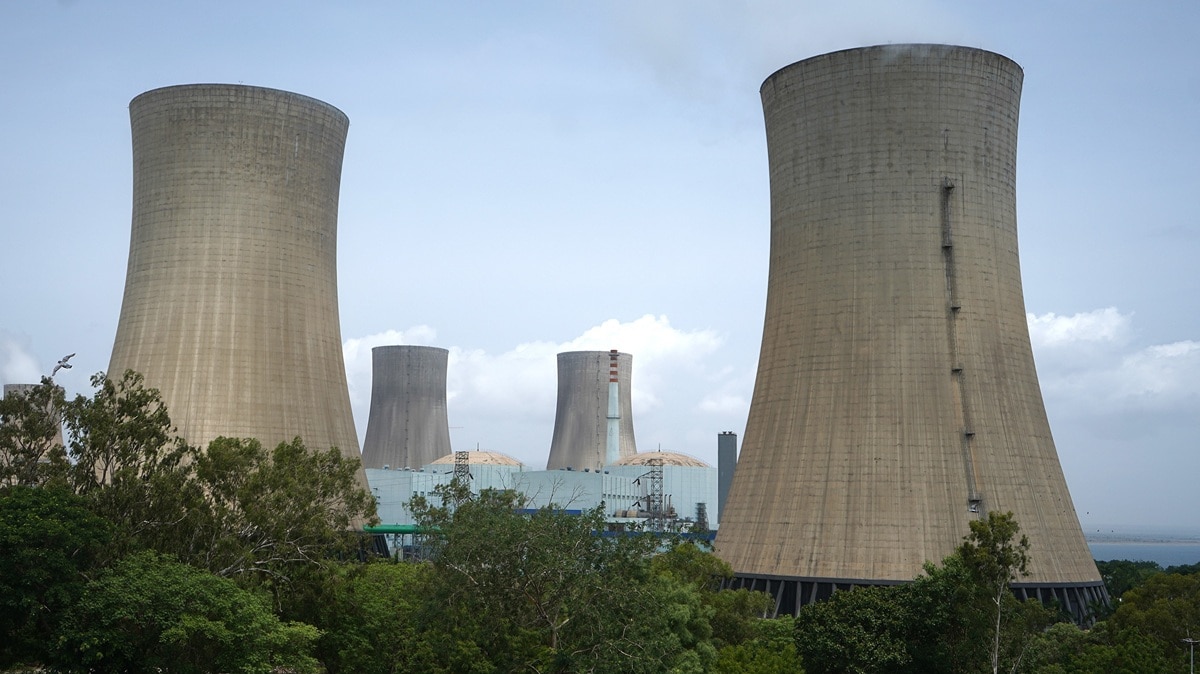
India's ambitious nuclear power strategy aims to address the nation's growing energy demands while pursuing climate goals, with projections indicating energy needs will triple by 2047.
New Delhi is making a bold commitment to nuclear energy as the foundation of its clean energy transition. The government has set an aggressive target of scaling nuclear capacity to 100 gigawatts (GW) by 2047, with the Nuclear Power Corporation of India Limited (NPCIL) leading this transformation.
Union Science and Technology Minister Dr. Jitendra Singh has confirmed that the previously restricted atomic energy sector is now open for private investment. Major industrial entities are preparing to establish captive atomic power plants as India moves to amend outdated atomic energy legislation to attract private capital.
Dr. Singh highlighted the government's increasing focus on nuclear energy, noting, "The Department of Atomic Energy's budget has grown from Rs 13,879 crore before 2014 to Rs 37,483 crore in 2025, representing a 170 percent increase."
Prime Minister Narendra Modi emphasized the ongoing nature of reform during his Independence Day address: "We have implemented significant reforms in nuclear energy and opened doors for private sector participation. We aim to combine our strengths."
Currently, India operates 25 nuclear reactors with a combined capacity of 8,880 megawatts (MW). Bhuwan Chandra Pathak, Chairman and Managing Director of NPCIL, told NDTV, "Our fleet includes 25 operational reactors with 17 more in various construction stages. We plan to commission at least one reactor annually."
The strategic roadmap outlines capacity increases to 22,000 MW by 2032 before reaching the 100 GW goal by 2047, aligning with India's Viksit Bharat (developed nation) vision and 2070 net-zero carbon emissions target. NPCIL expects to deliver at least 50 percent of this capacity, with private entities and imported technologies providing the remainder.
Finance Minister Nirmala Sitharaman announced a 'Nuclear Energy Mission for Viksit Bharat' in her Budget speech, advocating for legal amendments to facilitate growth. "Developing at least 100 GW of nuclear energy by 2047 is crucial for our energy transition efforts. To enable effective private sector partnerships, we will pursue amendments to the Atomic Energy Act and the Civil Liability for Nuclear Damage Act," she stated.
Sitharaman also revealed plans for a Rs 20,000 crore 'Nuclear Energy Mission for research & development of Small Modular Reactors (SMR)' with a goal of operationalizing at least five indigenous SMRs by 2033.
NPCIL is implementing "fleet mode" construction to accelerate deployment. "We're planning multiple fleets of ten 700 MW reactors each," explained Pathak. Sites have been identified at Kaiga (Karnataka), Bhimpur, Kakrapar (Gujarat), and Narora (Uttar Pradesh). "We've secured approvals for the first fleet and are developing detailed project reports for the second," he added.
The company specializes in Pressurised Heavy Water Reactors (PHWRs), which have evolved from 220 MW to the current 700 MW capacity. "We experienced initial challenges with the 700 MW units but have overcome them. Three 700 MW reactors are now operating efficiently," Pathak confirmed.
While indigenous technology forms the foundation, imported reactors will be essential to reach the 100 GW target. "Two Russian reactors are operational at Kudankulam with four more under construction," noted Pathak. Ongoing discussions with France's EDF for Jaitapur (Maharashtra) and the US-based Westinghouse for Kovvada (Andhra Pradesh) continue to progress. "Achieving our ambitious targets requires large-capacity reactors, and imported units will help bridge that gap," he emphasized.
Regarding fuel security, Pathak dismissed immediate concerns despite India's uranium shortage. "We have confidence in fuel supply for the next 22,000 to 25,000 MW," he stated. While acknowledging rising uranium prices and domestic shortfalls, he added, "We may need to acquire overseas mines, but this shouldn't present significant obstacles."
NPCIL claims significant cost efficiency, with Pathak stating, "Our latest completed reactor costs Rs 16 crore per MW, making it the world's most economical." Construction timelines have improved substantially, with several reactors completed within five years, excluding delays from post-Fukushima safety review implementations.
India is also advancing Bharat Small Reactor (BSR) and Bharat Small Modular Reactor (SMR) technologies. "BSR is a 220 MW PHWR with design modifications reducing land requirements," Pathak explained. The exclusion zone will decrease from 1.6 km to under 1 km through steel liners and hermetically sealed penetrations.
The SMR program, jointly developed by BARC and NPCIL, will provide flexible capacities ranging from 50 MW to 1,400 MW. "Design work is well-advanced, and we anticipate construction beginning within 2-3 years," Pathak indicated.
The government is considering amendments allowing 51 percent private ownership and revising liability frameworks to facilitate private sector participation. NPCIL has formed a joint venture with NTPC and signed agreements with other public sector undertakings. "We fully embrace this development," Pathak remarked. "A single organization cannot mobilize the resources required for this scale of expansion."
Safety remains the paramount concern. "Our 700 MW PHWR represents the world's safest reactor design," Pathak declared. "We've incorporated all Fukushima lessons, and our safety record since 1969 has been exemplary." NPCIL has achieved continuous reactor operation for 961 days without interruption and has upgraded older units to meet contemporary standards.
With India's energy demand projected to triple by 2047, substantial electricity generation expansion is essential. "Becoming a developed nation while addressing climate change requires base-load clean energy," Pathak emphasized. "Nuclear power will play a crucial role in this transition."
Nuclear power currently saves 40 million tons of carbon dioxide annually, with lifetime carbon emissions comparable to wind energy. "We are entirely confident," Pathak concluded. "NPCIL is prepared to meet and exceed established targets." He affirmed that NPCIL will provide guidance to the private sector to ensure a promising nuclear future.
Source: https://www.ndtv.com/india-news/india-bets-big-on-atomic-energy-to-power-carbon-free-future-9677552