
Medical Heroes Under Pressure: Inside Delhi's LNJP Hospital After the Red Fort Bombing
- Date & Time:
- |
- Views: 65
- |
- From: India News Bull
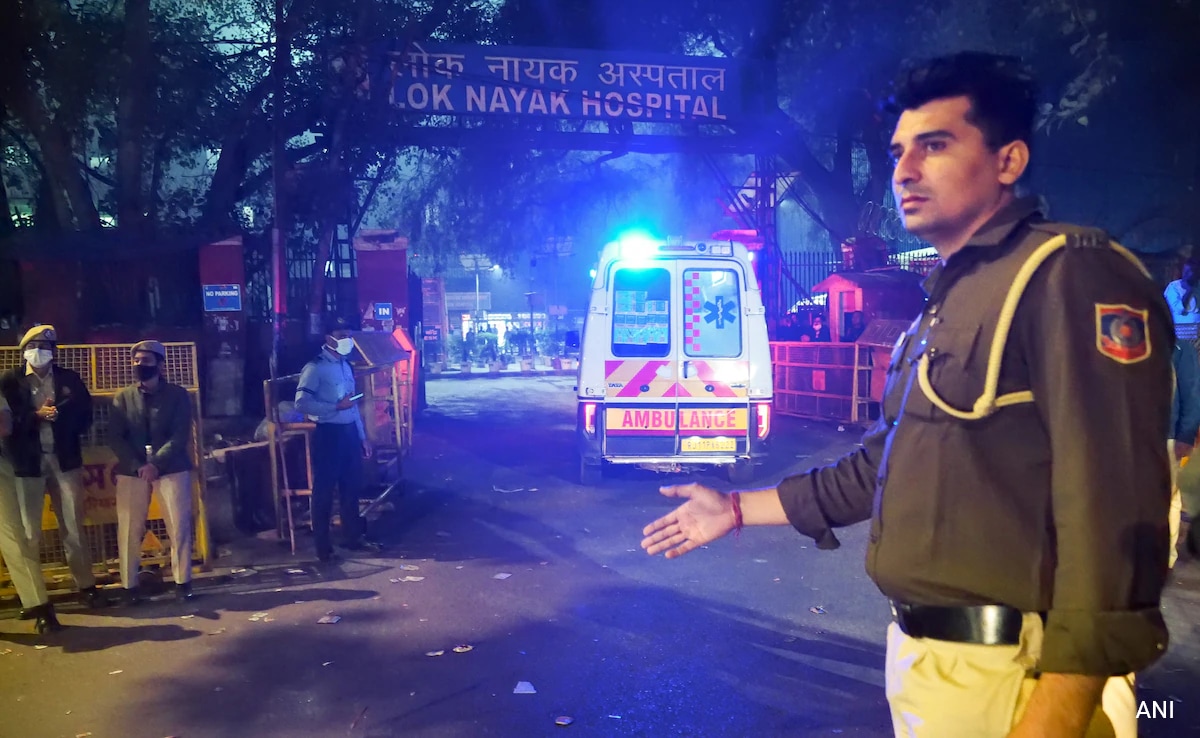
An ambulance rapidly arrived at Lok Nayak Hospital on November 10.
On the evening of November 10, emergency and forensic teams at Lok Nayak Jai Prakash Hospital faced an unprecedented crisis that tested their limits.
"It felt like a moral battle between dedicated medical professionals and those who betrayed their oath. While we struggled to save lives, these white-collar terrorists undermined our profession. Their actions have cast suspicion on all medical practitioners," revealed a resident doctor who requested anonymity.
A white Hyundai i20 detonated in a parking area near Red Fort last Monday evening, resulting in 13 fatalities and 20 injuries. The explosion was so powerful that numerous nearby vehicles sustained damage. Immediate chaos ensued as bystanders rushed to assist victims.
The explosion occurred shortly after authorities arrested eight individuals, including three physicians, and confiscated 2,900 kg of explosives, uncovering a sophisticated "white collar" terror network linked to Jaish-e-Mohammed and Ansar Ghazwat-ul-Hind spanning Kashmir, Haryana and Uttar Pradesh.
Ten suspects have been apprehended thus far, including three doctors associated with the controversial Al Falah University in Faridabad.
Fear gripped not only Delhi residents but also the medical professionals treating the incoming victims. Another resident doctor described the aftermath as "completely unprecedented." Inside the hospital, the atmosphere combined urgent medical response with profound trauma.
By late evening, LNJP Hospital mobilized over 50 doctors across multiple specialties—plastic surgery, orthopedics, general surgery, and ophthalmology—for continuous overnight surgical interventions.
A doctor who returned to duty despite completing his shift noted that the severity and nature of injuries shocked even seasoned medical teams.
"While we typically manage 50-60 patients daily, handling just 20-25 victims felt entirely different," he explained. The distinctive factor wasn't merely quantity but the horrific nature of the injuries—dismembered bodies, skull fractures, severe burns, and damaged internal organs.
To manage the influx effectively, hospital staff implemented a triage system, categorizing patients as Black (deceased upon arrival), Red (critical condition), or Green (minor injuries). Approximately 10 victims showed no signs of life upon arrival and were transferred directly to the morgue, where forensic specialists began immediate examinations. "By 4 AM, we had completed eight to nine postmortems," the doctor reported.
About 12 patients in the critical 'Red' category were admitted with severe burns, some requiring immediate surgical intervention. Four underwent immediate operations. One patient with nearly 70 percent burns unfortunately did not survive. Some families are still completing body claim formalities, while approximately twelve patients with less severe injuries were stabilized.
Beyond the physical trauma, hospital staff experienced significant emotional strain.
"Treating such patients, supporting their grieving families, and handling deceased victims has imposed tremendous psychological pressure on us," another doctor shared.
He described how normal protocols—consent documentation, administrative procedures—broke down as family members arrived in panic, demanding immediate information before standard formalities could be completed.
The hospital's forensic team worked continuously through the night. Another resident doctor had just returned home after completing a full shift and was preparing dinner when urgently summoned back to the hospital.
"This was clearly an extraordinary situation," he told reporters. Together with three junior doctors, a faculty member, and two additional physicians, he worked through the distressing night examining victims.
According to this doctor, the victims' conditions were catastrophic.
"Many exhibited multiple fractures, ruptured internal organs, shattered eardrums, and fractured skulls. Some bodies contained embedded foreign objects, and those deceased on arrival were severely burned," he explained. He performed five to six consecutive autopsies, meticulously reassembling body parts, documenting every injury and fracture, and maintaining proper evidence custody as remains were transferred to police and forensic teams.
After completing hospital postmortems, he joined the forensic team at the blast site. The scene was horrifying. "Body parts were scattered across the road—limbs, tissue fragments, internal organs." Collected samples were subsequently transferred to the National Investigation Agency and All India Institute of Medical Sciences, Delhi for DNA analysis.
For LNJP's medical teams, the Red Fort bombing represented not merely another emergency but a profound test of endurance, professionalism, and compassion under extraordinarily difficult circumstances, while Delhi residents processed shock, grief, and the unfolding terror investigation.
Source: https://www.ndtv.com/india-news/piecing-together-body-parts-chaos-unfolded-at-delhi-hospital-after-blast-near-red-fort-9661961