
Supreme Court Judge Warns of 'Civilisational Tremor' as India's Elderly Face Growing Isolation and Vulnerability
- Date & Time:
- |
- Views: 48
- |
- From: India News Bull
File photo
New Delhi:
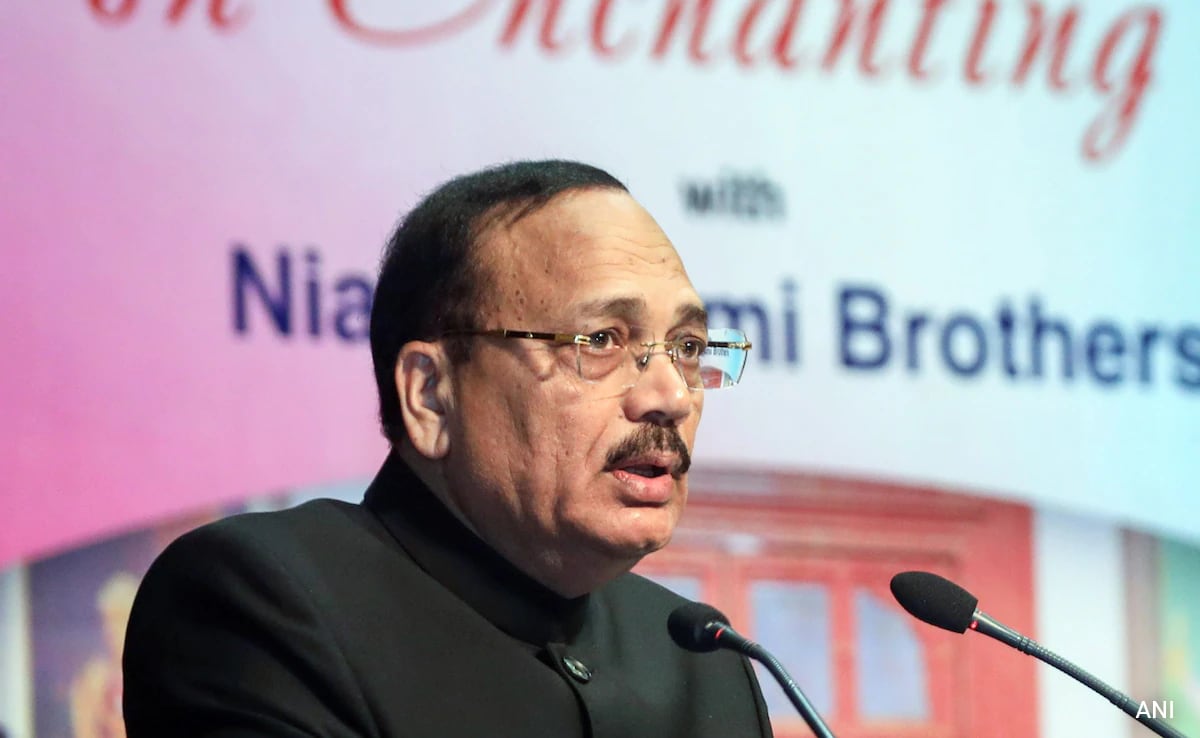
Supreme Court Judge Justice Surya Kant has raised an alarm about India potentially "losing the old world that kept us human," expressing deep concern over deteriorating intergenerational relationships and advocating for renewed social and legal frameworks to protect senior citizens.
During a special session on the Maintenance and Welfare of Parents and Senior Citizens (MWPSC) Act, Justice Surya Kant highlighted cases where elderly citizens fell victim to digital fraud, faced abandonment by family members, or became entangled in lifelong legal battles. He emphasized that the law must function as a "renewing framework of dignity" for the elderly.
The session, which took place on Monday, was attended by Social Justice and Empowerment Minister Virendra Kumar and Social Justice Secretary Amit Yadav, along with law students, officials, legal services authorities, and civil society representatives.
CJI-designate Surya Kant addressed the emotional, digital, and social vulnerabilities confronting India's aging population. "Prosperity has silently replaced proximity. Migration has opened new worlds of work, yet closed the doors between generations," he remarked, describing this shift as a "civilisation tremor."
The judge pointed out that aging in India was traditionally viewed as an ascension rather than decline, with elders serving as the "conscience of the narrative" in cultural and family life. However, modern developments have weakened these traditional structures. "We have gained new worlds but are in danger of losing the old one that kept us human."
Referencing a recent case of a widow who battled for maintenance for nearly five decades, Justice Kant explained how the Supreme Court restored her property under Article 142. "Justice demanded more than technical correctness," he noted. "The promise of dignity does not expire with age."
He called for enhanced coordination between NALSA, state legal services authorities, police, social welfare officers, and the Ministry of Social Justice to ensure early intervention and prevent neglect before it escalates to litigation. Nevertheless, he emphasized that institutions, regardless of their strength, cannot substitute for personal human connections.
"The bridge between the old and the new is built by the youth," he stated, urging young Indians to assist with digital transactions, provide companionship, or ensure no elderly person "stands alone in a queue."
Social Justice and Empowerment Minister Virendra Kumar remarked that Indian culture is rooted in reverence for elders, who form the "foundation on which the building of society stands." However, urbanization and evolving lifestyles have transformed family structures, often leaving parents isolated.
"The idea of the old-age home was never part of our Eastern culture. It is a Western thought," he observed, expressing regret that many young people relocate after securing employment, leaving parents to experience loneliness.
Kumar shared accounts from his visit to a Brahma Kumaris-operated old-age home in Mount Abu, describing how highly educated residents—including doctors, lawyers, and engineers—found themselves alone despite having children abroad. "Money is necessary, but money is not everything," he reflected.
Recounting instances where elderly parents transferred property to their children only to face subsequent neglect, the minister affirmed the government's readiness to help restore their rights.
"But mothers often say, 'Do not file a case against my son.' Even while suffering, the affection remains," he noted, emphasizing the need for societal empathy alongside legal protections.
Describing the MWPSC Act as a "historic law" safeguarding dignity and self-reliance, he encouraged communities to integrate senior citizens into everyday activities.
"We plan picnics every month. But do we ever think of visiting an old-age home nearby and speaking to the elders there?" he asked. "A simple touch, a conversation can make them feel they are not alone."
Social Justice Secretary Amit Yadav highlighted India's impending demographic transition, with the elderly population projected to increase from the current 10.38 crore to 34 crore by 2050.
"The ageing must be accompanied not by vulnerability but by dignity, security and meaningful participation," he stated.
Yadav explained that while the MWPSC Act implements the constitutional mandate under Article 41 to provide public assistance in old age, legal provisions alone cannot guarantee dignity. "Laws must be lived and dignity must be felt," he observed. "The primary objective must be to foster a compassionate, responsibility-driven mindset within families."
The secretary identified the digital divide as a growing challenge, exposing elders to fraud, exclusion, and misinformation as services increasingly move online. He emphasized that young family members can play a crucial role in assisting with medical appointments, online systems, welfare schemes, pensions, and property-related decisions.
Yadav also highlighted the ministry's MoU with NALSA to expand legal awareness camps nationwide. He stressed that legal literacy will empower elders to protect their property, seek maintenance, and access grievance redressal systems.
Source: https://www.ndtv.com/india-news/supreme-court-judge-surya-kant-warns-of-civilisational-tremor-we-risk-losing-old-world-that-kept-us-human-9656186