
The Collapse of Lalu Prasad Yadav's Political Dynasty: Family Discord and Electoral Defeat in Bihar
- Date & Time:
- |
- Views: 67
- |
- From: India News Bull
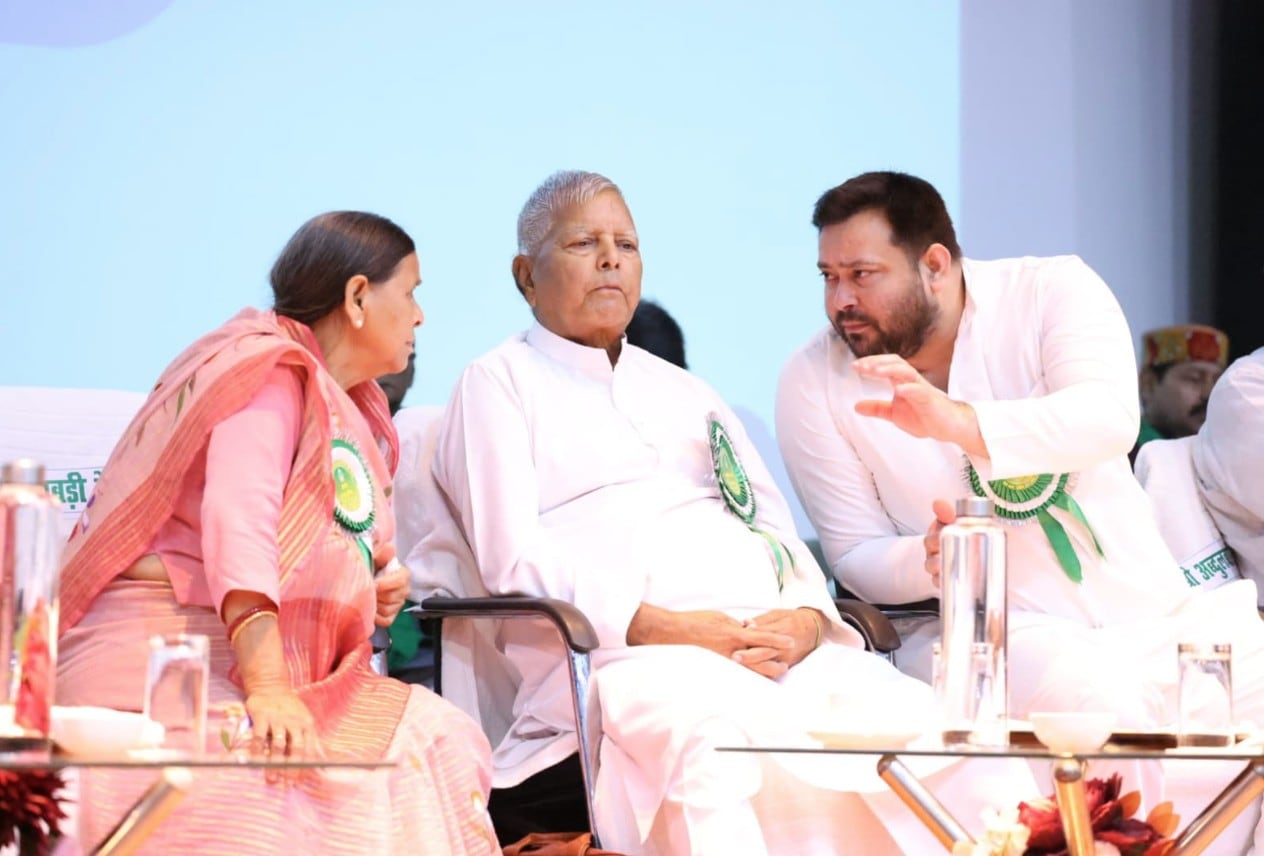
Lalu Prasad Yadav now finds himself in a political twilight, confronting the consequences of his own dynastic ambitions as family discord threatens his legacy.
The Yadav family saga epitomizes the volatile nature of dynasty politics—where power, familial relationships, and personal ambition create a fragile equilibrium that has now collapsed into chaos.
Today, Lalu stands at what could be described as his own "Autumn of the Patriarch," watching his carefully constructed political dynasty fragment before his eyes.
Dynastic succession in politics often creates fertile ground for internal conflict. Lalu himself established this pattern when he appointed his wife Rabri Devi as Chief Minister during his legal troubles related to the fodder scam, blurring the lines between family loyalty and governance.
During Rabri Devi's tenure, Lalu's brothers-in-law Subhash and Sadhu Yadav began asserting influence within the Rashtriya Janata Dal (RJD). Now, decades later, the very foundation of this political legacy appears to be disintegrating under its inherent contradictions.
The once-unified Yadav residence on Circular Road in Patna has become the epicenter of a family rebellion that threatens to permanently alter Bihar's political landscape.
The dramatic departure of Dr. Rohini Acharya, Lalu's second daughter who previously donated a kidney to her father, along with three of her sisters—Rajlakshmi, Ragini, and Chanda—and their families, reveals the severity of the family rupture.
Rohini's exodus stems from serious allegations against her brother Tejashwi Yadav and his close associates, Sanjay Yadav and Ramij Khan. Her departure represents more than a family disagreement—it constitutes a public condemnation of leadership that has led the RJD to its worst electoral performance in years.
Earlier in 2025, Lalu expelled his elder son, Tej Pratap Yadav, from both the party and family for six years. Tej Pratap subsequently formed his own political organization but failed to win his Mahua constituency in recent assembly elections.
The pattern of family discord extends further back, with Tej Pratap's former wife Aishwarya Rai—daughter of politician Chandrika Rai and granddaughter of former Chief Minister Daroga Prasad Rai—being forcibly removed from the family residence two years earlier.
In her media statements, Rohini claimed, "I have family. I was asked to leave by Sanjay Yadav and Ramij, who are friends of Tejashwi Yadav." She alleged physical assault with slippers and verbal abuse, accusations that neither Tejashwi nor his associates have publicly addressed.
The family fractures have created unlikely alliances, with Tej Pratap publicly supporting his sister Rohini and threatening action against Tejashwi's inner circle. Similarly, Uncle Sadhu Yadav has aligned himself with Rohini's faction.
Rohini, who narrowly lost the Saran Lok Sabha seat to BJP's Rajiv Pratap Rudy in 2024, has effectively been excommunicated from the family power structure.
Currently, only the eldest daughter Dr. Misa Bharati, a Member of Parliament representing Patliputra constituency, and Tejashwi remain with their parents in Patna.
Rohini's emotional departure statement described violent confrontations within the household and a profound sense of betrayal. "I have no family," she declared, highlighting how political ambitions had overtaken blood relationships. Her testimony reveals a family where former bonds of affection have devolved into hostility and estrangement.
For Lalu, once celebrated for his political acumen, these internal accusations expose vulnerabilities typically concealed beneath his charismatic public persona.
The RJD's electoral collapse has been catastrophic—plummeting from 75 seats in the 2020 assembly elections to merely 25 in 2025, marking its worst performance since 2010.
The Mahagathbandhan coalition, once positioned as a unified opposition to the NDA, has disintegrated to a mere 35 seats. Meanwhile, the NDA has secured a commanding 202 seats, demonstrating the volatile nature of political alliances and power.
This family drama evokes historical parallels of succession battles leading to dynastic collapse. Tej Pratap's expulsion from both party and family, coupled with his former wife's earlier ejection, demonstrates how personal conflicts inevitably spill into public political spheres.
As discord echoes through the Yadav residence, comparisons to other fallen political dynasties become inevitable. Lalu, once dominant in Bihar's political landscape, now confronts the unraveling of his creation—a political clan where loyalty has been subordinated to ambition, and familial bonds have been severed by the very power struggles they were meant to navigate.
The traditional values of family loyalty and trust have been supplanted by an atmosphere of suspicion and betrayal. The consequences extend beyond electoral numbers, affecting the fundamental relationships that once defined the Yadav political enterprise.
In this twilight period of his political journey, Lalu Prasad Yadav faces the disintegration of the dynasty he carefully constructed. The internal conflicts within his family transcend mere power struggles—they represent a fundamental crisis of identity and relevance in a changing political landscape.
History offers a clear warning: dynasties may provide temporary continuity but often lead to inevitable internal conflict—challenges arising not just from political opponents but from within the family itself.
The Yadav political legacy now stands at a critical juncture, uncertain whether it can regenerate or if it will ultimately collapse under the weight of its internal contradictions.
Source: https://www.ndtv.com/india-news/rohini-acharya-vs-brother-tejashwi-yadav-the-crisis-of-dynastic-politics-in-bihar-9647032