
India's Dual Success: Achieving Economic Growth While Advancing Social Inclusion According to UNDP
- Date & Time:
- |
- Views: 55
- |
- From: India News Bull
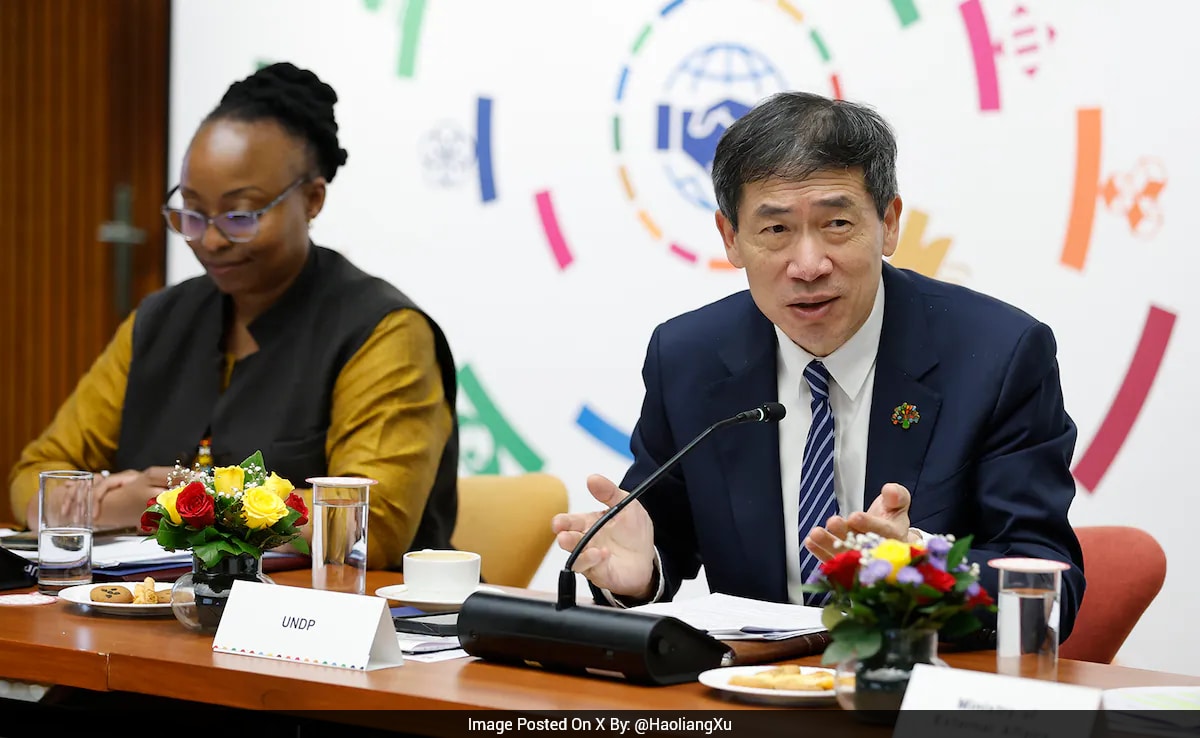
Haoliang Xu recently praised India's approach to balanced development, highlighting the Unified Payments Interface as an exemplary initiative.
New Delhi:
According to a senior United Nations Development Programme (UNDP) official, India has successfully demonstrated that economic advancement and social inclusivity can progress simultaneously, while also converting its domestic achievements into valuable global insights for creating a more equitable world.
Haoliang Xu, UNDP's Acting Administrator, emphasized that India's growth narrative extends beyond mere economic indicators, encompassing technological innovation and participatory governance to ensure comprehensive development goals are met without leaving anyone behind.
During an interview with PTI, Xu noted that India's dedication to climate adaptation, renewable energy implementation, and inclusive digital financial systems provides a model for harmonizing growth with environmental sustainability.
He observed that India continues to forge development pathways that maintain economic viability while demonstrating climate responsibility.
The UN Under-Secretary-General visited India for three days to strengthen existing partnerships and explore new collaborative opportunities, particularly in digital transformation and climate action initiatives.
Discussing global challenges, Xu referenced UNDP's latest Human Development Index, which reveals that worldwide progress in human development has decelerated to a 35-year low, remaining virtually stagnant over the past two years.
Despite these global concerns, he commended India's development approach to addressing various challenges, including climate change and poverty reduction.
"The country's commitment to just transitions, climate adaptation, renewable energy and inclusive digital finance offers a blueprint for balancing growth with sustainability," he stated.
"We can work together to align development objectives, development financing from all sources, and effective, accountable and inclusive institutional capacity even more closely," Xu added in his email interview.
The UNDP chief highlighted that India has demonstrated how rapid economic expansion can be complemented by deliberate investments in human capital, particularly focusing on historically marginalized populations.
"As a leading voice of the Global South, India is helping translate local success stories into global lessons through South-South cooperation, sharing not only its tools and technology but also the frameworks that make them work," he explained.
Xu specifically highlighted India's flagship programs such as MGNREGA and Ayushman Bharat, noting how they effectively integrate livelihood security with social protection mechanisms.
He praised India's digital public infrastructure and financial inclusion platforms, including the JAM trinity (Jan Dhan, Aadhaar, Mobile) and UPI, which have facilitated transparent direct benefit transfers to hundreds of millions, establishing precedents that many nations are now studying.
The JAM initiative connects individuals' bank accounts with their biometric identities and mobile numbers to enable streamlined government benefit transfers.
According to Xu, initiatives like the Aspirational Districts Programme demonstrate how data, evidence, and community engagement can reduce regional disparities and promote more equitable growth.
The UNDP acting administrator observed that India's growing emphasis on green employment opportunities and climate-resilient livelihoods—ranging from renewable energy to community-based conservation—aligns economic development with environmental stewardship and Sustainable Development Goals.
"The next phase of growth can further expand quality jobs, gender equality, and climate resilience to keep development inclusive and sustainable," he remarked.
"India's story is not only about growth, it is also about using technology, evidence and participatory governance to ensure that development objectives are achieved and no one is left behind," he added.
"These lessons are shaping a more equitable and sustainable world. Through South-South Cooperation, UNDP is pleased to be India's partner to share them with other developing countries globally," Xu stated.
He specifically commended India's Unified Payments Interface and CoWIN system, noting their effectiveness stems from addressing practical everyday challenges.
"The UPI digital payments are as simple as sending a text message. CoWIN tracked the administration of over two billion vaccine doses in record time during the COVID-19 pandemic and gave every person a verifiable vaccination record," he explained.
The UNDP official emphasized that India's digital platforms are distinctive because they operate on open, public digital infrastructure.
"This design encourages competition, lowers transaction costs and prevents monopolies."
"India's latest digital health innovation, U-WIN is a cutting-edge digital platform designed to electronically register and monitor the vaccination status of all expectant mothers and children across India," he noted.
"This people-centric platform - developed with technical support from UNDP - tracks and improves vaccine coverage nationwide," he added.
Xu also emphasized the necessity for concrete global climate action initiatives.
"Today, developing countries require about USD 2.4 trillion each year for climate action by 2030. The current multilateral finance commitment is reflected in the Baku to Belem Roadmap that calls for all actors to work together to scale up finance to USD 1.3 trillion per year by 2025," he stated.
"Yet accessing climate finance is still far too slow and complex. The climate crisis is here and now, and developing countries need urgent support to achieve their goals at scale," he added.
Regarding COP 30 in Brazil, Xu mentioned that financial support and international cooperation topped the agenda, alongside discussions on accelerating the implementation of national climate commitments.
"In particular, countries need financing systems that are simpler, faster and more predictable -- with multi-year windows and clear rules, not fragmented projects," he said.
"Adaptation must also be better funded. Protecting farms, water systems and communities is not charity -- it's smart economics: every dollar invested in adaptation yields up to ten dollars in returns." Xu explained.
He concluded by noting that UNDP is facilitating this vision's implementation: "For instance, with assistance from our UN partners and beyond, 86 countries are now implementing integrated national financing frameworks that aim to channel billions of dollars towards vital SDG areas like climate action, including help align private investment with national development objectives."
Source: https://www.ndtv.com/india-news/india-showed-economic-growth-social-inclusion-can-grow-together-undp-chief-9645881