
ISRO's Ambitious Space Timeline: Chandrayaan-4 in 2028, Space Station by 2035, and Lunar Astronauts by 2040
- Date & Time:
- |
- Views: 42
- |
- From: India News Bull
ISRO To Launch Chandrayaan-4 In 2028, Space Station By 2035: Chairman
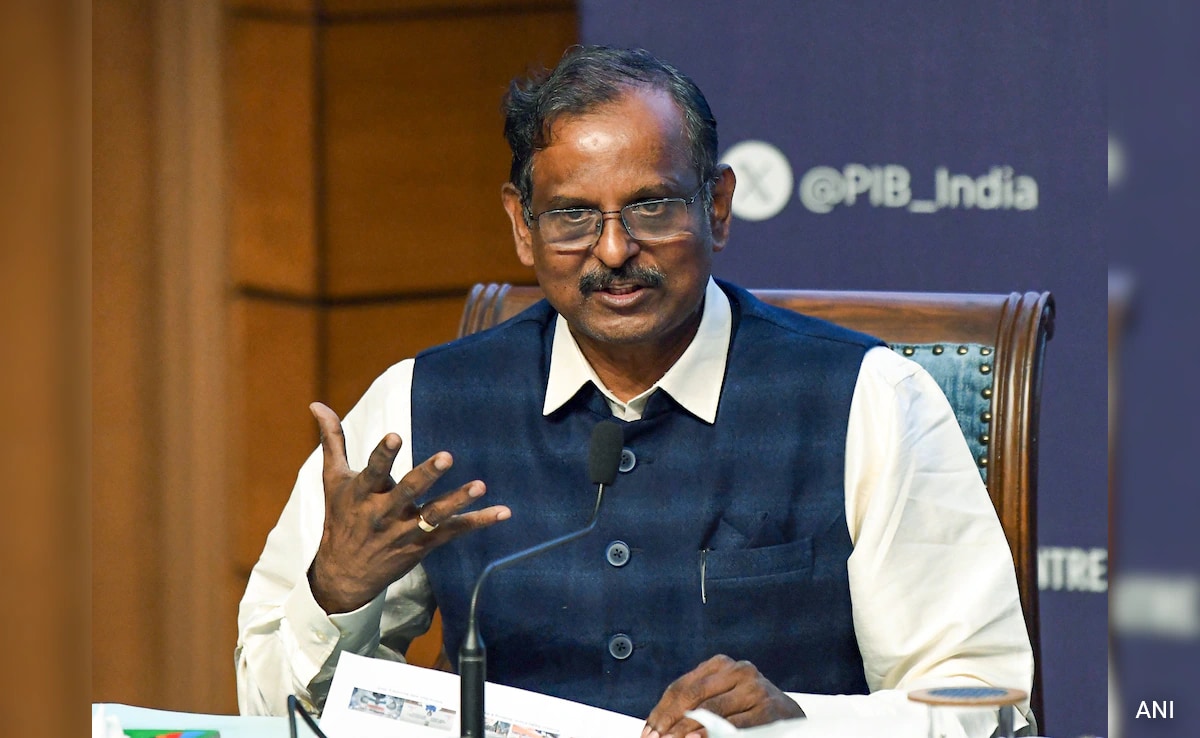
ISRO Chairman V Narayanan announced that the space agency is preparing for an intensive period with seven additional launches scheduled before the end of this financial year, while confirming India's first human spaceflight remains on track for 2027.
In his conversation with PTI, Narayanan emphasized that ISRO is entering a phase of significant expansion in scientific capabilities, technological advancement, and industrial capacity.
The chairman detailed that the upcoming launches include a commercial communication satellite and multiple PSLV and GSLV missions. A particularly significant milestone will be the launch of the first PSLV completely manufactured by Indian industry partners.
Narayanan confirmed government approval for the Chandrayaan-4 mission, which is designed as a lunar sample-return initiative and represents India's most sophisticated lunar exploration endeavor to date.
"We are targeting 2028 for Chandrayaan-4," he stated.
Another significant project in development is LUPEX, a collaborative lunar polar exploration program with Japan's JAXA space agency.
The space organization is simultaneously working to triple its spacecraft production capacity over the next three years to meet the growing demands of its expanding mission portfolio.
Chandrayaan-4's ambitious goal is to retrieve lunar samples and return them to Earth—a technical achievement previously accomplished only by the United States, Russia, and China.
The LUPEX mission will focus on investigating water ice deposits at the moon's south polar region.
Narayanan revealed that ISRO has initiated work on an Indian Space Station, with completion targeted for 2035.
"The first of the five modules will be placed in orbit by 2028," he explained.
This achievement would position India as the third major nation to operate an orbital space station, as the International Space Station approaches decommissioning and China's Tiangong station becomes fully operational.
Regarding India's pioneering human spaceflight mission, Gaganyaan, Narayanan clarified that only the timeline for unmanned test flights has been adjusted.
"Let me make it clear: the uncrewed mission was targeted for 2025. The crewed mission was always planned for 2027, and we are holding on to that date," he emphasized.
Three unmanned test missions will be conducted before Indian astronauts undertake their first spaceflight.
The chairman noted that Prime Minister Narendra Modi has directed ISRO to develop capabilities for sending Indian astronauts to the lunar surface and returning them safely by 2040.
India's extended human spaceflight strategy now aligns with other leading space powers. The United States is planning crewed lunar missions through its Artemis program, while China has established a 2030 target for its first crewed moon landing.
India currently holds approximately 2 percent of the global space economy, but ISRO aims to increase this to 8 percent by 2030, according to Narayanan.
He stated that India's space economy, presently valued at around USD 8.2 billion, is projected to grow to USD 44 billion by 2033. The global space economy stands at approximately USD 630 billion and could reach USD 1.8 trillion by 2035.
Narayanan highlighted that space-sector reforms have dramatically increased private participation in the industry.
He noted that over 450 industries and 330 startups are now active in India's space ecosystem—a remarkable increase from just three startups a few years ago.
"We now have a vibrant base ecosystem, and it will grow further," he affirmed.
India's private space sector has gained momentum following regulatory reforms implemented in 2020, which enabled private companies to develop rockets, manufacture satellites, and provide commercial launch services.
Source: https://www.ndtv.com/india-news/isro-to-launch-chandrayaan-4-in-2028-space-station-by-2035-chairman-v-narayanan-9644635