
Deadly Explosion at Nowgam Police Station: Links to Terror Network and Delhi Blast Revealed
- Date & Time:
- |
- Views: 50
- |
- From: India News Bull
The police station was severely damaged in the blast.
Srinagar:
Nine people lost their lives and 32 others sustained injuries when a substantial cache of confiscated explosives stored at a police station in Nowgam near Srinagar, Jammu and Kashmir, detonated on Friday night.
The majority of fatalities were policemen and forensic team officials who were examining the explosives. Two officials from the Srinagar administration also perished in the explosion.
The blast occurred while personnel were handling explosive materials recently transported from Faridabad, Haryana.
Injured victims were transported to the Indian Army's 92 Base Hospital and Sher-i-Kashmir Institute of Medical Sciences (SKIMS) for treatment.
Jammu and Kashmir Director General of Police (DGP) Nalin Prabhat confirmed that those killed included a State Investigation Agency official, three Forensic Science Laboratory officials, two crime wing officials, two revenue officials, and a tailor associated with the team.
He further stated that 27 police personnel, two revenue officials, and three civilians suffered injuries in the incident.
"Due to the unstable and sensitive nature of the recovered materials, they were being handled with extreme caution. However, an accidental explosion occurred at approximately 11:20 PM on Friday. Any additional speculation regarding the cause of this incident is unnecessary," he informed reporters.
The Nowgam police station was instrumental in cracking the case involving Jaish-e-Mohammed terror outfit posters placed in various locations throughout the area.
These posters exposed a terror module involving radicalized highly-qualified professionals. This discovery led to the recovery of extensive explosive materials and the arrest of several terror-linked doctors.
In October, one of the arrested doctors, Adeel Ahmad Rather, was observed placing these posters that threatened major attacks on security forces and "outsiders" in Kashmir. His arrest on October 27 uncovered a sinister network, later identified as responsible for the Delhi blast that claimed 13 lives earlier this week.
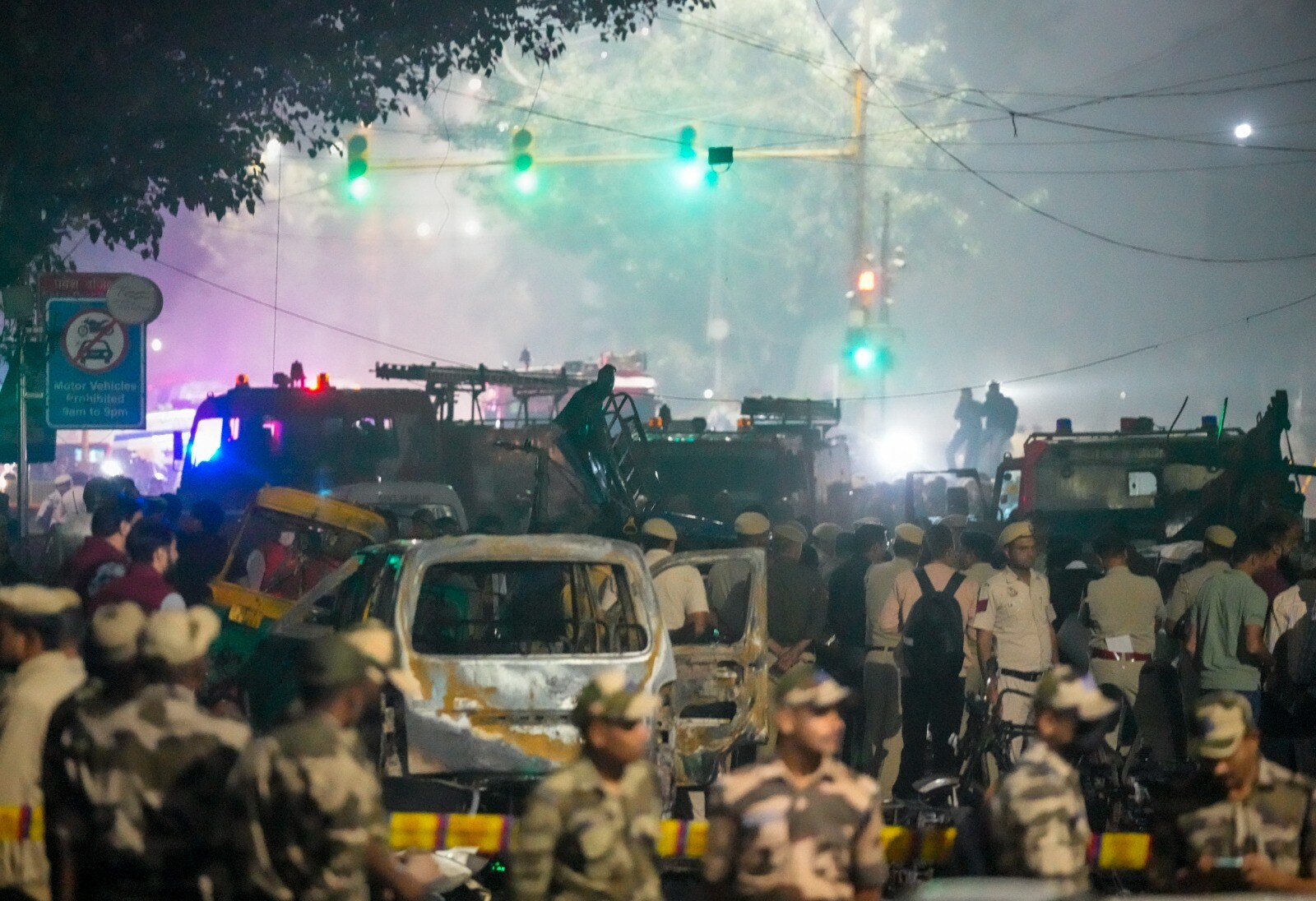
Security personnel at the spot after a blast occurred in a car near Red FortPhoto Credit: PTI
The investigation into the posters uncovered a "white-collar terror ecosystem, involving radicalized professionals and students in contact with foreign handlers, operating from Pakistan and other countries," according to Jammu and Kashmir police.
When police reviewed CCTV footage from areas where the Jaish posters appeared, they identified Rather, who had worked at the Government Medical College in Anantnag until October last year before relocating to Saharanpur in Uttar Pradesh.
He was promptly arrested, and an assault rifle was recovered from his locker at the Government Medical College.
During his interrogation, another doctor's name emerged—Muzammil Shakeel, who worked at Al-Falah Medical College in Haryana's Faridabad. During raids at properties associated with Shakeel, a joint team of Jammu and Kashmir and Haryana Police recovered nearly 3,000 kg of ammonium nitrate. Shakeel's arrest led to further revelations and the arrest of another doctor, Shaheen Saeed—who worked at the same university—on Monday.
Hours later, an explosion tore through a car stopped at a red light on a crowded road near the iconic Red Fort, killing 13 people, injuring more than 20, and damaging several vehicles.
The following day, another doctor—Umar Nabi—was implicated. Top sources revealed he was driving the Hyundai i20 car involved in the blast. Sources within the National Investigation Agency, which is investigating the incident, indicated that the seizure of bomb-making chemicals may have created panic among the suspects, compelling them to relocate.
NDTV sources suggested that the nature of the blast indicates the suspect likely assembled the improvised explosive device (IED) incorrectly. Investigators believe the suspects, acting in panic, failed to arm the IED for maximum damage.
Source: https://www.ndtv.com/india-news/ammonium-nitrate-confiscated-by-cops-explodes-inside-police-station-in-srinagars-nowgam-casualties-feared-9638701