
Global Carbon Report 2025: India Shows Slower CO2 Emissions Growth Amid Climate Crisis
- Date & Time:
- |
- Views: 53
- |
- From: India News Bull
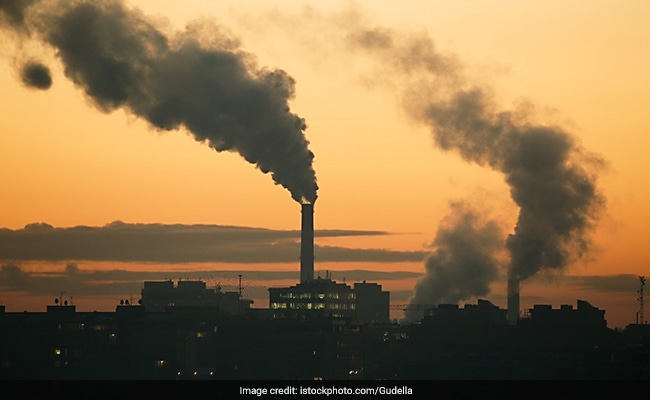
Despite a moderation in growth, India's carbon emissions continue to increase overall according to scientists.
New Delhi:
According to a report published Thursday by a global network comprising more than 130 climate scientists and research institutions, India's carbon dioxide emissions are projected to rise by 1.4 percent in 2025, representing a slower increase compared to previous years.
The Global Carbon Budget 2025 report, released at COP30 in Belem, Brazil, attributes this slowdown to an early monsoon that reduced cooling demand and to substantial growth in renewable energy, which has kept coal usage almost flat.
However, the report cautions that despite this moderation, India's overall emissions continue on an upward trajectory.
On a global scale, fossil-fuel carbon dioxide emissions are expected to reach an unprecedented 38.1 billion tonnes in 2025, increasing approximately 1.1 percent from 2024 levels.
China's emissions are forecast to increase by about 3 percent in 2025, primarily driven by sustained industrial activity and growth in coal consumption, despite record additions in renewable energy capacity.
The United States, ranking as the world's second-largest emitter, is expected to experience a decline in emissions of around 2.2 percent due to decreasing coal utilization and slower oil demand.
The European Union's emissions are projected to decrease by 4.2 percent.
These four major emitters collectively account for nearly 60 percent of global fossil CO2 emissions.
The study indicates that the remaining carbon budget consistent with limiting warming to 1.5 degrees Celsius has diminished to approximately 170 billion tonnes of CO2, equivalent to barely four years of emissions at current rates.
Atmospheric CO2 concentrations are projected to increase to 425.7 parts per million next year, approximately 52 percent above pre-industrial (1850-1900) levels.
According to the report, the planet's capacity to absorb CO2 through land and ocean sinks is diminishing.
Scientists estimate that roughly 8 percent of the increase in atmospheric CO2 since 1960 can be attributed to climate change reducing the effectiveness of these natural sinks.
The land sink decreased significantly during the 2023-24 El Nino and is only partially recovering as higher temperatures reduce plant productivity and increase respiration.
The ocean sink, which has absorbed approximately 29 percent of emissions over the past decade, has shown minimal growth since 2016 because warmer water has reduced capacity to hold CO2.
Global emissions from land-use change, such as deforestation, are projected to decline to approximately 4.1 billion tonnes of CO2 in 2025 as the El Nino event subsides.
Lead author Pierre Friedlingstein stated that with CO2 emissions still increasing, maintaining global warming below 1.5 degrees Celsius is "no longer plausible".
The report highlighted that 35 countries have successfully lowered emissions while expanding their economies between 2015 and 2024, twice the number compared to a decade ago.
Source: https://www.ndtv.com/india-news/indias-co2-emissions-see-slower-increase-in-2025-report-9625422