
The Cultural Phenomenon of "6-7": How Two Digits Became Gen Alpha's Viral Expression
- Date & Time:
- |
- Views: 55
- |
- From: India News Bull
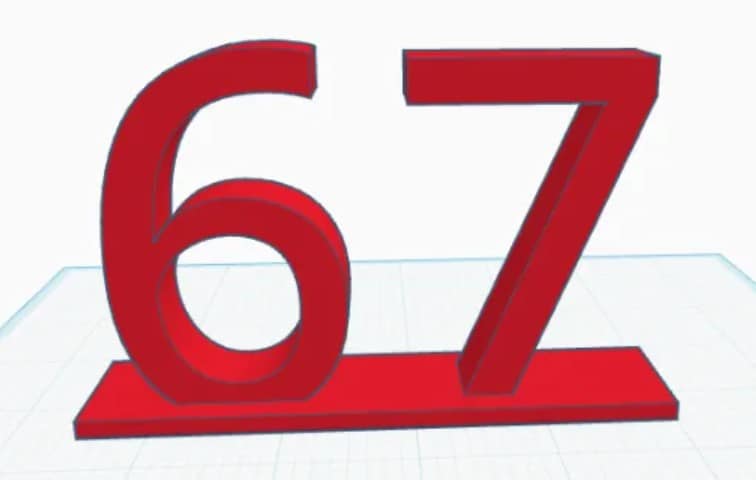
Let me begin with a candid admission: I have no understanding of what "6-7" means. And therein lies the central thesis of this exploration.
In a year already overflowing with algorithmic peculiarities, Dictionary.com, the internet's definitive authority on English vocabulary, has crowned "6-7" - yes, simply these digits - as its Word of the Year for 2025. Not "sixty-seven," which would be considerably more logical. Rather, it's "six-seven," typically delivered with an expressionless shrug and a hand gesture resembling someone uncertainly weighing invisible objects. It effectively serves as the linguistic equivalent of a raised eyebrow coupled with an apathetic "meh." And its presence is ubiquitous.
For generations raised on contextual understanding, grammatical structure, and proper articles, this selection represents a form of linguistic capitulation. However, for Generation Alpha, it stands as a perfectly meaningless, and therefore perfectly meaningful, triumph. This viral expression isn't actually a word - which is precisely the point. Ask any Gen Alpha child what "6-7" signifies, and you'll likely receive a smirk, a shrug, and the characteristic gesture. It functions as a response to virtually any question, from "How was your exam?" to "What would you like for lunch?" It serves as a reminder that language isn't solely about conveying meaning - it's about creating community. "6-7" may disappear by next spring, supplanted by whatever Skrilla or another musical phenomenon conjures next. But currently, it stands as testimony to the strange, whimsical, and remarkable ways humans employ language to play, connect, and confound.
The expression's origin story presents a delightfully chaotic blend of profundity and absurdity. It emerged onto the global scene through rapper Skrilla's 2024 track, 'Doot Doot (6 7).' In this song, Skrilla delivers the line "6-7" with such enigmatic conviction that fans began speculating wildly: Was it referencing the crime-plagued 67th Street in his hometown of Philadelphia? A coded allusion to transformation ("negative to positive," as Skrilla later suggested)? Or simply a catchy numerical hiccup?
Whatever its intended significance, TikTok performed its characteristic social media alchemy: transforming ambiguity into virality. "6-7" quickly became intertwined with professional basketball culture. The expression became intrinsically connected to 6'7" NBA star LaMelo Ball, who was filmed mouthing the lyrics while the song played, providing immediate visual and numerical context. Subsequently, it gained momentum through the "67 Kid," a child whose enthusiastic exclamations and accompanying palms-up, see-sawing hand gesture evolved into a foundational meme. From there, the phrase infiltrated school corridors, sports broadcasts, and social media feeds like a linguistic contagion. "6-7" functions as a verbal shrug, an interjection, or a universal, minimal-effort punchline.
It's not a word. It's not a number. It's a vibe, a mood, a generational signal, a Gen-Alpha inside joke. Similar to "skibidi" before it, which for several years held the world captivated, "6-7" represents the triumph of nonsense over nuance. Like its nonsensical predecessor, which emerged from animated, camera-headed protagonists battling singing toilets, "6-7" thrives on the separation of sound from sense. It epitomizes "brainrot," yet its very absurdity constitutes its greatest strength. It operates as a contagion within common social interactions, a sonic trigger that bypasses rational thought and connects directly to our shared juvenile sense of humor.
Thus, "6-7" surrounds us everywhere. And what does the inescapable, yet transient, popularity of "6-7" truly reveal about our current cultural moment?
Language is increasingly performative: "6-7" isn't so much spoken as it is enacted. It encompasses gesture, tone, timing - a theatrical shrug conveyed through two numbers and three syllables. The less definitive meaning a word possesses, the more interpretations we can project onto it. "6-7" provides a blank canvas for expressing irony, indifference, or exuberance. Creativity flourishes in ambiguity. Who would have anticipated that two digits could evolve into a cultural phenomenon? "6-7" reminds us that numbers, divorced from their arithmetic function, can serve as symbols, jokes, even social connectors. Numeracy has regained its cool factor.
Simultaneously, "6-7" has achieved worldwide recognition. From Michigan classrooms to Malaysian boat races, the phrase has transcended borders. English, as the lingua franca of meme culture, provides the framework for such viral expressions. Globalization generates shared absurdity. In our era of endless scrolling, what proliferates is what adheres - not because of profundity, but because it's repeatable, adaptable, and ridiculous. Nevertheless, it's being prohibited in classrooms for disrupting lessons. Teachers report outbreaks of "six!" followed by choruses of "seven!" - a call-and-response ritual that leaves adults mystified and children delighted.
For older generations, "6-7" remains perplexing. This epitomizes the generational inside joke: a shared code that excludes the uninitiated. Perhaps the most compelling sociological function of "6-7" is its role as a generational identifier. It serves as the perfect, low-stakes generational "inside joke." It creates immediate solidarity among users, functioning as a shibboleth that instantly distinguishes the "in-group" (those who understand) from the perpetually confused "out-group" (generally anyone over 25). "6-7" represents solidarity in syllabic form. It's the linguistic equivalent of a secret handshake - one that communicates, "We comprehend this. You don't. And that's perfectly acceptable."
The expression is a masterpiece of linguistic efficiency. It utilizes the globally standardized numerical system to create a uniquely Anglo-centric, yet universally translatable, in-joke. It demonstrates that linguistic innovation no longer depends on inventing new words, but on re-contextualizing existing elements. Numeracy matters here not for its mathematical significance, but for its ubiquity. The numbers six and seven appear constantly in clocks, calendars, and sports scores, offering Generation Alpha endless opportunities for playful subversion.
The dissemination of "6-7" exemplifies digital globalization. The American hip-hop and NBA ecosystems, which ordinarily might hold little relevance in India or Indonesia, provide the foundational content, subsequently amplified by US-dominated social media platforms. The expression traverses oceans, classrooms, and languages, confirming English's role not merely as a tool for commerce or diplomacy, but as the primary channel for global algorithmic humor. An Australian child exclaiming "six-seven" in Sydney isn't making a localized joke, but participating in a coordinated, worldwide experience.
Today's generation gap is thus defined not by profound ideological differences, but by sheer incomprehension. When an adult inquires, "What does it mean?" and a child responds, "6-7," the child hasn't failed to communicate; they've succeeded at the highest level. They've employed language to assert their independence, their algorithmic fluency, and their collective resistance to defined meaning. They're exercising their linguistic capabilities, not by innovating syntax, but by reducing semantics to zero.
The term may vanish within six or seven months, replaced by some equally bewildering sequence of sounds or symbols. But currently, "6-7" stands tall as a six-foot-seven monument to the beautiful, baffling, and indeed, brain-rotted state of contemporary communication. We may not understand what it means, but we recognize it as a phenomenon.
So the next time someone asks how you're doing, try responding with a straight face and a gentle hand wobble: "6-7." If they laugh, you've been accepted. If they frown, you've just widened the generational divide - and deepened the mystery.
(Shashi Tharoor has been a Member of Parliament from Thiruvananthapuram, Kerala, since 2009. He is an author and a former diplomat)
Disclaimer: These are the personal opinions of the author
Source: https://www.ndtv.com/opinion/the-inescapable-nonsense-of-6-7-9620241