
Supreme Court Cites Investigative Failures in Acquittal of Final Nithari Murder Case: Justice and Evidence Standards
- Date & Time:
- |
- Views: 58
- |
- From: India News Bull
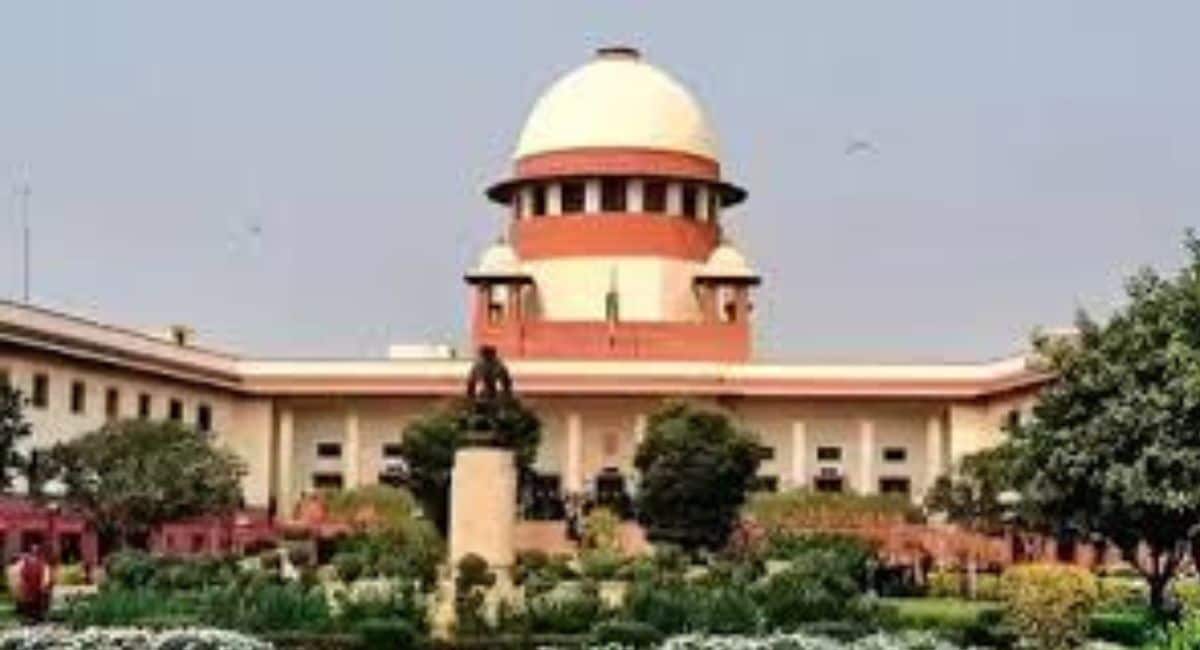
The Supreme Court expressed on Tuesday that it was "deeply regrettable" that the true perpetrator of the horrific Nithari killings remains unidentified despite an extensive investigation.
A three-judge bench led by Chief Justice B R Gavai, along with Justices Surya Kant and Vikram Nath, acknowledged the heinous nature of the crimes and the immeasurable suffering endured by the victims' families.
"Despite prolonged investigation, the identity of the actual perpetrator has not been established in a manner that meets legal standards," the bench stated while acquitting Surendra Koli in the final Nithari murder case.
The notorious Nithari killings came to light on December 29, 2006, when skeletal remains of eight children were discovered in a drain behind businessman Moninder Singh Pandher's Noida residence. Koli, who worked as Pandher's domestic help at the time, was implicated in the crimes.
In its judgment, the Court emphasized that criminal law prohibits convictions based on conjecture or hunches.
The bench highlighted several investigative failures: the crime scene was not secured before excavation commenced, alleged disclosures were not properly recorded, remand documents contained contradictory information, and Koli was subjected to extended police custody without timely court-mandated medical examination.
The Court granted Koli's curative petition challenging his conviction in the case involving the alleged rape and murder of a 15-year-old girl in Nithari.
"We recognize the principle of finality and understand that curative relief is exceptional with narrow grounds. This case, however, meets that demanding threshold," the bench noted.
The judges determined that the confession underpinning the conviction was legally compromised on grounds already accepted by the Supreme Court in related Nithari cases.
They further stated that the purported discoveries failed to satisfy statutory requirements for admissibility, and the forensic and investigative record did not provide the necessary connections.
"Once these keystones are removed, the circumstantial chain collapses. The conviction cannot stand without departing from principles now authoritatively applied to indistinguishable prosecutions from the same occurrence," the bench observed.
The Court emphasized that Article 21 of the Constitution demands fair, just, and reasonable procedure, particularly in cases involving capital punishment. While Koli's death sentence in this case was previously commuted to life imprisonment on January 28, 2015, the conviction still carried profound consequences.
The bench asserted that maintaining a conviction based on evidence the Supreme Court had already rejected as involuntary or inadmissible in the identical fact-matrix violated Article 21 and Article 14 of the Constitution, which requires similar cases to be treated alike.
They noted that DNA analysis in the case linked certain remains to families of missing persons but only aided in identification.
Regarding physical evidence, the bench pointed out that knives and an axe were presented without proof of blood, tissue, or hair consistent with their alleged use in the crimes. There was no credible chain of custody or expert testimony establishing how a domestic helper with no medical training could perform the precise dismemberment described.
The Court observed that these evidentiary gaps were central to acquittals in the other 12 cases and were equally present in this case.
Evidence also revealed that police and public were already aware that bones and articles were present in the area, and excavation had begun before Koli arrived, negating the element of discovery by the accused.
The bench emphasized that legal conclusions cannot vary from case to case when the premises are identical.
They noted that Koli's statement under section 164 of the CrPC was recorded after approximately 60 days of continuous police custody, without meaningful legal representation.
The recording magistrate failed to document the clear satisfaction required by statute. The investigating officer's proximity to the recording process, including initial presence and subsequent access, compromised the environment of voluntariness.
The bench observed that the statement itself repeatedly referenced tutoring and prior coercion, concluding there was no principled basis to treat the statement as voluntary and reliable in this case when it had been judicially discredited in all others.
In October 2023, the Allahabad High Court acquitted Koli in 12 cases and Pandher in two, overturning death sentences imposed by the trial court in 2017.
The Central Bureau of Investigation and victims' families challenged these acquittals before the Supreme Court, but the top court dismissed all 14 appeals on July 30 this year.
Source: https://www.ndtv.com/india-news/regrettable-that-real-perpetrator-not-identified-supreme-court-in-nithari-killings-case-9618516