
Identifying the Lost: How Families Recognized Delhi Blast Victims Through Personal Belongings
- Date & Time:
- |
- Views: 64
- |
- From: India News Bull
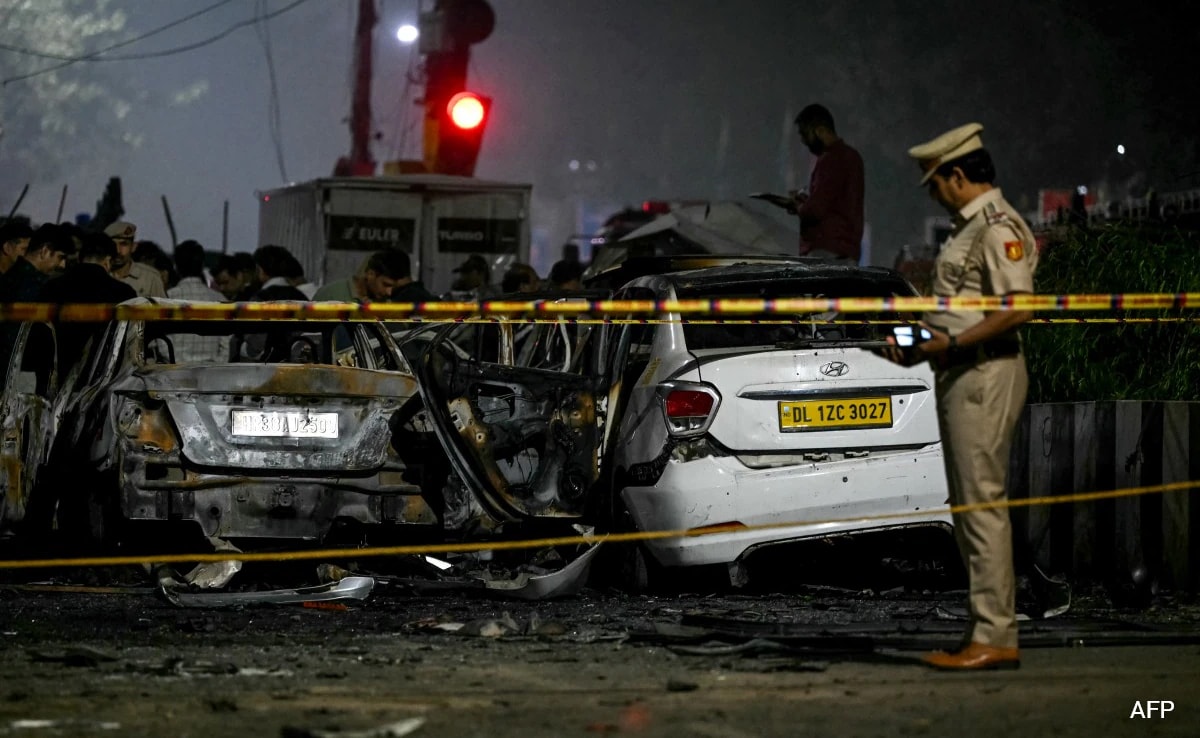
The explosion at Red Fort claimed eight lives and injured more than 20 individuals.
New Delhi:
In the aftermath of the Red Fort explosion, families were left to identify their deceased loved ones through tattoos, torn shirts, and jackets amidst the devastating tragedy that struck the capital city on Monday.
At LNJP Hospital corridors, relatives clung desperately to hope until the heartbreaking moment when a familiar ink pattern, torn sleeve, or blue shirt confirmed their worst fears.
Among the deceased was Amar Kataria, 34, a pharmaceutical businessman from Chandni Chowk. Though his body was severely burned, his family identified him by the tattoos he had gotten to honor his parents and wife. What once symbolized love became his only means of identification.
For other victims, clothing items became the final connection between the living and the dead.
The incident occurred when a high-intensity explosion tore through a slow-moving vehicle at a traffic signal near Gate No. 1 of the Red Fort Metro station on Monday evening, killing at least 12 people and wounding numerous others.
Idris spent the entire night searching for his 35-year-old nephew, Mohammad Zunman, a battery-rickshaw driver who transported passengers through Chandni Chowk's narrow streets. Zunman's GPS signal disappeared around 9 pm on Monday.
"Police directed us to check the hospital, so we went to LNJP but couldn't find him," Idris explained. "They showed us four bodies that we couldn't recognize." While the family was filing a missing person report at Shastri Park police station, they received a devastating call.
"The caller informed us a body had been found and asked us to come identify it," said Idris. "Some body parts were missing, including legs. We recognized Zunman by his blue shirt and jacket."
Zunman was his family's sole provider. His physically challenged wife remained beside his body throughout the night, unable to move or speak, according to Idris.
"He had three children. He was only thirty-five. He drove his rickshaw in Chandni Chowk daily. Now his children have nobody," Idris lamented.
For 30-year-old Pankaj Sahni's family, the night began with anxiety and ended in tragedy.
His father, Ram Balak Saini, first saw news reports about the explosion on television around 9:30 pm. Pankaj, a cab driver, had left home around 5:30 pm Monday to transport a client to Old Delhi.
"I repeatedly called him but received no response," Ram Balak told PTI. "My friends also tried, but his phone remained unreachable. We hurried to the blast site; everything was chaotic." The family attempted to file a missing person report at Kotwali police station but were instructed to return the following morning.
"We continued searching and calling him, but still no response," he recalled. "Then police called, asking what my son was wearing. I told them—a shirt and blue jeans." The family was summoned to LNJP Hospital shortly afterward.
"I thought they would take us to the injured ward," Ram Balak said. "Instead they took us to where bodies were kept. One of my relatives went inside and identified Pankaj," said Ram Balak, who performed his younger son's funeral rites on Tuesday.
Pankaj's vehicle was discovered nearby, completely destroyed.
"He was our family's only income earner," his father said. "Our vehicle is gone, and so is our son."
Damaged vehicles, torn clothing, and the odor of burnt metal still permeate the narrow lanes near Red Fort.
For many who waited through the night outside hospitals and police stations, these fragile remnants of ordinary life—a tattoo, fragments of torn clothing—carried unbearable significance.
The explosion didn't merely destroy metal and glass; it shattered families, leaving them to identify their loved ones from whatever little the fire had spared.
Source: https://www.ndtv.com/india-news/tattoos-torn-clothes-how-families-identified-delhi-blast-victims-9618167