
US Embassy's Contrasting Response to Terror Attacks in India and Pakistan Raises Concerns
- Date & Time:
- |
- Views: 42
- |
- From: India News Bull
Indians on X said the US embassy's post on the Delhi blast didn't mention "terrorism"
New Delhi:
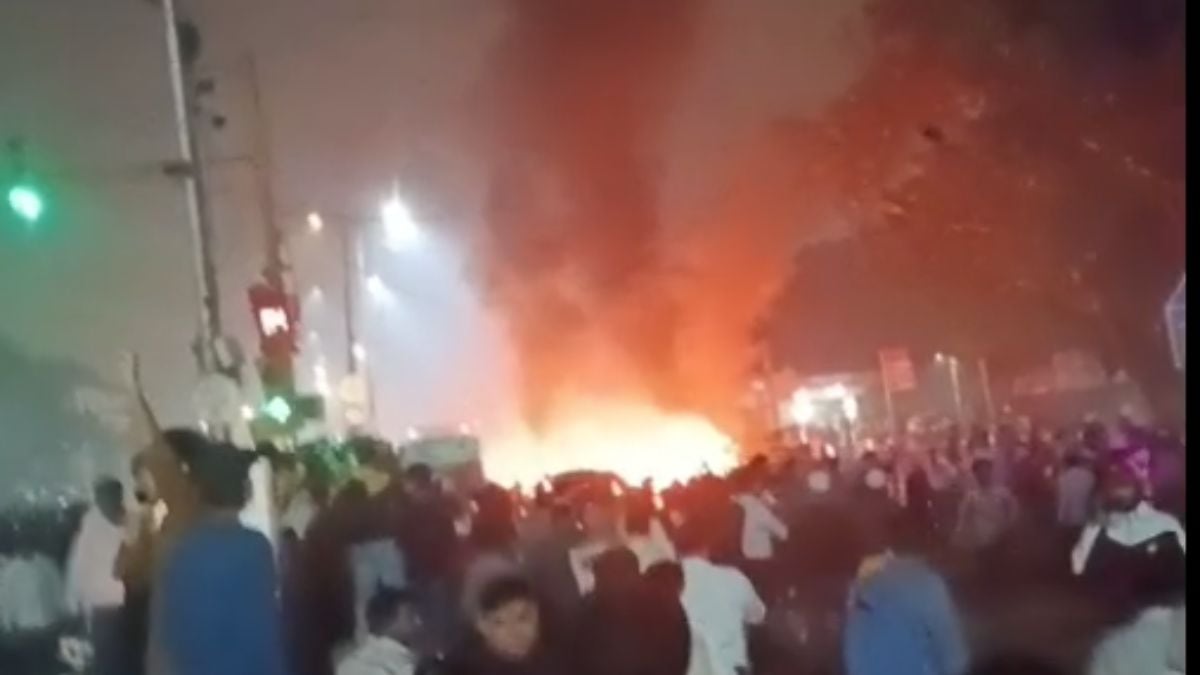
The US embassy faced sharp criticism from Indian social media users over its post regarding the explosion near Delhi's Red Fort that claimed nine lives. Critics highlighted that the embassy's message on X appeared a day after the incident occurred.
Many pointed out a concerning omission - the US embassy's statement made no reference to terrorism, despite the car bomb explosion at a busy traffic stop clearly being an act of terror in one of Delhi's most crowded areas.
"Our thoughts and prayers are with the families of those who were lost in the terrible explosion in New Delhi last night. We wish a swift recovery to those who were injured. Ambassador Sergio Gor," read the post from the US embassy in India's official X account.
In response, numerous social media users, including geopolitical experts with decades of experience, highlighted what they described as a significant discrepancy between this message and the embassy's statement following a blast at an Islamabad court complex in Pakistan.
The US embassy in Islamabad posted: "The United States stands in solidarity with Pakistan in the struggle against terrorism. Our condolences to the families of those who lost their lives in today's senseless attack. We wish a swift recovery to those injured. We condemn this attack and all forms of terrorism and remain committed to supporting the Government of Pakistan's efforts to ensure peace and stability in their nation."
Indians questioned why the US embassy prominently mentioned Pakistan's "struggle against terrorism" while avoiding the term "terrorism" entirely when referring to the Delhi car bombing that killed nine people.
Additional criticism centered on timing, with observers noting the US embassy promptly condemned the Islamabad blast that occurred earlier the same day, yet took nearly 24 hours to acknowledge the Delhi attack.
Banker Shiva Mudgil commented: "It took the US Embassy in India nearly a day to tweet condolences for the terror attack here, but the US Embassy in Pakistan was quicker for the Pakistani attack. It seems terror in India is viewed through a different prism than elsewhere."
Another X user, Sheffali Singh, expressed that the word choice and delayed response suggested a troubling double standard in how terrorist incidents in India are perceived, stating: "It's disappointing to see the US embassy address this tragedy without explicitly calling it what it was: a terrorist attack. Immediate and strong condemnation is essential."
US President Donald Trump has imposed significant tariffs on Indian goods following India's purchase of Russian oil. Despite these tensions, he has referred to India as an "important economic and strategic security partner" in the Indo-Pacific region.
Trump has also described Pakistan's army chief Asim Munir as his "favourite Field Marshal" - notable given Pakistan's documented state policy of supporting terror operations against India.
The American president's repeated claims of preventing prolonged conflict between India and Pakistan after Operation Sindoor have been met with skepticism from Indian officials. His frequent repetition of this assertion has led commentators to question whether the two-term president is seeking Nobel Peace Prize recognition.
Former R&AW Chief's Perspective on US Relations
A significant assessment came from Vikram Sood, one of India's most respected intelligence leaders and former head of the Research and Analysis Wing (R&AW). While acknowledging China as an immediate concern, he cautioned that the United States represents a "distant threat."
In his NDTV interview, Sood suggested India needs to develop a more comprehensive understanding of the United States.
"We haven't studied the US properly. We have studied the US cursorily, on the surface. We haven't read the entire history. I get that feeling that we're perfunctory about the whole thing. And it's Time Magazine and Voice of America and NYT [that] gives an idea," the former intelligence chief stated.
In Sood's analysis, the US imposes steep tariffs to maintain its position of control while harboring fears about declining to second or third-place status globally. The tariffs, he believes, serve as a declaration that America remains number one.
"Hit hard before anybody reacts and then claim victory. But it has not worked to the extent it should have, and I feel it may have backfired because you raise tariffs, you raise your own prices also. You may cut off my product, but if it is not available in your country, then what do you offer in exchange? You haven't got the manufacturing capability," Sood concluded.
Source: https://www.ndtv.com/india-news/in-us-posts-on-blasts-terrorism-in-pak-and-terrible-explosion-in-india-9617584