
Mother's Emotional Plea to India's Most Wanted Maoist Hidma: Government Extends Olive Branch in Historic Bastar Peace Initiative
- Date & Time:
- |
- Views: 48
- |
- From: India News Bull
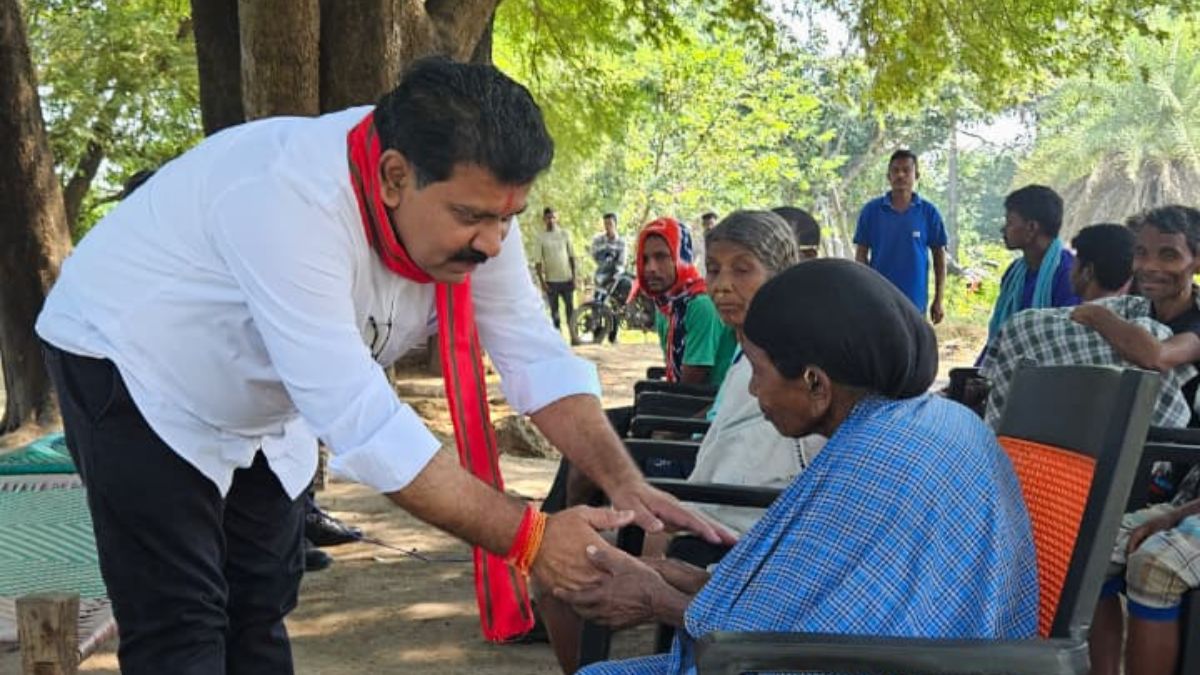
Chhattisgarh Deputy Chief Minister Vijay Sharma meets the mother of Maoist Madvi Hidma
In a remarkable turn of events in one of India's most conflict-affected regions, Chhattisgarh Deputy Chief Minister and Home Minister Vijay Sharma traveled by motorcycle into the remote forests of Poorvarti village, the birthplace of Madvi Hidma, India's most sought-after Maoist who carries a bounty exceeding Rs 1 crore.
The encounter that followed was both unprecedented and profoundly moving—a meeting not with the rebel commander himself but with his mother, whose emotional plea carried a weight that years of military operations could not achieve.
"Where are you, son? I'm telling you to come. We'll earn and eat at home... come back, live with your people," she implored.
The deputy chief minister sat on the earthen floor of her modest home and shared a meal prepared by local villagers. "Violence no longer has any meaning. Your son must return. Surrender is the only right path," he advised.
For the first time in Bastar's recent history, a high-ranking government official entered the home of a notorious insurgent's family bringing reconciliation rather than retribution.
Hidma's elderly mother, though frail, remained resolute in her hope, speaking through tears: "I told him not to go. If I could, I would have gone into the forest to bring him back. What can I do now? Only call him come home, surrender, live with us."
Similarly, Deva's mother expressed her longing: "He left saying he would fight for the people, but what did we get? Blood, loss, and loneliness. Come home, son. Work, earn, and live among your people."
The voices of these women, breaking through years of silence, fear, and separation, have now become the emotional foundation of a new peace initiative in Bastar.
In an exclusive interview with NDTV, Vijay Sharma stated, "Hidma has a loving mother; she wants him to join the mainstream. Another major rehabilitation initiative is on the way for Bastar. The killing of education ambassadors and civilians will not be tolerated."
His solitary journey into one of Sukma's most volatile areas demonstrated both symbolic power and political courage. Officials described it as an "emotional bridge" between the government and families who have long lived under conflict's shadow.
Recent security operations have eliminated several senior Maoist leaders. Following these operations, only a few top commanders like Madvi Hidma and Deva remain active in Bastar, continuing to direct the insurgency.
Hidma is widely considered the most dangerous Maoist in Bastar and among the most elusive in India. Various governments have placed bounties totaling over Rs 1 crore on him over the years.
A top leader of the People's Liberation Guerrilla Army (PLGA), Hidma has orchestrated some of the most devastating attacks in India's Maoist history, including the Tadmetla attack (2010), the Jhiram Valley attack (2013), the Burkapal ambush (2017), and the Aranpur IED blast (2023). These assaults claimed dozens of lives among security personnel and civilians, severely challenging India's internal security framework.
Now believed to be between 50 and 55 years old, Hidma completed education only until the tenth grade. Known for ruthless discipline and stealth, he operates with a three to five-layer security ring, maintaining limited contact even among Maoist cadres. He avoids gatherings and media exposure, remaining a ghostly presence in Bastar's dense forests.
Once Commander of Battalion No. 1, he has risen to the Maoists' Central Organizing Committee (COC), the highest decision-making body of the CPI (Maoist), comprising the most ideologically committed leaders across India.
Deva, also known as Barsa Sukka, Barse, Devanna, and Badadeva, comes from Poorvarti village, the same as Hidma. He previously served as Secretary of the Darbha Division Committee and is considered one of Hidma's most trusted associates. Despite being illiterate, Deva speaks Odia, Telugu, Marathi, and Hindi, besides his local dialect. His extensive experience with the Maoist press and communication wing has provided him significant technical and tactical expertise.
Officials describe Deva as a strategist with intimate knowledge of local terrain and logistics, making him a vital link in the surviving Maoist network in southern Bastar.
Poorvarti, once associated with fear, now stands at the crossroads of hope and history. For the first time, government representatives and families of top Maoists have shared a meal and perhaps the same desire for peace.
Deputy Chief Minister Sharma's unguarded visit without heavy security was a powerful symbolic gesture that resonated throughout Bastar's conflict zones. "Another major rehabilitation effort is coming soon," Sharma indicated, signaling a shift from military counterinsurgency to dialogue-based reconciliation.
With most senior Maoist commanders neutralized in recent operations, Hidma and Deva represent the final symbols of the traditional Maoist leadership. Their surrender could potentially mark the beginning of the end of Bastar's decades-long insurgency.
Source: https://www.ndtv.com/india-news/come-home-hidma-mother-of-indias-most-wanted-maoist-tells-son-9616380