
Bihar's Historic Gender Gap in Voter Turnout: How Women Voters Are Reshaping Election Outcomes
- Date & Time:
- |
- Views: 48
- |
- From: India News Bull
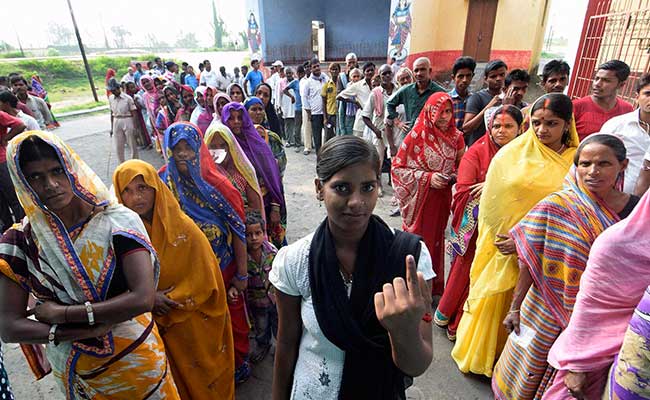
The first phase of Bihar assembly elections has witnessed a record-breaking voter turnout of 65.08%, significantly surpassing the 57.29% recorded in 2020. This impressive figure requires careful analysis, particularly regarding the participation patterns between male and female voters.
Some observers have attributed the increased turnout to the Special Intensive Revision (SIR) process, but this interpretation is inaccurate. In fact, the electorate has grown from 7.36 crore in 2020 to 7.42 crore currently. The first phase alone recorded 35 lakh more votes than in 2020, suggesting that even without SIR, turnout would have increased by approximately 4%.
The gender dynamics in this election reveal a remarkable trend. Female voter participation reached 69.04%, considerably higher than the male turnout of 61.56%. This 7.5 percentage point difference highlights a consistent pattern in Bihar, where women have outpaced men in voter participation for the past three electoral cycles, with margins ranging from three to seven percentage points.
This wasn't always the case. When Nitish Kumar first won in October 2005, female turnout lagged behind men by 2.6 percentage points. The transformation began following significant improvements in law and order and the introduction of female-focused initiatives including bicycle distribution programs, job reservations, the Jeevika Didi program, and prohibition policies.
By 2010, female turnout exceeded male participation by 3.35 percentage points. This gap expanded to 7.2 percentage points in 2015, slightly contracted to 5.3 percentage points in 2020, and has now rebounded to 7.5 percentage points in the current first phase.
Bihar's socioeconomic context also contributes to this phenomenon. Many men migrate to other regions for employment opportunities, often missing the opportunity to vote.
The National Democratic Alliance (NDA), particularly the Janata Dal (United), has benefited substantially from this trend. The JD(U) demonstrates impressive performance in constituencies where women outvote men, securing 37 of its 43 victories in 2020, 61 of 71 in 2015, and 79 of 115 in 2010.
In the 2020 elections, women outvoted men in 167 of the total 243 constituencies, with JD(U) winning 99 of these seats. Conversely, the Mahagathbandhan alliance claimed 49% of the 76 constituencies where male turnout exceeded female participation. Overall, the NDA led by 1% among women voters while the Mahagathbandhan enjoyed a 2% advantage among men, contributing to NDA's narrow victory.
Current polling from the VoteVibe tracker indicates that as of early October, the NDA maintains a 6% lead among women, while the Mahagathbandhan holds a 2% advantage among men. Among young male voters, the Mahagathbandhan leads by 7%, though the Jan Suraaj Party (JSP) is fragmenting the vote according to Ascendia Strategies analysis. Projections suggest Mahagathbandhan may secure 41% of male votes, with NDA at 34% and JSP at 18%.
Conversely, NDA enjoys a substantial 14% lead among young female voters. Overall forecasts suggest NDA could capture 48% of female votes, with Mahagathbandhan at 34% and JSP at 8%. JSP's pledge to enforce prohibition if elected has created uncertainty among women voters.
Despite women's higher turnout rates, Bihar's female electorate remains smaller than the male electorate in absolute numbers. However, reports from the first phase indicate equal participation, with 1.22 crore voters from each gender. Between 2005 and 2020, female votes doubled from 1.04 crore to 2.08 crore, while male votes increased 1.5 times from 1.41 crore to 2.11 crore. The male advantage has shrunk dramatically from 37 lakh votes in March 2005 to just 3 lakh in 2020. Women's share of total votes has grown from 42.48% in 2005 to 49.62% in 2020.
The 7.5 percentage point gender turnout gap suggests the effectiveness of the Mahila Rozgar Yojana implemented under Nitish Kumar's government. Many refer to this as the "das-hazariya" election, referencing the Rs 10,000 payment provided through the women's employment scheme.
Nitish Kumar appears to have successfully established a caste-neutral female voting bloc. According to VoteVibe data, 58% of women recipients have utilized their payments to launch small businesses, and many anticipate receiving Rs 2 lakh after six months. The independent identity of Jeevika Didis, beyond their traditional family roles, has significantly resonated with women voters.
The consistent increase in women's electoral participation in Bihar represents a significant political transformation. Enhanced women's empowerment initiatives, improved security conditions, and heightened political awareness have established women as a decisive electoral constituency. The 2025 election results will determine whether this pattern continues and which alliance most effectively harnesses this demographic shift.
(Amitabh Tiwari is a political strategist and commentator. Previously, he worked as a corporate and investment banker.)
Disclaimer: These are the personal opinions of the author
Source: https://www.ndtv.com/opinion/its-the-women-who-may-decide-bihars-fate-this-time-9608889