
Delhi Battles Severe Air Quality: CM Implements Emergency Measures and Urges Public Cooperation
- Date & Time:
- |
- Views: 46
- |
- From: India News Bull
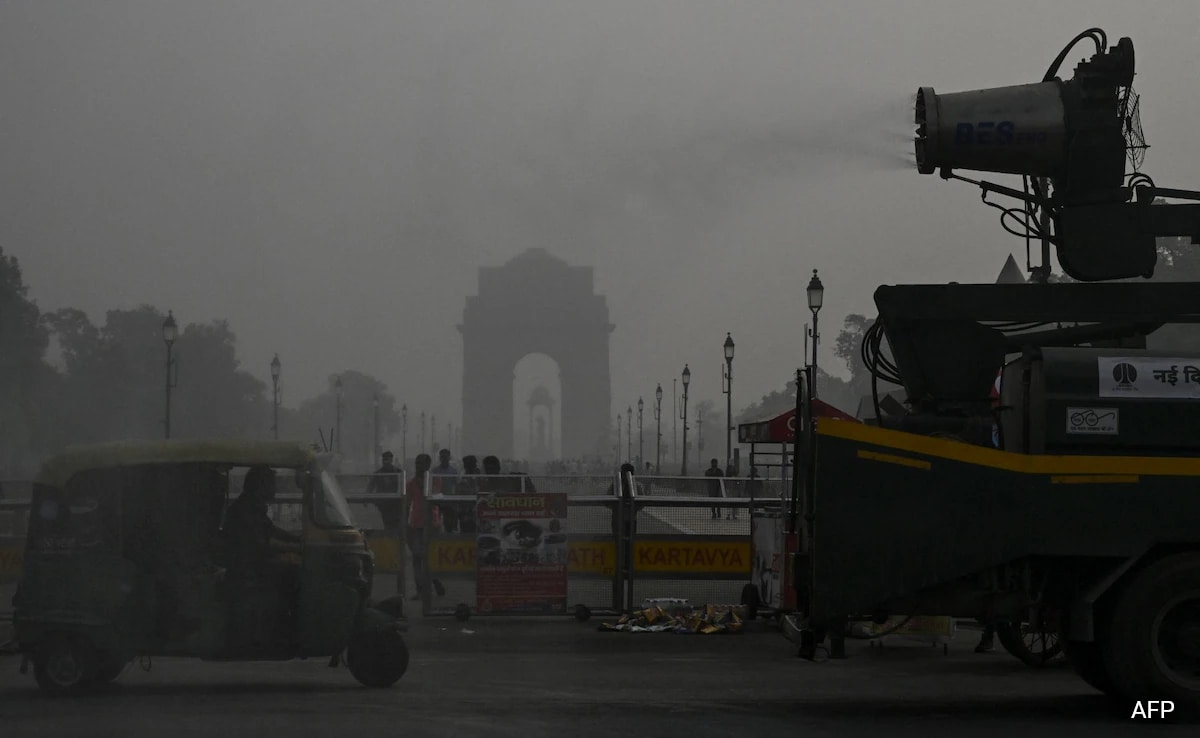
Delhi's air quality deteriorated to "severe" levels in multiple areas on Saturday, prompting Chief Minister Rekha Gupta to announce targeted initiatives to eliminate traditional cooking fuels in slum clusters while intensifying citywide anti-pollution measures.
With Central Pollution Control Board (CPCB) data indicating a city-wide 24-hour average AQI of 361, Gupta revealed that the Delhi Urban Shelter Improvement Board (DUSIB) has been directed to survey all slum areas to identify households still using wood-fired stoves or coal angithis. "We're extending the Ujjwala Yojana to these families on priority," she stated, describing the initiative as addressing both household pollution and health risks. She noted that smoke from these sources contributes to Delhi's toxic air and endangers residents, particularly in densely populated informal settlements.
The Chief Minister emphasized that pollution control efforts are being implemented with urgency, with teams deployed to hotspots for immediate interventions. Urban local bodies have received instructions to mobilize all sanitation resources for sweeping, water sprinkling, and mechanical dust suppression. Gupta explained that "cooling and clearing" polluted zones through continuous misting and road repairs aims to reduce particulate matter dispersion.
Gupta also issued an advisory urging residents to carpool, use public transport, and encouraging private employers to implement work-from-home policies. This follows the activation of GRAP-2 restrictions limiting certain outdoor activities, though ground-level enforcement has faced criticism for inconsistencies. Despite the escalating crisis, GRAP-3, which includes stricter measures like construction bans, has not yet been implemented.
To alleviate morning traffic congestion, the government will introduce staggered office hours starting November 15. Delhi government offices will operate from 10 am to 6:30 pm, while MCD facilities will function from 8:30 am to 5 pm. This arrangement will remain in effect until February 15, 2026. However, urban mobility experts have expressed skepticism that a half-hour adjustment will significantly reduce emissions from the millions of vehicles on Delhi's roads.
In a separate development, the Delhi Pollution Control Committee (DPCC) held a briefing on Saturday chaired by Chairman Sandeep Kumar and Member Secretary Sandeep Mishra, highlighting incremental improvements. For six of the past seven days, Delhi's AQI has shown improvement compared to last year's figures on corresponding dates: November 1 (303 vs. 339), November 3 (309 vs. 382), November 4 (291 vs. 381), November 5 (202 vs. 373), November 6 (311 vs. 352), and November 7 (322 vs. 377). An official noted that "Proactive coordination across departments has kept us ahead of last year's curve, avoiding early GRAP-3 invocation," attributing this to increased mechanized sweeping, waste collection, and vehicle inspections.
DPCC appealed for public cooperation, urging citizens to avoid biomass burning, replace coal heaters with electric alternatives in guarded complexes, install anti-smog guns at construction sites (mandatory for buildings over five floors until at least November 29), and report violations through the Green Delhi or 311 apps. Residents were also advised to use approved fuels, maintain vehicles properly, and prefer public or electric transport.
However, this optimism contrasted with real-time readings. By 4 pm, CPCB recorded an average AQI of 361 - categorized as "very poor" citywide - but localized monitors in areas such as Anand Vihar and Punjabi Bagh exceeded 400, entering "severe" territory. This represented a significant deterioration from Friday's 322, making Delhi the second-most polluted city nationally, behind only a few industrial hubs. Stubble burning contributed 30.91 percent to the pollution, highlighting interstate challenges, with farm fires in Punjab and Haryana exacerbating the inversion-trapped smog.
The Commission for Air Quality Management (CAQM) in NCR and adjoining areas, chaired by Rajesh Verma, conducted on-site inspections in Punjab, examining thermal power plants in Rajpura (Patiala), Lehra Mohabbat (Bathinda), and a Compressed Bio-Gas (CBG) facility in Lehragaga (Sangrur), alongside in-situ straw management efforts. At Lehra Mohabbat, Verma expressed serious concerns about the plant's substandard operations and non-compliance with emission standards, warning of potential closure orders without rapid improvements; stray stubble fires were also observed during the tour.
A subsequent high-level review in Chandigarh on November 7 revealed that Punjab's stubble burning incidents decreased to 3,284 from September 15 to November 6 - down from 5,041 last year. However, hotspots like Muktsar and Fazilka experienced increases, while four thermal plants co-fired only 3.12 lakh MT of residue pellets against a target of 11.83 lakh MT, indicating ongoing challenges.
CAQM acknowledged Haryana's significant progress during the same review, with farm fires declining to 206 incidents over the period compared to 888 in 2024, crediting incentive-driven changes in farmer behavior alongside strict enforcement for in-situ and ex-situ residue management.
The panel urged continued action on broader pollution sources, including vehicular emissions, industrial effluents, construction dust, road pollution, and waste management to maintain improvements. Reiterating zero-tolerance for burning, Verma instructed Punjab to enhance IEC campaigns, ensure availability of crop residue management machinery, strengthen CBG and industrial straw utilization, enforce accountability for non-compliant officers, and increase patrols - emphasizing coordinated, statutory measures across NCR states for sustainable air quality improvements.
Source: https://www.ndtv.com/india-news/delhi-chief-minister-urges-carpooling-work-from-home-amid-severe-aqi-9600580