
The Battle Over Citizenship: Examining the 'Ghuspaithiya' Controversy in West Bengal's Electoral Politics
- Date & Time:
- |
- Views: 111
- |
- From: India News Bull
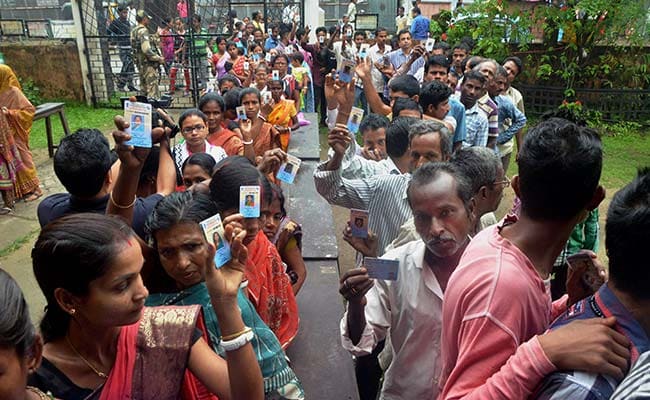
West Bengal's political landscape has long been characterized by intense competition, violence, and verbal confrontations. The commencement of the Special Intensive Revision (SIR) of electoral rolls, designed to ensure "pure" voter lists as per Election Commission standards, has ignited a series of verbal conflicts, mass mobilizations, and political initiatives that will shape the campaign narrative for the 2026 state assembly elections.
The central political discourse revolves around defining who qualifies as a "ghuspaithiya" (illegal migrant), who is an Indian citizen, and consequently, who is a legitimate voter. The Election Commission has introduced changes regarding documentation required to prove citizenship, primarily affecting voters who were not registered during the previous SIR in 2003 in West Bengal.
On one side of this conflict stands the Election Commission, while the Trinamool Congress, Congress, and Left parties (particularly the Communist Party of India (Marxist)) occupy the opposing position. The Bharatiya Janata Party (BJP), as the main opposition challenging Chief Minister Mamata Banerjee's governance, strongly advocates for the SIR process that other parties oppose to varying degrees and for different reasons.
The political battle was exemplified by the contrast between Mamata Banerjee's anti-SIR rally on November 4 and the BJP's counter-characterization of it as a "Jamaat-sponsored" and "Ghuspaithiya Bachao" (Save the Infiltrators) march, implying support for Muslim "illegal migrants." Concurrently, the CPI(M) mobilized supporters defending the freedom to sing Rabindranath Tagore's 'Amar Sonar Bangla,' which Assam's Chief Minister Himanta Biswa Sarma had criticized as being "Bangladesh's national anthem."
The BJP's narrative overlooks the fact that a significant portion—likely several million—of "illegal migrants" are Hindus. This includes not only the Matuas (a scheduled caste Hindu sect with an estimated 25 million followers in West Bengal and approximately 12-15 million registered voters) but also many others from various backgrounds who fall within the "illegal migrant" category. The West Bengal BJP leadership's claim of approximately 20 million ineligible voters complicates the SIR process beyond simply identifying Muslim "ghuspaithiyas."
By organizing camps helping Hindu illegal migrants apply for citizenship under the Citizenship (Amendment) Act (CAA) in Bangladesh-bordering districts with substantial Muslim populations, the BJP is utilizing the SIR process to generate support for the CAA and the legitimization it provides. However, applying for CAA carries the risk of disenfranchisement—possibly temporary but nonetheless fear-inducing—especially with elections approaching. The wave of suicides in West Bengal following the SIR announcement demonstrates the emotional distress the process has caused among citizens.
The political reality involves both Hindu and Muslim voting blocs. While neither bloc is homogeneous, Muslims have predominantly supported the Trinamool Congress since 2011. The Hindu vote has been more dispersed, though the BJP's significant increase in vote share since 2014 reflects its consolidation of Hindu support and positioning as an alternative to the Trinamool Congress. In the 2024 elections, the Trinamool Congress secured 46.7% of votes compared to the BJP's 38.7%, an eight-percentage-point difference.
The exclusion of suspect or ineligible voters under SIR will impact both Hindu and Muslim communities, consequently affecting electoral outcomes for both the Trinamool Congress and BJP in the 2026 state assembly elections. Depending on who is excluded and where, the 2026 election results could become unpredictable.
It's impossible to quantify precisely how many Hindus living in West Bengal should be classified as 'illegal migrants'—a fact acknowledged by all political parties. The 'naturalization' of people who crossed the border before and after Bangladesh's formation in 1971 has involved the Congress, CPI(M), and Trinamool Congress. The concept of 'vote banks' is well-established; the CPI(M), Congress, and Trinamool Congress have all been accused of creating Muslim vote banks. The shift of Muslim voters from CPI(M) to Trinamool Congress contributed significantly to ending the 35-year Left rule in West Bengal.
This 'naturalization' process wasn't exclusively about appeasing Muslims; it involved issuing ration cards, voter IDs, Aadhaar cards, birth certificates, and even passports to regularize migrants who arrived from Bangladesh after 1971 or from former East Pakistan between 1947 and 1971. The population transfer between the partitioned regions of former Bengal was never clean or organized.
Economically disadvantaged voters understand the power their votes carry; they recognize their leverage and the benefits associated with their voting rights. The recent trend of announcing direct cash transfers to certain voter groups before elections, as seen in Maharashtra, Madhya Pradesh, Chhattisgarh, and Bihar, has made voting rights even more valuable.
Therefore, disenfranchisement—whether through SIR or CAA applications—is unacceptable for people already on electoral rolls who benefit from Mamata Banerjee's flagship programs like Lakshmir Bhandar, Kanyashree, and Swasthya Sathi health schemes, as well as central government initiatives including housing programs, free rations, and MGNREGA (Mahatma Gandhi National Rural Employment Guarantee Act). Being labeled a "ghuspaithiya" affects not only identity but also the entitlements associated with citizenship.
Source: https://www.ndtv.com/opinion/who-really-is-a-ghuspaithiya-in-bengal-9593763