
The Art of Political Alliances in India: How Vote Accelerators Shape Electoral Success
- Date & Time:
- |
- Views: 49
- |
- From: India News Bull
In Indian politics, forming alliances is often as crucial and intricate as winning elections themselves. The mathematics of seat-sharing arrangements, leadership dynamics, and the complex transfer of voter loyalty collectively determine whether political partnerships thrive or collapse.
The 2001 Tamil Nadu Assembly elections provide a compelling case study in alliance management. The Pattali Makkal Katchi (PMK) departed from Prime Minister Atal Bihari Vajpayee's National Democratic Alliance (NDA) to align with J Jayalalithaa's AIADMK. In a strategic maneuver, Jayalalithaa offered PMK the Chief Minister position in Puducherry for half a term. As part of this agreement, PMK accepted just 10 of 30 seats in Puducherry, while AIADMK claimed the remaining 20.
While the arrangement anticipated PMK transferring its Vanniyar caste votes to strengthen the alliance, Jayalalithaa's strategy ran deeper. She allocated a minimal seat share to PMK in Tamil Nadu, even surrendering winnable constituencies to her own party. The outcome proved remarkable: AIADMK secured 132 of 141 contested seats—a 94 percent success rate. Meanwhile, PMK won only 18 seats in Tamil Nadu and none in Puducherry.
Jayalalithaa's approach demonstrated clarity—as the chief ministerial candidate, AIADMK functioned as the vote accelerator, transforming alliance support into electoral victories. She mastered the technique of offering partners less viable constituencies while maintaining her party's dominance.
The Congress party's experience in alliances presents a contrasting narrative. Despite commanding a 15 percent vote share in Tamil Nadu (including its Trinamool Congress offshoot), Congress rarely received more than 48 of 234 seats when allied with DMK. Even in 2021, though Congress contested just 25 seats and won 18—achieving a 72 percent strike rate and outperforming other DMK allies.
Yet in Bihar, where Congress historically secures only 8-9 percent of votes, it consistently obtains between 41 and 70 seats in alliance arrangements. The 2020 elections saw Congress contest 70 seats but win only 19, yielding a 27 percent success rate—the lowest among Mahagathbandhan partners.
In Uttar Pradesh's 2017 elections, Congress contested 117 seats alongside Samajwadi Party (SP) but secured just 7 victories—a mere six percent success rate compared to SP's 15 percent.
This generosity from northern regional parties stands in stark contrast to DMK's more calculated approach to seat-sharing, despite Congress performing better in Tamil Nadu.
The NDA, particularly BJP, has historically adopted a more aggressive stance toward managing alliances. During Bihar's 2020 Assembly elections, the combined vote share of Hindustani Awam Morcha (HAM), Rashtriya Lok Samta Party (RLSP), and Lok Janshakti Party (LJP) reached 8.32 percent, comparable to Congress. However, these parties received only 41 seats within NDA—20 fewer than Congress obtained in the Mahagathbandhan.
This reflects BJP's conviction that it serves as the vote accelerator, with allies benefiting from the association. BJP's impressive 89 percent strike rate in Bihar's 2010 elections—winning 91 of 102 seats—came despite lacking a pan-Bihar leader comparable to Nitish Kumar.
In Maharashtra's 2024 elections, BJP contested 149 seats and secured 132, achieving an 89 percent success rate and outperforming its allies despite contesting fewer constituencies.
Kerala's 2021 elections saw the LDF expand its support base among Muslim and Christian communities, securing 99 of 140 seats with a 45.43 percent vote share—defying the state's traditional anti-incumbency pattern.
Alliances exceeding the 45 percent vote share threshold are often viewed as suboptimal, as not all partners receive proportional representation. However, effective management and strategic candidate selection can produce high success rates and mutual benefits.
BJP has leveraged junior positions in alliances to maximize electoral conversion. In pre-2014 Maharashtra, despite contesting fewer seats than Shiv Sena, BJP often achieved comparable results. Similarly, in Bihar's 2010 elections, BJP secured a higher strike rate despite Nitish Kumar's predominance.
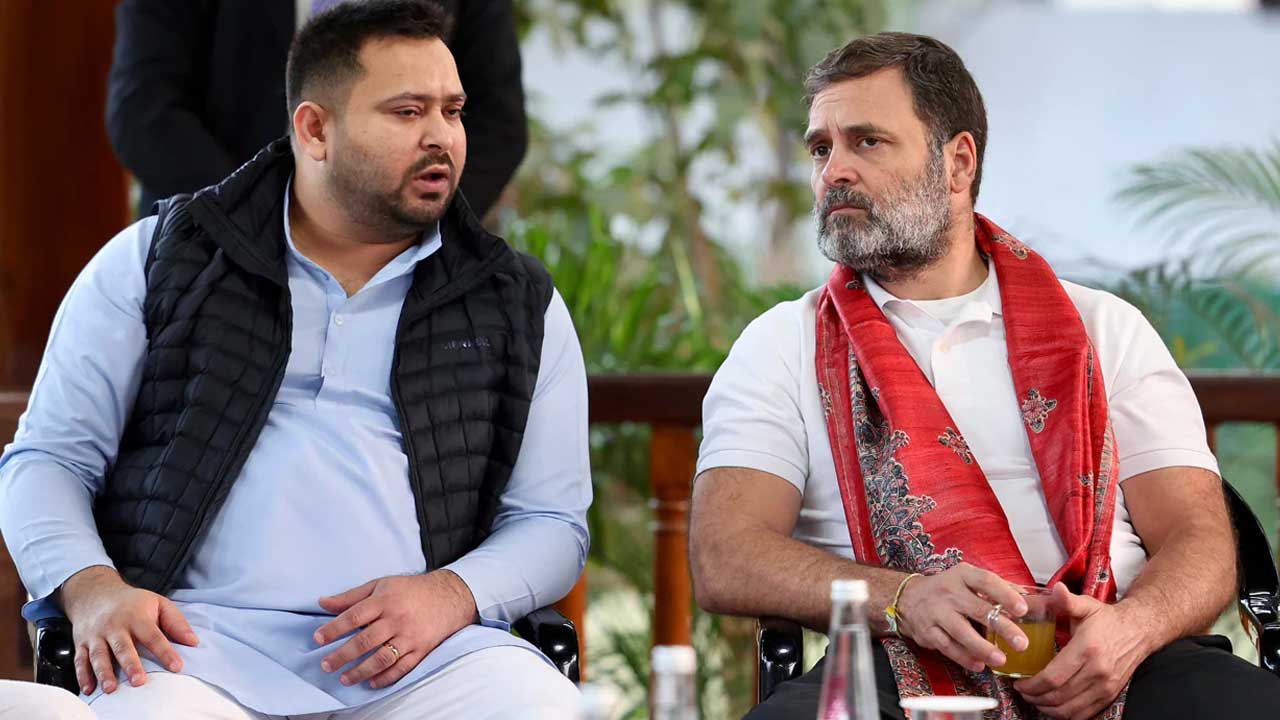
As Bihar's opposition leader, Tejashwi Yadav would benefit from studying these patterns. Congress's disproportionate seat share despite underwhelming performance, contrasted with NDA's strategic allocation, offers valuable insights.
The fundamental lesson lies in identifying the true vote accelerator and ensuring seat allocation reflects electoral efficiency rather than merely historical precedent or goodwill.
Ultimately, alliance management combines artistry with arithmetic. The capacity to optimize resources while maintaining coalition unity distinguishes effective strategists from sentimental partners.
Follow the author on X @JMAI799249
Source: https://www.ndtv.com/india-news/vote-accelerators-and-seat-shapers-how-alliances-win-or-lose-9585724